
Review · BAALBEK & ANJAR DAY TRIPS
Guided Small-Group Tour to Baalbek, Anjar and Ksara with Lunch
Ancient stones, generous food, and Lebanese wine. This 9-hour trip from Beirut packs two UNESCO World Heritage sites and Chateau Ksara into one well-organized day. I especially like the small group limit of 15, which gives you a better chance to hear the guide at the ruins, and the fact that a driver handles the long journey into the Bekaa Valley.
The local guides are another strong point. Guides named Albert, Hassan, Alfred, Mariana, Hassane, and Mike receive repeated praise for being warm, funny, punctual, and well informed. My main caution is the pace: this is a big day, summer walks can be hot, and wine tasting may cost extra. One meal received less favorable feedback than the rest, so lunch quality may depend on the restaurant and the day.
In This Review
- Key points at a glance
- Why this is one of Beirut’s best day trips
- Leaving Beirut for the Bekaa Valley
- Baalbek’s colossal Roman temples
- A short stop at the Mosque of Sayyida Khawla
- Anjar’s orderly Umayyad ruins
- Lunch at a Lebanese restaurant
- Chateau Ksara and Lebanon’s wine tradition
- What the guides add to the day
- Price, group size, and what is included
- Who should book this Baalbek day trip?
- Should you book it?
- FAQ
- How long does the tour last?
- What time does the tour start?
- Is hotel pickup available?
- What places does the tour visit?
- Are Baalbek and Anjar UNESCO World Heritage Sites?
- Is lunch included?
- Is wine tasting included?
- How many people can join the tour?
- Can I cancel for a full refund?
Key points at a glance
- Baalbek gives you Lebanon’s grandest Roman spectacle: The Temple of Jupiter and Temple of Bacchus are enormous, dramatic, and worth the long drive from Beirut.
- Anjar adds a different chapter: Its orderly Umayyad streets and palace ruins show an 8th-century Islamic city rather than another Roman sanctuary.
- The drive is part of the value: A designated driver and hotel pickup spare you the stress of navigating Beirut and the Bekaa Valley yourself.
- Lunch is a proper part of the day: A Lebanese restaurant meal is included, and many visitors found it filling and excellent, though one account criticized the food and service.
- Chateau Ksara brings a change of pace: After ruins and archaeology, you visit a winery founded by Jesuit priests in 1857.
- Expect a long but efficient schedule: About nine hours allows three major stops, lunch, transfers, and guided visits without requiring an overnight stay.
Why this is one of Beirut’s best day trips
Baalbek is the headline act, but the tour works because it does not stop there. You get Roman imperial architecture, an Umayyad commercial city, Lebanese food, and a historic winery in one sweep through the Bekaa Valley.
That variety matters. A full day spent only at Baalbek could feel heavy for anyone who is not an archaeology enthusiast. Here, the subject changes every few hours, so the ancient stones have time to settle before you move on to Anjar and then Ksara.
The price is $65 per person, which is strong value if your hotel is in central Beirut and the listed inclusions operate as described. You are paying for round-trip transportation, a tour leader, local site guides, air conditioning, lunch, and a full day on the road. Self-driving would mean handling the route, parking, timing, and a tiring return journey yourself.
The group can reach 15 people. That is not a private tour, but it is small enough to avoid the feel of a large coach excursion. Some departures may be smaller. A few people even ended up with what felt like a private experience because uncertain conditions reduced the group size, but that should not be expected every time.
More Baalbek and Anjar day trips:
- Anjar, Baalbek & Ksara Day Trip – With Lunch (4G on Board)
★ 4.5 · 181 reviews - Baalbek – Anjar – Ksara Trip From Beirut
★ 4.5 · 80 reviews - Private Anjar and Baalbek Tour from Beirut with Departure Ticket
★ 5.0 · 79 reviews
Leaving Beirut for the Bekaa Valley
Pickup begins around 8:30 a.m., with door-to-door service offered from central Beirut hotels. That is a practical advantage in a city where finding the right meeting point can take more effort than expected.
The vehicle is air-conditioned, and the driver also handles the long road portion. Several guides, including Albert, Hassan, and Mike, were praised for explaining places seen along the way, not just the formal stops. That can turn transfer time into part of the lesson rather than dead time.
You should allow the entire day. The advertised duration is about nine hours, and the schedule is full. Wear shoes suitable for uneven archaeological ground, bring water, and use sun protection in warmer months. One account specifically noted that the walks were hot in summer.
The tour’s schedule is best suited to you if you want to see a lot in one day. If you prefer slow museum visits, long meals, or extended time for photography, the plan may feel brisk.
Baalbek’s colossal Roman temples
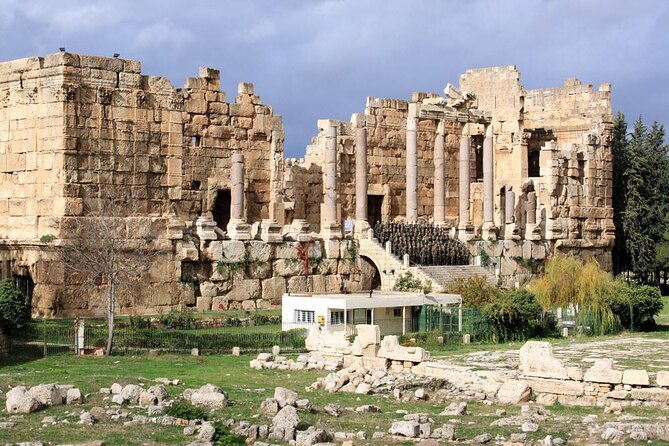
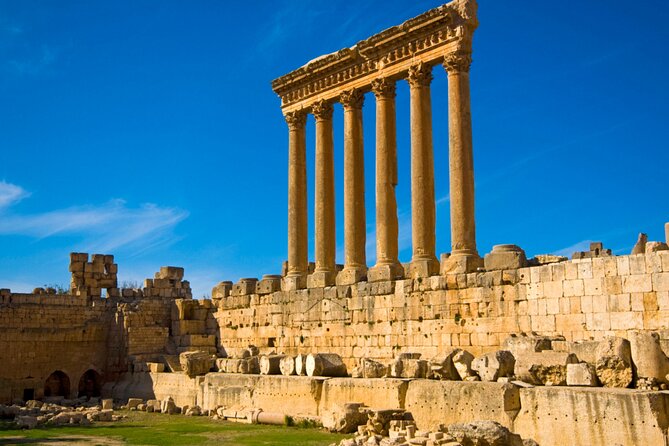
The first major stop is Baalbek, located at about 1,150 meters near the Anti-Lebanon range. The ancient sanctuary was known as Heliopolis during the Hellenistic period and later became one of the Roman world’s great religious centers.
The site is powerful before you know the details. Huge columns, broad stone platforms, and the remains of monumental temples make the scale easy to grasp. The complex includes the Temple of Jupiter and the Temple of Bacchus, two of the most impressive surviving Roman temple ruins anywhere.
The Temple of Jupiter was the larger of the two. Even in ruin, its construction suggests the ambition of the Roman builders. The Temple of Bacchus is especially well preserved, with elaborate carved details and a strong sense of height and enclosure.
Your visit is scheduled for roughly 90 minutes at the Baalbek area, with another 90 minutes listed for the temple complex. The exact way that time is divided may depend on the day, local site access, and your guide. That is enough for a solid introduction, photographs, and explanations, but not for examining every stone.
This is where the site guide matters most. Several departures used archaeologists or specialist local guides at Baalbek, and that can change the experience from simply looking at old columns to understanding how the sanctuary worked. Guides can explain the Phoenician roots of the cult, the Romanized triad of Jupiter, Venus, and Bacchus, and why pilgrims came here in large numbers.
I would give Baalbek your full attention. It is the reason many people choose this excursion, and the broad spaces make it easy to appreciate the scale even if you are not usually drawn to ancient history.
A short stop at the Mosque of Sayyida Khawla
The day also includes a stop at the Mosque of Sayyida Khawla in Baalbek. It marks the site where local tradition holds that Sayyida Khawla, the daughter of Imam al-Hussein, was buried after the events of Karbala.
This adds a religious and living-cultural layer to the ancient Roman setting. Baalbek is not only an archaeological site. It is also a present-day city with places of worship and traditions that remain important to local people.
The supplied schedule does not give a separate duration for this stop, so expect it to fit within the Baalbek portion rather than function as a long independent visit. Dress and behave respectfully at a religious site, and follow your guide’s instructions about the appropriate way to enter or view the mosque.
More Wine Tours in Beirut:
- Guided Private Full Day Tour to Baalbek, Anjar and Chateau Ksara
★ 5.0 · 60 reviews - Lebanon tour Baalbek ruins & Ksara w/pick-up, lunch,guide+entries
★ 5.0 · 35 reviews - Baalbek Temples & Ksara Caves w/pick-up,guide, entries+lunch
★ 4.9 · 34 reviews - Small Group Tours to Baalbek, Anjar & Chateau Ksara with lunch and Tickets
★ 5.0 · 29 reviews
Anjar’s orderly Umayyad ruins
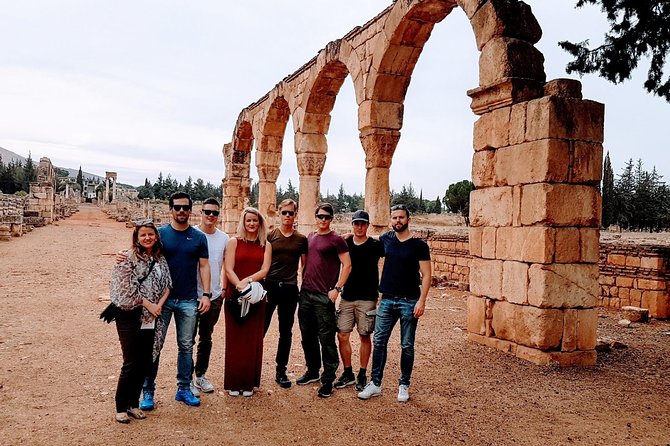
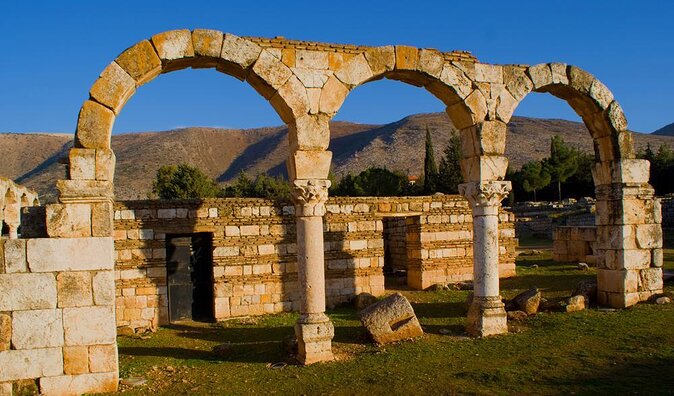
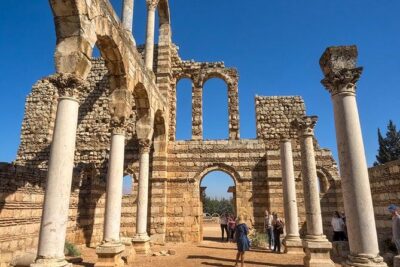
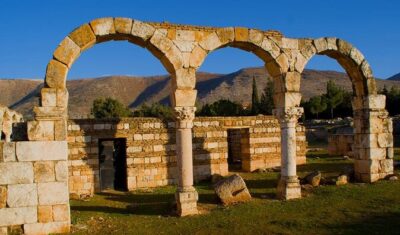
Anjar changes the tone completely. Founded by Caliph Walid I at the start of the 8th century, the city was built during the Umayyad period and served as an inland commercial center.
Its layout is one of the most interesting things about the site. Instead of the sprawling feel of Baalbek, Anjar reveals a regular urban plan, with streets and buildings arranged in a way that recalls earlier palace cities. The ruins include a palace, harems, a mosque, thermal baths, and other structures.
Roman architectural elements appear here too, but Anjar is not simply another Roman ruin. Its importance comes from the way it shows Umayyad city planning and trade. The ancient city stood near routes connecting Beirut with Damascus and the Bekaa Valley with Homs and Tiberiade.
The visit is scheduled for about 45 minutes. That is enough for an overview with a good guide, but you will not have unlimited time to wander. The site was only identified by archaeologists in the late 1940s, which gives it a different feel from a monument that has been famous for centuries.
I like the pairing of Baalbek and Anjar because it prevents the day from presenting Lebanon’s past as one long Roman story. The two sites belong to different periods and serve different purposes. Your guide can help connect them without treating them as interchangeable piles of stone.
Lunch at a Lebanese restaurant
Lunch is included, and it is more than a quick sandwich between stops. The meal is described as fresh, authentic Lebanese food, and many people found it generous enough to leave them completely full.
That pause is welcome. After walking around Baalbek and Anjar, you will want a proper seat, shade, and time to eat. A restaurant meal also gives you a chance to try local dishes in a setting chosen for the group rather than relying on whatever snack happens to be available at an archaeological site.
Still, keep your expectations practical. One person found the restaurant’s food and service disappointing, while other accounts called the meal excellent and very good. That suggests the lunch is a useful inclusion, but not a guaranteed culinary highlight.
The tour leader may also be able to explain what you are eating. One particularly well-regarded guide, described as both funny and helpful, was praised for sharing information over lunch. That is one of the quiet benefits of a group meal: you get a natural break without losing the local context.
Chateau Ksara and Lebanon’s wine tradition
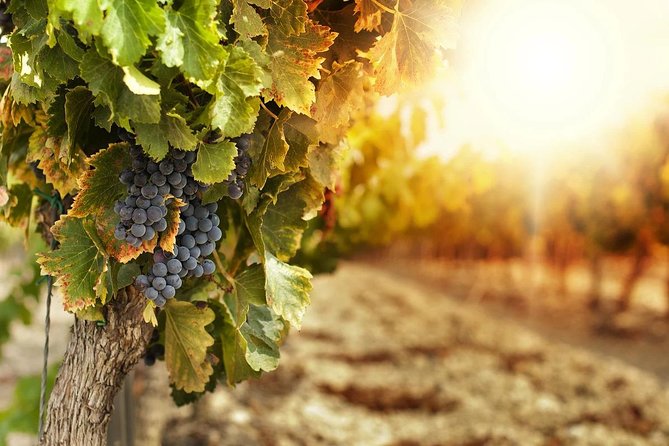
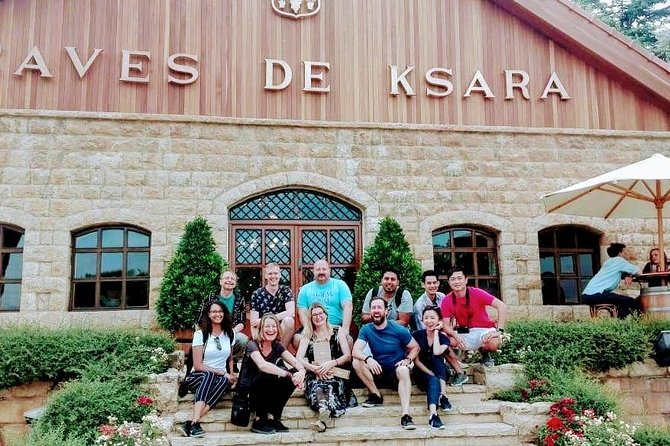
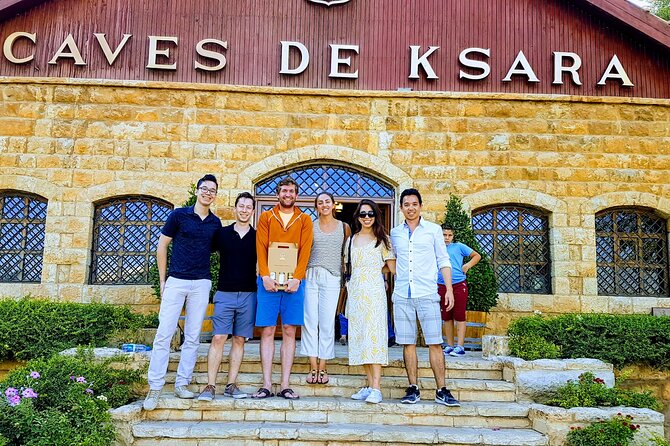
The final major stop is Chateau Ksara, a winery in the Bekaa Valley founded by Jesuit priests in 1857. It developed Lebanon’s first dry wine and now produces about three million bottles a year, with exports to more than 40 countries.
After two archaeological sites, Ksara provides a welcome change of subject. You can learn about Lebanese wine production and see how the valley’s agricultural identity fits alongside its ancient monuments.
The visit is scheduled for about an hour. The information provided confirms that admission is not included, and one account specifically notes that wine tasting cost extra but was worth paying for. If you want to taste rather than simply visit the winery, budget separately and ask your guide what the current tasting arrangement includes.
This is a good stop for people who enjoy food and drink as part of a trip, but it may be less important to you if Baalbek is your sole priority. The schedule gives Ksara a meaningful amount of time, so the winery is not just a rushed photo stop.
What the guides add to the day
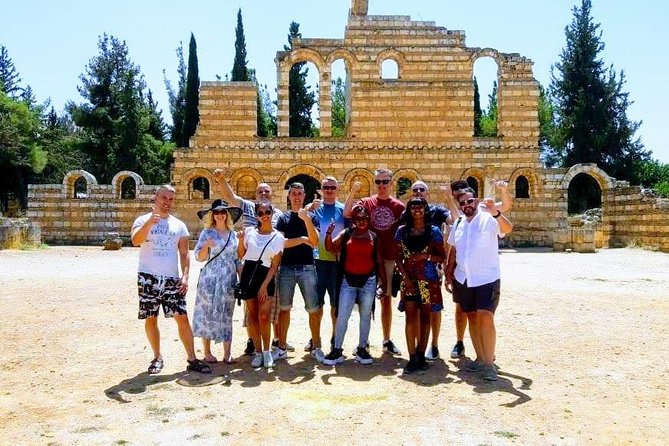
The strongest pattern in the feedback is the guide service. Albert is repeatedly described as professional, friendly, funny, and clear about pickup times and the day’s plan. Hassan is praised for patience, historical knowledge, and waiting while people took extra photographs. Alfred receives similar praise for kindness and organization.
Other names appear too. Mariana is described as informative and helpful, while Mike is praised for humor and for explaining the places along the road. Hassane is noted for being considerate, good company, and willing to make the day easier.
You should not assume you will receive a particular guide, but these details show what the operator appears to value: warmth, clear communication, local explanation, and flexibility with photographs. Specialist guides or archaeologists may lead the visits at Baalbek and Anjar, which is a major benefit at sites where a quick walk around cannot explain the full story.
The guide can also shape the group mood. Several people describe laughter and easy conversation alongside serious historical information. That balance is useful on a long day.
Price, group size, and what is included
At $65, this tour is priced to make a full Bekaa Valley day accessible without arranging a private car. The best value comes from the combination of transport and content. You visit three very different places, receive guided interpretation, eat lunch, and return to Beirut without arranging each piece separately.
Included services are hotel pickup and drop-off, an air-conditioned vehicle, comfortable transportation, a tour leader, professional guides, and lunch. The group maximum is 15.
Admission deserves attention. The tour details mark entry tickets as not included for the Baalbek temple complex, Anjar ruins, and Chateau Ksara. Wine tasting is also described as an additional cost. I would confirm the exact entrance and tasting charges before departure so the $65 price does not catch you off guard.
Free cancellation is available if you cancel at least 24 hours before the start time. Changes or cancellations made inside that window are not accepted for a refund.
Who should book this Baalbek day trip?
I would choose this tour if you are staying in Beirut and want the simplest way to reach Baalbek. It suits first-time visitors who want history explained rather than merely photographed, and it works well for people who enjoy combining monuments with food and wine.
It is also a good fit if you do not want to drive. The distance, the long day, and the need to return safely make a designated driver particularly useful.
You may want a different plan if you need a private schedule, dislike group meals, or want several hours at Baalbek alone. The 9-hour format is efficient, not leisurely. The summer heat can make the walking portions harder, and the lunch may not satisfy every diner.
Should you book it?
Book it if you want Baalbek, Anjar, and Ksara in one day with transport and lunch handled for you. The excellent rating, strong guide feedback, small group cap, and mix of Roman, Umayyad, culinary, and wine experiences make $65 a sensible deal.
Before paying, confirm which entrance tickets and wine tasting fees are extra. Then bring water, comfortable shoes, and room for a substantial Lebanese meal. If Baalbek is high on your Lebanon wish list, this is an efficient and well-supported way to reach it from Beirut.
FAQ
How long does the tour last?
The tour lasts approximately 9 hours.
What time does the tour start?
The stated start time is 8:30 a.m.
Is hotel pickup available?
Yes. Pickup and drop-off are offered from central Beirut hotels.
What places does the tour visit?
The tour visits Baalbek, the Baalbek temple complex, the Mosque of Sayyida Khawla, Anjar, the Umayyad ruins of Anjar, and Chateau Ksara.
Are Baalbek and Anjar UNESCO World Heritage Sites?
Yes. Baalbek was inscribed as a UNESCO World Heritage site in 1984, and Anjar is also identified as a UNESCO World Heritage site.
Is lunch included?
Yes. A Lebanese lunch at a local restaurant is included.
Is wine tasting included?
The tour information does not include wine tasting in the listed inclusions. A separate account indicates that tasting costs extra.
How many people can join the tour?
The maximum group size is 15 people.
Can I cancel for a full refund?
Yes, if you cancel at least 24 hours before the experience’s start time. Cancellations or changes made less than 24 hours in advance are not accepted for a refund.
More Tours with Lunch in Beirut
- Guided Small-Group Tour to Jeita, Harissa, Byblos with Lunch
★ 5.0 · 361 reviews - Byblos, Jeita Grotto & Harissa Day Trip -With Lunch (4G on Board)
★ 4.5 · 145 reviews - Semi-Private Tour to Jeita Grotto, Harissa & Byblos with Lunch
★ 5.0 · 52 reviews - Sidon, Tyre & Maghdouche Day Trip – With Lunch (4G on Board)
★ 4.5 · 44 reviews
Just added around Beirut
- Private Full-Day Tour to Jeita Grotto, Harissa and Saint Charbel from Beirut★ 5.0 · 3 reviews
- Beirut to Jeita Grotto and Byblos: Daily Tours with Lunch★ 5.0 · 3 reviews
- PRIVATE city tour of Old Sidon & Historic Tyre★ 5.0 · 3 reviews
- Journey Through Time: Half-Day Private Tour to Baalbek★ 5.0 · 3 reviews
- Small-Group Tour to Sidon, Tyre and Maghdouche with Lunch and Tickets★ 4.5 · 3 reviews
- Hike Chouwen★ 5.0 · 3 reviews
- Beirut to Sidon, Tyre and Maghdouché: Daily Tours with Lunch★ 5.0 · 3 reviews
- Private Full-Day Tour to Byblos and Tripoli from Beirut★ 5.0 · 3 reviews
Baalbek & Anjar Day Trips, compared.
Anjar, Baalbek & Ksara Day Trip – With Lunch (4G on Board)
Read our review →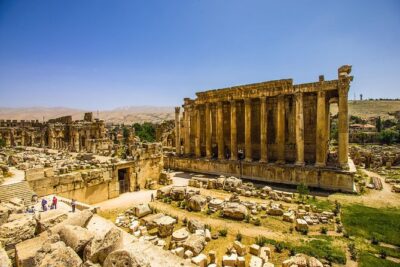
Private Anjar and Baalbek Tour from Beirut with Departure Ticket
Read our review →
Guided Private Full Day Tour to Baalbek, Anjar and Chateau Ksara
Read our review →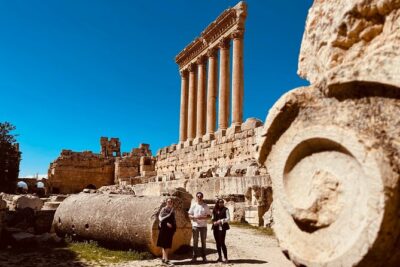
Lebanon tour Baalbek ruins & Ksara w/pick-up, lunch,guide+entries
Read our review →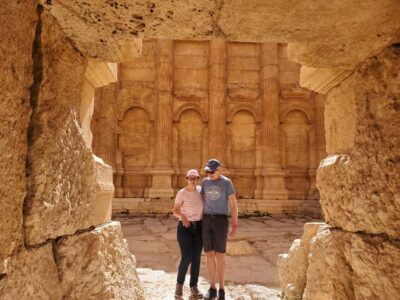
Baalbek Temples & Ksara Caves w/pick-up,guide, entries+lunch
Read our review →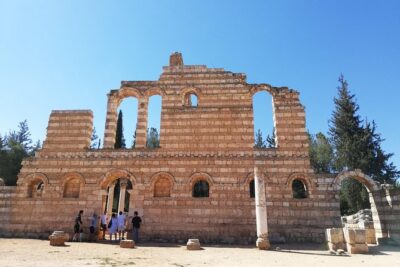
Small Group Tours to Baalbek, Anjar & Chateau Ksara with lunch and Tickets
Read our review →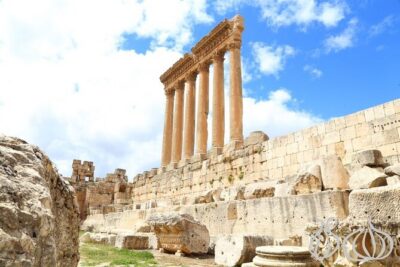
Private Tour: Anjar, Baalbek and Ksara Day Trip from Beirut
Read our review →Browse the lists this tour appears in