
Review · BYBLOS TOURS
Private Full-Day Tour to Byblos and Tripoli from Beirut
Northern Lebanon packs a lot into one day. I like the private air-conditioned vehicle and the chance to see both Byblos and Tripoli without arranging separate transport. I also like the mix of Phoenician ruins, Crusader fortresses, Mamluk mosques, Ottoman-era souks, and working craft spaces. The main drawback is pace: eight hours is enough for an introduction, but not enough for a slow, detailed visit to every stop.
At $65 per person, this is a strong value if your group wants door-to-door service and a full day beyond Beirut. Lunch is not included, and admission to Byblos Castle and the Citadel of Tripoli costs extra, so you should carry some money for those items.
In This Review
- Key points at a glance
- Why this Beirut day trip makes sense
- Byblos: Phoenician roots beside the sea
- Byblos Castle and the archaeological site
- Byblos souk and port
- Tripoli: markets, mosques, and old trade routes
- Citadel of Tripoli and its changing past
- Al Mansouri Great Mosque
- Taynal Mosque and reused columns
- Tripoli’s khans and old crafts
- Hammam Al Jadid and El Mina Port
- Transport, timing, and what $65 buys you
- Who should book this private tour
- Should you book it?
- FAQ
- How long does the tour last?
- Is hotel pickup included?
- Is the tour private?
- Is lunch included?
- Are admission fees included?
- What is the cancellation policy?
Key points at a glance
- Two major northern cities in one day: See Byblos and Tripoli without changing hotels or planning separate rides.
- Byblos combines ruins and seaside views: The archaeological site, castle, old souk, and ancient port each show a different side of the city.
- Tripoli is the cultural heavyweight: Mamluk mosques, covered markets, hammams, khans, and soap-making traditions give the visit real variety.
- Private transport keeps the day practical: Hotel pickup and drop-off in Beirut remove much of the transport hassle.
- The schedule is full but useful: Several stops last only 5 to 15 minutes, so expect an overview rather than extended visits.
- Extra costs are limited but important: Lunch and admission to the two castles are not part of the $65 price.
Why this Beirut day trip makes sense
Lebanon rewards travelers who can move beyond Beirut, but arranging northern day trips on your own can take time. This private tour handles the driving, starts with pickup at your Beirut hotel, and returns you there at the end of the day. You get a designated tour leader throughout the outing, plus a local guide in Byblos.
The private format matters most for a route like this. You are not waiting for a large group at every stop, and your own party takes part in the activity. The exact pace still depends on traffic, site access, and how much time you spend looking around, but the arrangement is more flexible than a standard coach excursion.
I see the tour as a broad introduction to northern Lebanon rather than a specialist archaeological or architectural tour. Byblos receives a clear historical focus, while Tripoli is covered through a sequence of short visits. That balance works well if you want variety in one day. It is less suitable if you prefer to spend half a day inside one museum, mosque, or archaeological site.
More Byblos tours:
- Guided Small-Group Tour to Jeita, Harissa, Byblos with Lunch
★ 5.0 · 361 reviews - Jeita Grotto,Harissa&Byblos Full-Day PRIVATE-CAR Trip from Beirut
★ 5.0 · 222 reviews - Jeita Grotto – Harissa – Byblos Trip
★ 5.0 · 169 reviews
Byblos: Phoenician roots beside the sea
The morning begins in Byblos, one of the oldest continuously inhabited cities in the region. The city has been occupied since Neolithic times and is closely tied to the Phoenician world, including the development and spread of the Phoenician alphabet.
That background gives the visit more weight than a simple walk through an old seaside town. As you move through the area, you are looking at a place connected to Mediterranean trade, writing, and shipping over thousands of years. The scheduled time in Byblos is about two hours, so you should use it well and stay aware of the meeting time.
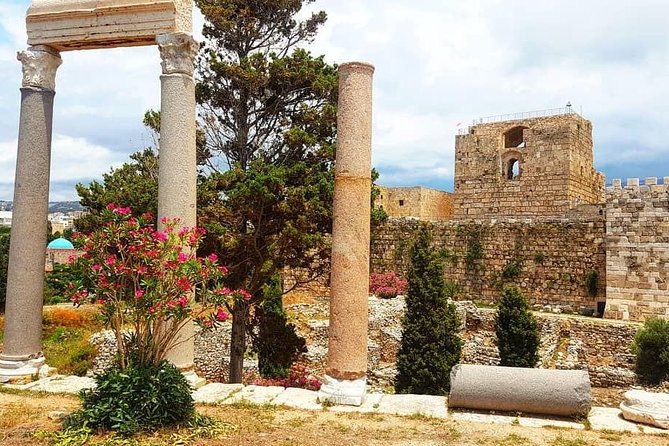
The archaeological area contains remains linked to several periods. The Temple of Baalat Gebal and the Temple of the Obelisks help show how long this site was used and rebuilt. The ruins are not presented as one single, untouched city. Instead, different layers sit close together, which is part of what makes Byblos rewarding.
Byblos Castle and the archaeological site
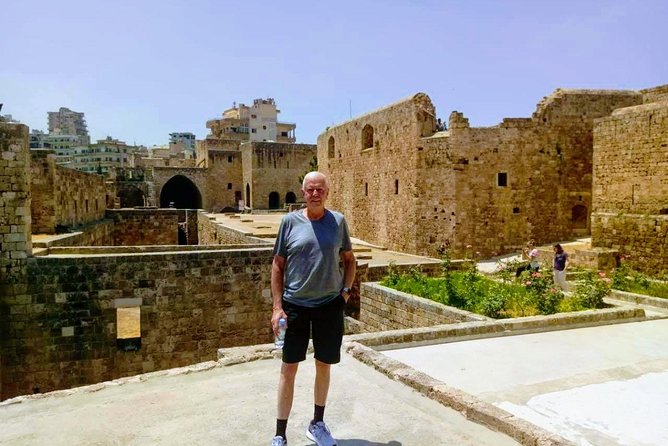
Byblos Castle is a restored 12th-century Crusader fortress inside the archaeological area. A dry moat about 10 meters wide surrounds it, giving the building a strong defensive feel even before you climb inside.
The square keep is the reason to pay the separate admission fee. From the top, you get a useful view over the archaeological remains and toward the sea. Bronze Age dwellings can be seen below the castle walls, creating a striking contrast between early settlement remains and the later Crusader structure.
There is also a small museum and a room with panels explaining the city’s past. The visit is scheduled for about 30 minutes. That is enough to see the main structure and gain a sense of the site, but not enough for a long museum reading session.
Admission is not included, so account for that when judging the price. If you enjoy castles, archaeology, or city views, this is one of the most worthwhile paid additions of the day.
Byblos souk and port
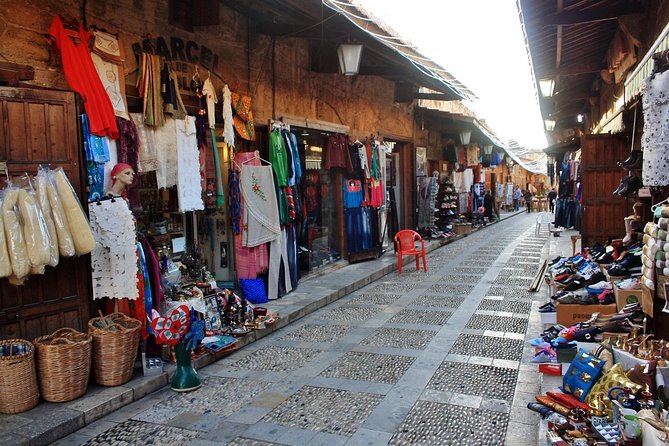
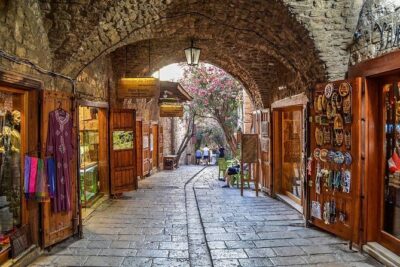
After the castle and ruins, the route moves into the old souk. This is a short 15-minute stop, best used for a quick walk along the cobblestones and a look at the old architecture. Shops sell souvenirs and antiques, but you should not expect a long shopping session at this pace.
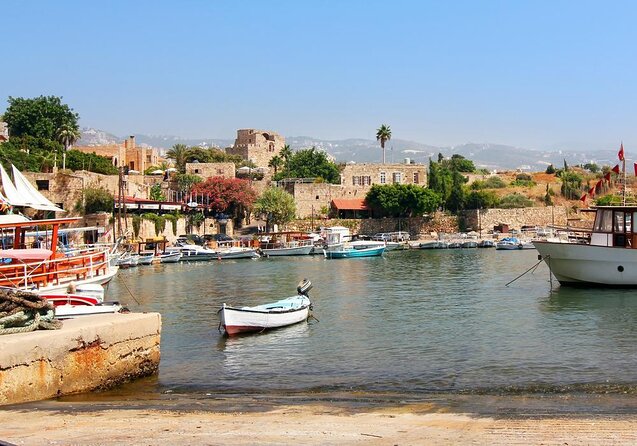
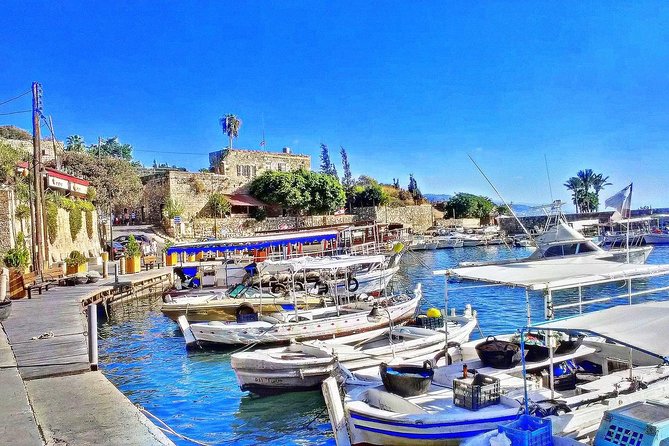
The Byblos port gets another 15 minutes. Lebanese tradition identifies it as one of the oldest ports in the world, and around 3000 BC it served as an important timber-shipping center in the eastern Mediterranean.
The port is valuable because it links the city’s physical setting to its ancient role. Byblos was not important only because people lived there. Its position beside the sea helped connect it with wider Mediterranean trade. The stop is brief, but the waterfront gives you a useful visual pause after the archaeological ruins.
More Tripoli and Batroun tours:
- Aaqoura Lakes – Baatara Waterfall – Batroun
★ 4.5 · 55 reviews - PRIVATE city Tour of authentic Tripoli and vibrant Batroun
★ 5.0 · 51 reviews - Guided Small-Group Tour to Tripoli and Batroun with Lunch
★ 5.0 · 16 reviews - Tripoli City Lebanon Trip
★ 5.0 · 7 reviews
Tripoli: markets, mosques, and old trade routes
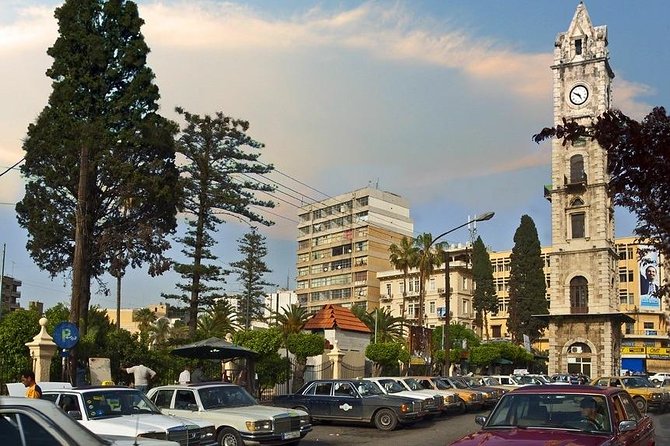
Tripoli changes the mood of the day. Byblos feels closely tied to the Phoenician past and seaside archaeology. Tripoli brings you into a dense old urban center shaped by Mamluk and Ottoman periods.
The city lies about 80 kilometers north-northeast of Beirut, at the mouth of the Abu Ali River. Its old quarter includes historic buildings, mosques, hammams, souks, and khans. Forty-five buildings are registered as historical sites, and twelve Mamluk and Ottoman mosques have survived.
The planned Tripoli visit lasts about three hours, but it includes many stops. That means you will see a lot from the outside and enter selected sites, rather than study every building in depth. I think that is a fair trade for covering so much ground in one day, but you should be prepared for a quick rhythm.
The souks are especially useful for understanding Tripoli as a working city. These were not built simply for sightseeing. The khans grouped related trades, while the covered market streets provided space for commerce and daily business.
Citadel of Tripoli and its changing past
The Citadel of Tripoli, also called Qal’at Sinjil or Saint Gilles, rises above the city. Its size is impressive: the fortress measures about 140 meters long and 70 meters wide.
The present structure reflects several periods. It includes an octagonal Fatimid construction later converted into a church by the Crusaders, Crusader additions from the 12th and 13th centuries, Mamluk work from the 14th century, and Ottoman changes from the 16th century.
The fortress was also heavily restored by Mustafa Barbar Agha, who governed Tripoli in the early 19th century. That makes the citadel useful for more than photographs. It shows how a strategic building can be altered by successive rulers, religions, and military needs.
The visit lasts about 30 minutes. Admission is not included, so ask your tour leader about the current entrance cost before you arrive. From the upper areas, the citadel gives you a broad view over Tripoli, making it one of the strongest viewpoint stops on the route.
Al Mansouri Great Mosque
The Great Mosque, or Al Mansouri Mosque, was begun in 1294 and finished in 1315. It was built over the remains of the 12th-century Crusader cathedral of St. Mary of the Tower.
The building’s courtyard is surrounded by a vaulted prayer hall. Look for the traces of the earlier church, including the northern entrance and the Lombard-style bell tower that was later turned into a minaret.
This is a good place to see how Tripoli’s buildings preserve several chapters at once. The mosque is not isolated from the city’s Crusader past. Its structure incorporates pieces of it, while inscriptions and foundation plaques offer clues about construction and daily life during the Mamluk period.
The scheduled visit is only 15 minutes. That is enough for a focused look, but modest clothing and respectful behavior remain important at any active religious site. The stop is included, with no separate admission charge listed.
Taynal Mosque and reused columns
Taynal Mosque dates from 1336 and was built by Saif Ed-Dine Taynâl on the site of a ruined Crusader church. Its adjoining domed mausoleum contains the founder’s tomb.
The mosque’s most distinctive feature is the reuse of earlier architectural elements. Two rows of granite columns with late Roman capitals sit in the first prayer hall. The entrance to the second prayer hall has an unusual decorative design associated with Mamluk Tripoli.
You get about 15 minutes here. That does not allow for a slow architectural study, but it gives you time to notice the columns, the layout, and the way older materials were incorporated into the later building. This is one of the stops where a good explanation from the tour leader makes a real difference.
Tripoli’s khans and old crafts
Khan Al-Khayyatin is part of the Tripoli souks. It is a long rectangular structure, about 40 by 80 meters, with a covered central courtyard and shops along both sides.
Its name means the tailors’ khan, and the trade still shapes the place. Tailors and related businesses use the space, along with shops selling needles, thread, and sewing machines. The visit is listed at only five minutes, so think of it as a quick look rather than a full market exploration.
The Soap Khan, or Khan As Sabon, was built in the early 17th century. It began as a military barracks for Ottoman troops and was placed in the center of the city so the pasha could control possible unrest. Its two-story arcaded corridors surround a fountain courtyard.
The stop is also about five minutes. The name points to Tripoli’s soap-making tradition, but the building itself has a military and civic story too. If you want to buy local products, this is a good moment to ask the tour leader where a genuine soap purchase fits into the day.
One especially practical tip comes from the food side of Tripoli. Al Hallab 1881 is praised for its sweets, and it may be worth asking if there is time for a stop or purchase. It is not listed as a formal stop, so do not count on a tasting being included.
Hammam Al Jadid and El Mina Port
Hammam Al Jadid, also known as Hammam El-Abed, is described as the only functioning hammam in Tripoli. It probably dates from the late 17th century and has the pierced domes typical of Mamluk and Ottoman public baths.
Inside, traditional cushions, a central fountain, and older fittings help you picture how a public bath once operated. The scheduled visit is five minutes, so you may see only the exterior or a very quick interior look, depending on access at the time.
The final stop is El Mina Port, the coastal town serving modern Tripoli. It occupies the location of the old Phoenician city of Tripoli and includes nine islands. Four islands have been designated natural reservations to support fish breeding and protect their habitat.
The 15-minute port visit adds a coastal finish to a day otherwise focused on ruins and old city streets. It also brings the route back to the sea, linking modern Tripoli with the maritime world represented earlier in Byblos.
Transport, timing, and what $65 buys you
The $65 price is easiest to justify for a small private group. You receive an air-conditioned vehicle, private transport, a tour leader, hotel pickup and drop-off in Beirut, and a local guide in Byblos. For a full day involving two cities, that removes several costs and planning jobs that can quickly add up.
The value is not just the vehicle. A driver who knows the route can connect Byblos and Tripoli in one day, while the tour leader keeps the schedule moving. The private setup also means only your group participates, which is useful if you want to ask questions or adjust the amount of time spent at a stop when possible.
There are two clear extra costs: lunch and admission to Byblos Castle and the Citadel of Tripoli. The other listed stops have no admission charge. Since the day runs from a 9:00 am start for about eight hours, plan to eat efficiently so lunch does not remove too much time from the sites.
The schedule may feel compressed. Several Tripoli stops last five or 15 minutes, and both cities contain enough material for a full day on their own. Still, the route gives you a broad, well-organized introduction, with easy transfers and no need to return to Beirut between destinations.
Who should book this private tour
I would choose this tour if you have limited time in Lebanon and want to see northern cities without handling the transport yourself. It fits couples, families, and small groups who value a private vehicle and a tour leader over a slow, highly specialized visit.
It also suits anyone interested in layers of history. In one day, you move from Phoenician trade and writing to Crusader fortifications, Mamluk mosques, Ottoman military planning, traditional markets, public baths, and soap production.
I would hesitate if your priority is a relaxed day. Byblos Castle deserves more than a quick look for serious archaeology fans, and Tripoli’s souks could easily absorb several hours. You may prefer separate day trips if you want long meals, extended shopping, or detailed visits inside each religious building.
The experience has received a five-star rating from three published reviews, with particular praise for the castles, easy transfers, views, and the guide’s explanations of Lebanese history. One account also singled out the driver and tour guide for being helpful and experienced. Those strengths match the design of the day: organized transport, a wide range of sights, and enough historical help to connect them.
Should you book it?
Book this trip if you want maximum variety from a single Beirut day and accept a brisk schedule. At $65 per person, the private vehicle, hotel transfers, tour leader, and Byblos guide make it a sensible choice for a small group.
Before booking, ask yourself one question: do you want to sample two northern cities, or study one in depth? If the answer is sample both, this tour gives you an efficient route with strong cultural range. If you want unhurried archaeology, long market walks, or a full hammam and mosque experience, arrange more time.
Free cancellation is available if you cancel at least 24 hours before the 9:00 am start. Changes or cancellations inside that window are not accepted for a refund.
FAQ
How long does the tour last?
The tour lasts approximately eight hours, beginning at 9:00 am.
Is hotel pickup included?
Yes. Pickup and drop-off at hotels in Beirut are included.
Is the tour private?
Yes. Only your group participates in this private activity.
Is lunch included?
No. Lunch is not included in the tour price.
Are admission fees included?
Admission is not included for Byblos Castle or the Citadel of Tripoli. The other listed stops have no admission charge.
What is the cancellation policy?
You can cancel at least 24 hours before the experience start time for a full refund. Cancellations or changes made less than 24 hours before the start time are not accepted for a refund.
Just added around Beirut
- Private Full-Day Tour to Jeita Grotto, Harissa and Saint Charbel from Beirut★ 5.0 · 3 reviews
- Beirut to Jeita Grotto and Byblos: Daily Tours with Lunch★ 5.0 · 3 reviews
- PRIVATE city tour of Old Sidon & Historic Tyre★ 5.0 · 3 reviews
- Journey Through Time: Half-Day Private Tour to Baalbek★ 5.0 · 3 reviews
- Small-Group Tour to Sidon, Tyre and Maghdouche with Lunch and Tickets★ 4.5 · 3 reviews
- Beirut to Sidon, Tyre and Maghdouché: Daily Tours with Lunch★ 5.0 · 3 reviews
- Hike Chouwen★ 5.0 · 3 reviews
- PRIVATE Tour to Cedars of God, Besharre & Qozhaya Valley★ 5.0 · 3 reviews
Byblos Tours, compared.
Guided Small-Group Tour to Jeita, Harissa, Byblos with Lunch
Read our review →
Jeita Grotto,Harissa&Byblos Full-Day PRIVATE-CAR Trip from Beirut
Read our review →
Byblos, Jeita Grotto & Harissa Day Trip -With Lunch (4G on Board)
Read our review →
Semi-Private Tour to Jeita Grotto, Harissa & Byblos with Lunch
Read our review →
Small Group Tour to Jeita Grotto, Harisa & Byblos with Hotel pickup
Read our review →
Private Guided Tour to Jeita Grotto through Harissa and Byblos
Read our review →
Browse the lists this tour appears in