
Review · TRIPOLI & BATROUN TOURS
Guided Small-Group Tour to Tripoli and Batroun with Lunch
Tripoli rewards the curious visitor. This $65 day trip combines Tripoli’s Mamluk souks and mosques with Batroun’s ancient sea wall, while hotel pickup removes the strain of driving in Lebanon. I like the small maximum of 15 people and the included Lebanese lunch, which make the day feel practical rather than rushed from one sight to the next.
I also like the range of the route. You get fortifications, working markets, hammams, a soap-making tradition, an unfinished Oscar Niemeyer exhibition complex, and a quiet coastal stop in Batroun. The trade-off is time: eight hours is a lot for one day, and Tripoli receives most of the attention, leaving only about 50 minutes for Batroun.
In This Review
- Key points to know before booking
- Why this northern Lebanon day trip works
- Tripoli’s old city, where the day finds its character
- Citadel Saint Gilles and Tripoli’s changing rulers
- Two mosques with Crusader foundations
- Tripoli’s souks and the working khans
- Hammams that reveal everyday life
- A modern architectural surprise at the fairgrounds
- Hallab sweets and Al-Mina port
- Lunch and the value of the $65 price
- Batroun and the Phoenician sea wall
- The guide, group size, and overall pace
- Who should book this experience?
- Should you book the Tripoli and Batroun tour?
- FAQ
- How long does the tour last?
- What time does the tour start?
- Where does the tour begin?
- Is hotel drop-off included?
- What is the maximum group size?
- Is lunch included?
- Is transportation provided?
- Is admission to the Citadel included?
- How much time is spent in Tripoli?
- How much time is spent in Batroun?
- Can I cancel for a full refund?
Key points to know before booking
- Tripoli is the main event: Plan on roughly three hours among souks, khans, mosques, hammams, sweets shops, and old city streets.
- The group is capped at 15: That is small enough for better contact with the guide than a large coach tour.
- Hotel pickup and drop-off are included: You avoid renting a car and dealing with Lebanon’s demanding roads yourself.
- Lunch is part of the price: The meal gives you a proper taste of Lebanese food without adding another decision to the day.
- The Citadel costs extra: Admission to Citadel Saint Gilles is not included, unlike the other listed stops.
- Guide Albert receives especially warm praise: He is noted for friendly conversation, clear explanations, and helpful discussion of present-day Lebanon.
Why this northern Lebanon day trip works
Lebanon is compact on a map, but getting around can take patience. This outing links Beirut with two northern cities in a single day, using an air-conditioned vehicle and a guide who can handle the route and explain what you are seeing.
That matters most in Tripoli. The old city is not simply a row of polished monuments. Its historic buildings are mixed into working souks, small trade workshops, religious sites, and older public baths. A guide helps connect those pieces, especially when a former khan looks at first like just another stone courtyard.
The maximum group size of 15 is a useful middle ground. You still get the social ease of a group, but you are less likely to lose every explanation in a crowd. If you want a private, slow photographic tour, this is not that. If you want a structured day without sitting on a large bus, it is a sensible choice.
The departure time is 8:30 a.m., and the total outing lasts about eight hours. That gives you a full day away from Beirut, with little need to plan transport, lunch, or the order of sights yourself.
More Tripoli and Batroun tours:
- Aaqoura Lakes – Baatara Waterfall – Batroun
★ 4.5 · 55 reviews - PRIVATE city Tour of authentic Tripoli and vibrant Batroun
★ 5.0 · 51 reviews - Tripoli City Lebanon Trip
★ 5.0 · 7 reviews
Tripoli’s old city, where the day finds its character
Tripoli is one of Lebanon’s oldest cities, with roots reaching back to the Phoenician era. Its surviving historic core includes dozens of protected buildings, along with mosques, khans, hammams, and market streets shaped during the Mamluk and Ottoman periods.
The city is best understood on foot. You move through narrow passages where food, metalwork, tailoring, spices, and other trades occupy old stone buildings. The route gives you more than a quick photo stop, with about three hours devoted to Tripoli itself.
That is the strongest part of the day for anyone who enjoys places that still function as communities. You are not only looking at a preserved facade. You may see the old commercial layout continuing to serve local trades, especially in the khans and souks.
The pace, however, is active. Several stops last only five or 20 minutes. You should expect a guided overview rather than a long, quiet examination of every building.
Citadel Saint Gilles and Tripoli’s changing rulers
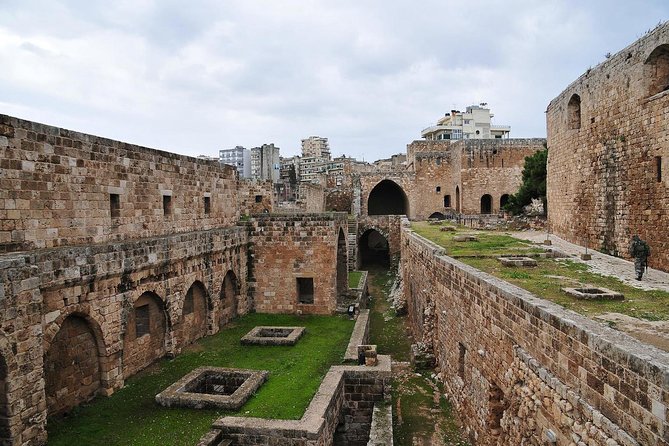
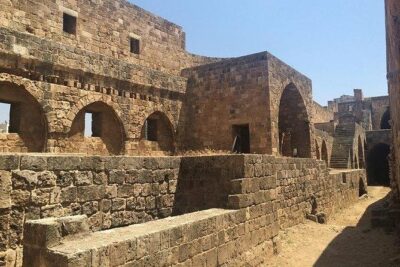
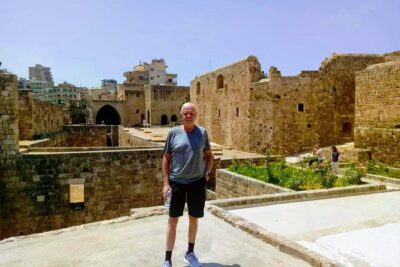
The Citadel of Tripoli, also called Qal’at Sinjil, rises above the city and gives the route a clear visual anchor. The fortress is about 140 meters long and 70 meters wide, with layers from Fatimid, Crusader, Mamluk, and Ottoman periods.
Its story is unusually easy to read in the architecture. An octagonal Fatimid structure was converted into a church by the Crusaders. Later rulers altered the complex, and much of what you see today reflects restoration carried out by Mustafa Barbar Agha, who governed Tripoli in the early 19th century.
The scheduled visit lasts around 30 minutes. That is enough to get a feel for the site and its commanding position, but not enough for a slow architectural study. Admission is not included, so carry a little extra money for the entrance fee.
The fortress is a good early stop because it helps you see Tripoli from above before entering the denser old city. It also gives the guide a natural place to explain how control of the port and inland routes changed over time.
Two mosques with Crusader foundations
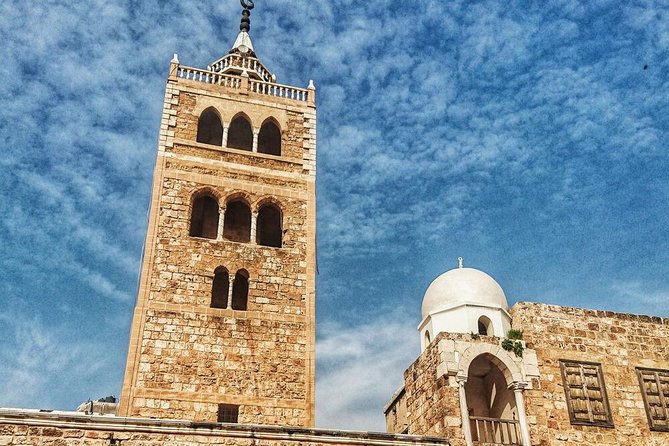
Al Mansouri Great Mosque was begun in 1294 and completed in 1315 on the remains of the Crusader cathedral of St. Mary of the Tower. Its courtyard and vaulted prayer hall reveal the scale of the Mamluk religious complex.
Look for the surviving Western elements. The northern entrance and a former Lombard-style bell tower were incorporated into the mosque, with the tower later serving as a minaret. Inscriptions and foundation plaques add another layer, recording building decisions and details of everyday life in the Mamluk period.
The visit lasts about 20 minutes. Dress and behave respectfully at religious sites, and follow the guide’s instructions about where you may enter or stand.
The 20-minute stop at Taynal Mosque offers a different architectural lesson. Built in 1336, it reused parts of a ruined Crusader church, including granite columns with late Roman capitals. Its two prayer halls and decorated entrance show how Tripoli’s builders adapted older materials rather than starting from a blank site.
These stops are valuable because they keep the past from being placed into separate boxes. Roman, Crusader, Mamluk, and Ottoman influences overlap in the same buildings.
More Tours with Lunch in Beirut:
- Guided Small-Group Tour to Baalbek, Anjar and Ksara with Lunch
★ 5.0 · 511 reviews - Guided Small-Group Tour to Jeita, Harissa, Byblos with Lunch
★ 5.0 · 361 reviews - Anjar, Baalbek & Ksara Day Trip – With Lunch (4G on Board)
★ 4.5 · 181 reviews - Byblos, Jeita Grotto & Harissa Day Trip -With Lunch (4G on Board)
★ 4.5 · 145 reviews
Tripoli’s souks and the working khans
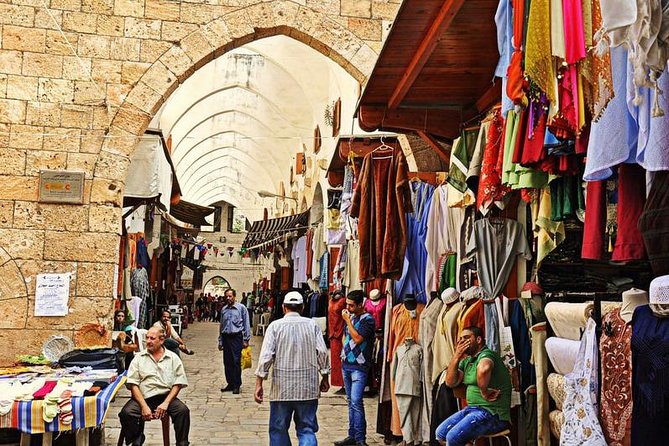
The souks are where the tour feels most immediate. Tripoli has nine named markets, including Attareen, Bazerkan, Haddadin, Haraj, Kameh, Koundarjiyeh, Nahhasin, Samak, and Sayyaghin, along with a food market selling produce, meat, fish, and other goods.
You get about an hour among the market lanes. Expect a maze of passages, small alleys, smells from food stalls, and the sound of ordinary commerce. This is not a staged market built for sightseeing. It is part of the city’s daily rhythm, so you should stay close to the group and watch your footing.
Khan al-Khayyatin is a particularly useful stop for understanding the old commercial system. The rectangular building has a covered central courtyard and shops around its edges. Tailors and related trades, including needles, thread, and sewing machines, are still connected with the khan.
The short visit to Tripoli’s soap factory adds another local craft. Khan As Sabon, or the Soap Khan, was built in the early 17th century as an Ottoman military barracks before becoming linked with soap production. Its two-story arcades surround a fountain courtyard.
The stop is listed at only five minutes, so do not expect a full hands-on workshop. Its value is in seeing how a historic building and a traditional product fit into the city’s story.
Hammams that reveal everyday life
Tripoli’s public baths are easy to overlook if you focus only on forts and mosques. This route includes several, and together they show how urban life once worked beyond grand religious architecture.
Hammam El-Abed is described as the only functioning hammam in Tripoli. Probably built near the end of the 17th century, it has pierced domes associated with Mamluk and Ottoman baths, plus cushions, a fountain, and traditional fittings.
Hammam al-Jadid, built around 1740, is the largest of the group. It has not operated since the 1970s, but its worn interior still suggests the role public baths once played in city life.
Hammam Izzeddine was donated to Tripoli by its Mamluk governor, Izz ed-Dine Aybak, who died in 1298 and was buried in a neighboring mausoleum. The bath was used until recently and is now under restoration.
Each hammam receives only about five minutes. You will get a quick introduction, not a detailed inspection. Still, including these buildings makes the day more useful than a standard monument circuit because it shows where people washed, met, rested, and maintained social routines.
A modern architectural surprise at the fairgrounds
The Rashid Karami International Fair is one of the day’s most unexpected stops. The complex was designed in 1963 by Brazilian architect Oscar Niemeyer, one of the major architects of the 20th century.
Its 15 structures form one of the world’s largest exhibition-center projects, but construction ended when the Lebanese Civil War interrupted the project in 1975. The site remains unfinished.
Only about five minutes are allotted here, so treat it as a visual pause rather than a full architectural tour. The contrast is what makes it worthwhile: after old mosques, khans, and market lanes, you see a bold modern project left incomplete by political upheaval.
Hallab sweets and Al-Mina port
Hallab 1881 offers a 15-minute look at one of Tripoli’s best-known Lebanese sweet makers. The business began in Tripoli in 1881, and its Kasr El Helou location is now a recognized city landmark.
This is a good place to connect food with place. Lebanese sweets are not simply a snack added to the day. In Tripoli, they are part of the city’s identity and a reason people come from elsewhere in Lebanon and beyond.
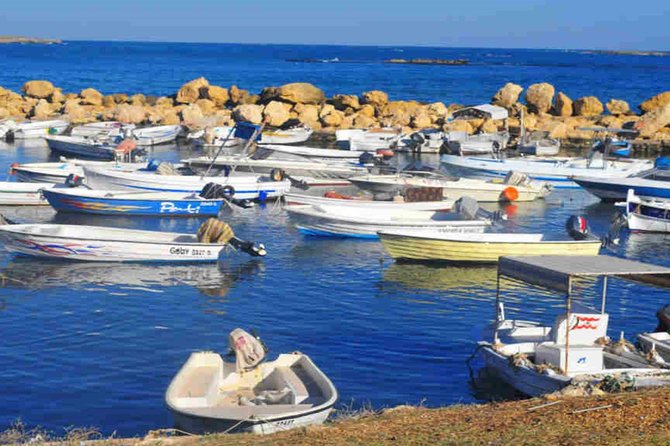
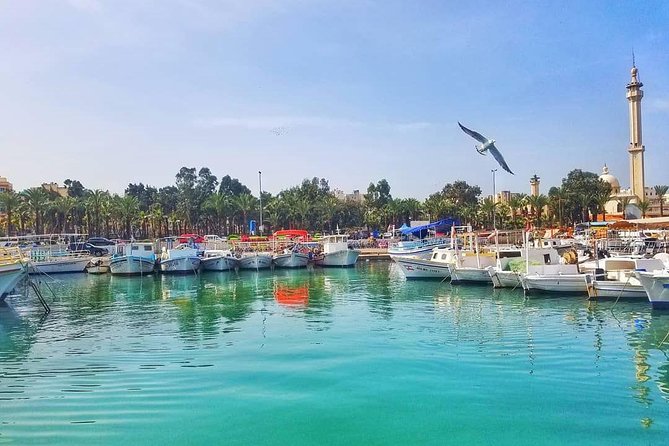
The route then reaches El Mina, the coastal town and harbor area of modern Tripoli. El Mina occupies the location of the old Phoenician city and includes nine islands, four of which have been designated natural reservations to help protect fish and local habitats.
The stop lasts about 15 minutes. It will not give you a full coastal exploration, but it widens the picture of Tripoli from old inland markets to its maritime roots.
Lunch and the value of the $65 price
The included lunch is one of the tour’s strongest practical features. You eat at a local Lebanese restaurant, with an authentic meal included rather than having to find a place during a tightly timed day.
At $65 per person, the value comes from the package, not just the sightseeing. You receive hotel pickup and drop-off in Beirut, an air-conditioned vehicle, a guide, transportation between cities, and lunch. A self-drive plan would require you to arrange the car, fuel, parking, navigation, and meal yourself, while also handling roads that may feel stressful if you do not know Lebanon well.
The price is especially fair for solo visitors or anyone who would otherwise hire a private driver. A couple who likes complete control over timing might prefer a private arrangement, but for a shared group outing, the inclusions make the cost easy to justify.
The main limitation is that the schedule leaves little room for an extended meal or spontaneous wandering. You are paying for coverage of two cities in one day, so the tour favors variety over lingering.
Batroun and the Phoenician sea wall
Batroun receives less time than Tripoli, with roughly 30 minutes in the city and another 20 minutes at the Phoenician Wall. That is enough to see the character of the place, but not enough to treat Batroun as a full standalone visit.
Batroun is one of the world’s oldest cities, with Phoenician roots stretching back more than three millennia. It is known for ancient fortifications and churches, citrus fruit, beaches, and modern nightlife, giving it a different mood from Tripoli’s dense old markets.
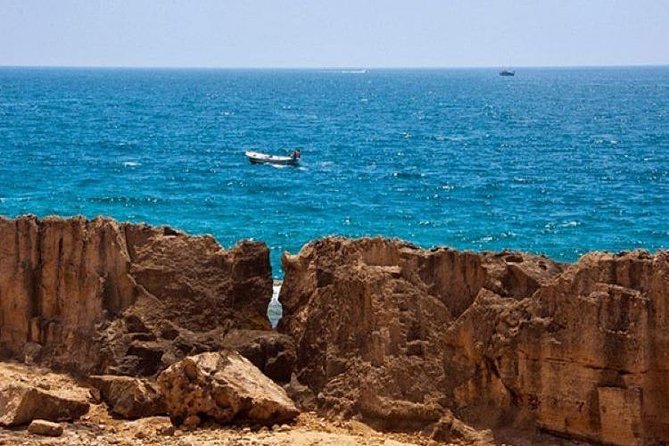
The sea wall is the key stop. Originally formed by petrified sand dunes, it was gradually reinforced by the Phoenicians. The wall reached its present shape in the first century BC and helped protect the city from storms and attacks. During Roman times, parts were used as a quarry.
It runs for about 225 meters and is between one and 1.5 meters thick. Some sections have crumbled, but the remaining stones still meet the sea with a simple, impressive force.
I would treat Batroun as a scenic closing chapter rather than an equal half of the tour. If you want churches, beaches, nightlife, or a longer coastal walk, plan a separate visit. If you want one memorable seaside feature after Tripoli’s inland streets, the stop works well.
The guide, group size, and overall pace
The guide can make or break a day with this many short stops. Guide Albert is particularly praised for welcoming conversation and for explaining both the sights and current situations in Lebanon and the wider world.
That kind of conversation is useful here because the route crosses several eras and deals with places shaped by war, restoration, changing governments, and living religious traditions. You get more than dates if the guide does the job well.
The group limit of 15 supports that style. You can ask questions without stopping a huge coachload, and the guide has a better chance of keeping everyone together in the souks.
Still, this is not a slow walking tour. The itinerary contains many five-minute visits, plus longer stops at the Citadel, souks, mosques, and sea wall. Wear comfortable shoes, keep your phone charged for the mobile ticket, and be ready for a full day of moving between places.
Pickup is offered directly from your Beirut hotel, which saves time at the start and end. The tour begins at 8:30 a.m., and confirmation is provided when you book.
Who should book this experience?
I would choose this tour if you are based in Beirut and want to see northern Lebanon without renting a car. It suits first-time visitors who want history, food, architecture, and local streets in one organized day.
It also works well for solo visitors, couples, and small groups who value a guide but do not want a large coach. The lunch and direct transport simplify the day, while the 15-person limit leaves some room for questions.
You may want another plan if your priority is spending a whole day in Batroun, lingering over photography, or visiting every site at length. The schedule is broad and efficient, not leisurely.
The published feedback is very strong, with a 5.0 rating from 16 reviews and 100 percent recommendation. One useful detail is that a guest had already taken a second tour with Lebanon Tours & Travels and singled out Albert’s friendly, reassuring approach. Another guest praised the Tripoli souk and the chance to enter a mosque and see its madrasa.
Free cancellation is available if you cancel at least 24 hours before the 8:30 a.m. start. Changes or cancellations inside that window are not accepted for a refund.
Should you book the Tripoli and Batroun tour?
Book it if you want an efficient northern Lebanon day with door-to-door transport, lunch, and a small group. Tripoli is the real prize, especially the souks, khans, mosques, and hammams, while Batroun adds a pleasant coastal finish and the striking Phoenician Wall.
Do not book it expecting a relaxed two-city holiday. The itinerary is packed, several stops are brief, and Batroun gets limited time. For $65, though, the mix of transport, food, guidance, and access to places that are awkward to reach independently makes this a strong-value introduction to northern Lebanon.
FAQ
How long does the tour last?
The tour lasts approximately eight hours.
What time does the tour start?
The scheduled start time is 8:30 a.m.
Where does the tour begin?
Hotel pickup is offered directly from your Beirut hotel.
Is hotel drop-off included?
Yes. The experience includes pickup and drop-off at your Beirut hotel.
What is the maximum group size?
The group is limited to a maximum of 15 participants.
Is lunch included?
Yes. An authentic Lebanese restaurant lunch is included in the price.
Is transportation provided?
Yes. Transportation is provided in an air-conditioned vehicle.
Is admission to the Citadel included?
No. Admission to Citadel Saint Gilles is not included.
How much time is spent in Tripoli?
The main Tripoli visit is scheduled for about three hours, followed by additional short stops around the city.
How much time is spent in Batroun?
The itinerary gives about 30 minutes in Batroun and 20 minutes at the Phoenician Wall.
Can I cancel for a full refund?
Yes, if you cancel at least 24 hours before the experience begins. Cancellations made less than 24 hours before the start time are not refunded.
Just added around Beirut
- Private Full-Day Tour to Jeita Grotto, Harissa and Saint Charbel from Beirut★ 5.0 · 3 reviews
- Beirut to Jeita Grotto and Byblos: Daily Tours with Lunch★ 5.0 · 3 reviews
- PRIVATE city tour of Old Sidon & Historic Tyre★ 5.0 · 3 reviews
- Journey Through Time: Half-Day Private Tour to Baalbek★ 5.0 · 3 reviews
- Small-Group Tour to Sidon, Tyre and Maghdouche with Lunch and Tickets★ 4.5 · 3 reviews
- Beirut to Sidon, Tyre and Maghdouché: Daily Tours with Lunch★ 5.0 · 3 reviews
- Hike Chouwen★ 5.0 · 3 reviews
- Private Full-Day Tour to Byblos and Tripoli from Beirut★ 5.0 · 3 reviews
Tripoli & Batroun Tours, compared.

PRIVATE city Tour of authentic Tripoli and vibrant Batroun
Read our review →
Full day Tripoli private great guide/all-in + rustic meal
Read our review →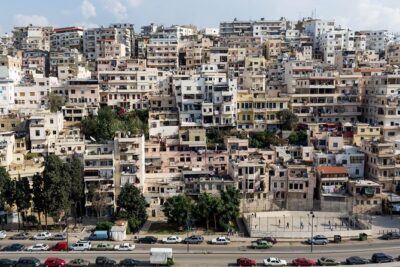
Private Full-Day Tour to Byblos and Tripoli from Beirut
Read our review →Browse the lists this tour appears in