
Review · BAALBEK & ANJAR DAY TRIPS
Anjar baalback & Ksara tour
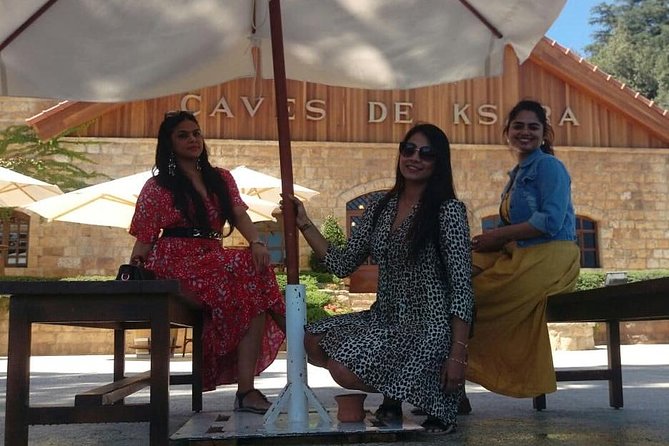
Ancient temples, Arab ruins, and Lebanese wine fill one long day. From Beirut, this private tour links three very different places in the Bekaa Valley: Anjar, the only Umayyad archaeological site in Lebanon; Baalbek, home to enormous Roman temples; and Chateau Ksara, Lebanon’s oldest winery. The combination gives you more than a single ancient site. You see how several civilizations shaped the country, then finish with a local wine tasting.
I like the private format for up to three people, since you can travel with your own group and speak directly with the guide. I also like the unusual mix of archaeology and food culture, especially the chance to visit Ksara’s old caves after seeing Baalbek’s stone temples. The main drawback is the long day. With roughly nine hours on the road and at the sites, this is not a gentle half-day outing.
In This Review
- Key points at a glance
- Why this Bekaa Valley day makes sense
- Leaving Beirut at 8:00 am
- Anjar, the Umayyad city of the Bekaa
- Baalbek and the scale of Heliopolis
- Chateau Ksara, caves and Lebanese wine
- What $130 means for a private group
- The guide can shape the whole day
- Timing, comfort, and practical planning
- Who will enjoy this tour most
- Should you book Anjar, Baalbek, and Ksara?
- FAQ
- What is included in the tour price?
- How long does the tour last?
- Is this a private tour?
- What places does the tour visit?
- Is wine tasting included?
- Can I cancel for a full refund?
- What happens if bad weather cancels the tour?
Key points at a glance
- Three very different stops: See Umayyad city planning at Anjar, Roman architecture at Baalbek, and Lebanese winemaking at Chateau Ksara.
- Private transportation for up to three people: The $130 group price can be good value when shared by two or three people.
- Baalbek gets the most time: The advertised visit lasts about two hours, giving you room to study the huge temple remains.
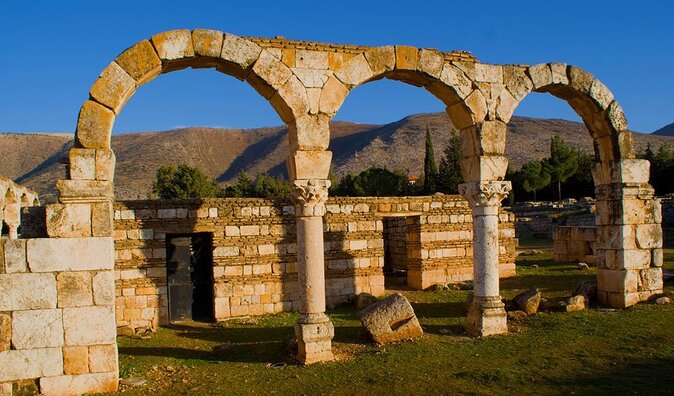
- Anjar offers a rare Arab-era perspective: It is described as Lebanon’s only Umayyad site, founded by Caliph Walid I in the early eighth century.
- Ksara tasting costs extra: The winery visit includes its caves and wine samples, but admission is not included in the tour price.
- Guide Kifah earns strong praise: His friendly manner, historical explanations, practical help, photography, and occasional small gestures such as drinks or a Lebanese dish are part of the appeal.
Why this Bekaa Valley day makes sense
Lebanon packs several major periods of history into a small country, but the sites are not all clustered around Beirut. Anjar, Baalbek, and Ksara sit in the Bekaa Valley, so visiting them independently can mean arranging transport, finding the right roads, and managing three separate stops.
This tour solves that problem with an early start at 8:00 am and pickup service. You spend the day moving east from Beirut, then return after a full schedule. The stated duration is about nine hours, while the itinerary describes the sightseeing day as roughly eight hours. Either way, plan on most of your day being committed.
The appeal is the contrast. Anjar is tied to the Umayyad Caliphate and the early eighth century. Baalbek takes you much farther back through the ancient Roman world, with its former identity as Heliopolis. Ksara shifts the mood again, from carved stone to wine caves and tasting glasses.
That variety makes the tour particularly useful if you have limited time in Lebanon. Instead of choosing between Roman ruins and a winery, you get both, along with a less familiar Arab archaeological site.
More Baalbek and Anjar day trips:
- Guided Small-Group Tour to Baalbek, Anjar and Ksara with Lunch
★ 5.0 · 511 reviews - Anjar, Baalbek & Ksara Day Trip – With Lunch (4G on Board)
★ 4.5 · 181 reviews - Baalbek – Anjar – Ksara Trip From Beirut
★ 4.5 · 80 reviews
Leaving Beirut at 8:00 am
The fixed start time matters because the Bekaa Valley is not a quick hop from central Beirut. Pickup is offered, and the meeting information identifies Lebanon as the ticket redemption point, so you should confirm the exact pickup address and arrangements when booking.
The tour is private, meaning only your group participates. The maximum group size is three people, which creates a more personal setup than a large coach excursion. You can ask questions as the day develops, request clarification at a monument, and keep the pace within the limits of the planned schedule.
Guide Kifah is named repeatedly in the supplied feedback and receives especially warm praise for his friendly, helpful approach. His strengths appear to go beyond facts about ancient sites. He has been described as trustworthy, a good photographer, and willing to help with practical needs. One account also describes him bringing free drinks and a Lebanese dish during the day.
Those touches are not guaranteed features, so I would not book solely for them. Still, they suggest the kind of personal service you may receive from a guide who treats the day as more than a simple transfer between attractions.
Anjar, the Umayyad city of the Bekaa
Anjar is the first historical stop and usually receives about one hour. That may sound brief, but the site is different enough from Baalbek that it earns its place on the route.
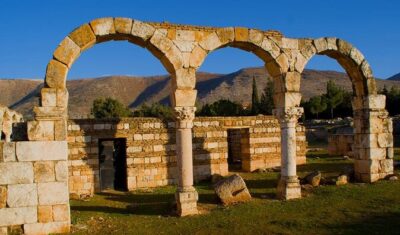
The city was founded by Caliph Walid I at the beginning of the eighth century. It is described as the only Umayyad site in Lebanon, giving you a direct look at a period that is often overshadowed by the country’s Phoenician and Roman remains.
You can expect the guide to explain the city within the wider sequence of Lebanese history. The tour description places the Umayyads alongside Phoenicians, Romans, Turks, and Crusaders, so Anjar helps correct the idea that Lebanon’s ancient story is only about classical ruins.
Anjar’s value is partly visual and partly historical. Rather than focusing on one giant temple, the site represents a planned settlement from the early Islamic period. The remains help you picture how power and urban life shifted after the Roman era.
The one-hour stop also sets a practical limit. You will probably have time for an introduction, a walk through the main remains, photographs, and questions, but not an unhurried archaeological study. If Anjar is your main interest, tell the guide early. If your priority is seeing the most famous monument, the scheduled pace should work well.
Admission is listed as free for this stop. Even so, bring water and wear shoes suited to walking over old stone and uneven ground. Those are sensible precautions for any full day among archaeological remains.
Baalbek and the scale of Heliopolis
Baalbek is the centerpiece of the day, with about two hours allocated to the visit. The site was known to the Romans as Heliopolis, and its preserved temples are famous for their size and ambitious architecture.
This is the place where scale does much of the talking. Massive columns, broad stone platforms, and large temple remains give the ruins a physical impact that is hard to get from photographs. You do not need to be an ancient-history expert to appreciate the effort involved in building on this scale.
A good guide adds the missing structure. Without context, a large ruin can become a collection of impressive stones. Kifah is praised for explaining Lebanese history clearly, which should help connect the buildings to the civilizations that used and reshaped this region.
Two hours is a reasonable amount of time for a first visit. It lets you walk through the principal areas without turning the stop into an all-day archaeological project. You should still expect to make choices. Photography, close inspection of architectural details, and listening to a full explanation all take time.
Baalbek can also be the most tiring stop because the site is broad and the day is already underway. Pace yourself rather than rushing through the first half. Keep some energy for the winery, especially if you want to pay attention during the tasting instead of treating it as a quick final stop.
The tour description identifies admission as free for Baalbek. Since ticket arrangements can change, confirm current entry details before departure, but the stated terms do not add a separate admission charge for this stop.
More Wine Tours in Beirut:
- Guided Private Full Day Tour to Baalbek, Anjar and Chateau Ksara
★ 5.0 · 60 reviews - Lebanon tour Baalbek ruins & Ksara w/pick-up, lunch,guide+entries
★ 5.0 · 35 reviews - Baalbek Temples & Ksara Caves w/pick-up,guide, entries+lunch
★ 4.9 · 34 reviews - Small Group Tours to Baalbek, Anjar & Chateau Ksara with lunch and Tickets
★ 5.0 · 29 reviews
Chateau Ksara, caves and Lebanese wine
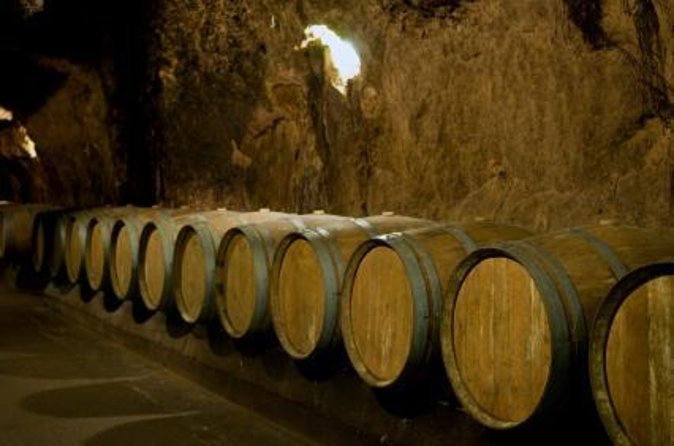
The final stop lasts about 45 minutes and changes the tone completely. Chateau Ksara is presented as the oldest winery in Lebanon. The visit includes the winery’s caves and samples of Lebanese wine, while admission is specifically not included in the $130 price.
That last point matters. The headline price covers the private group tour, but you should budget separately for the winery entry or tasting. The available information does not state the exact additional cost, so ask about it before the day begins.
Forty-five minutes is enough for a compact introduction to the winery and a tasting, but it is not a long wine-country visit. You are not signing up for a leisurely afternoon among vineyards. This is a focused stop added to a day already built around history.
The caves give the visit a sense of place. After the open stone remains at Anjar and Baalbek, you move into a more enclosed setting connected to storage and winemaking. The tasting also gives you a chance to sample something made in Lebanon rather than simply looking at ancient artifacts.
If you do not drink wine, the winery may be less important to you. The historical stops still form the core of the day, but Ksara is not just a filler stop. It provides a modern cultural connection to Lebanon and a welcome change after hours of ruins and driving.
What $130 means for a private group
The price is $130 per group of up to three people, not $130 per person. For three people, that works out to about $43.33 each before the separate winery admission. For two people, the cost is $65 each. A solo participant carries the full group price, so the value changes sharply with group size.
For a private full-day trip from Beirut, the pricing can make sense if you are traveling with two companions. You get pickup service, a dedicated vehicle and guide, and a route that would be more complicated to arrange on your own. The strongest value comes from the combination of transport and guiding, not simply from the entrance tickets.
The price is less attractive for one person who does not need a private experience. Since this is not a shared group tour, you are paying for exclusivity and convenience. That may be worthwhile if you value flexibility, personal attention, and avoiding a large bus.
Remember to allow for the Ksara admission or tasting charge. The listed ticket details say admission is free at Baalbek and Anjar, while Chateau Ksara is not included. Food is not listed as part of the price either, although Kifah has sometimes provided a Lebanese dish and drinks as a personal courtesy. Treat that as a pleasant possibility, not a promised inclusion.
The guide can shape the whole day
The clearest pattern in the available feedback is praise for Kifah’s manner. He is described as friendly, helpful, trustworthy, and good at explaining Lebanon’s history. One family also credited him with finding practical ways to keep a trip moving during the difficult conditions of the October 2019 protests.
That older example should not be treated as a guarantee about current conditions. It does show the value of having a local guide who can respond to changing circumstances rather than simply following a printed schedule.
Another useful detail is Kifah’s reputation as a photographer. If you care about having good group photos, you can ask him to help. Again, this is a personal strength associated with the guide, not a formal service listed as part of the tour.
The best guide for this route needs to do more than name dates and rulers. Anjar and Baalbek represent different worlds, and the day works when those differences are made clear. The praise for Kifah’s explanations suggests that history is one of the tour’s stronger features.
You should still speak up about your interests. Tell him if you want more time for photography, more historical detail, or a faster visit at one stop. A private tour gives you a better chance of making those preferences understood.
Timing, comfort, and practical planning
Nine hours is a serious commitment. The day includes pickup, travel from Beirut, three stops, and the return journey. You will spend a fair amount of time in the vehicle, so this suits you if you prefer seeing several major places in one day rather than staying close to the capital.
The itinerary lists one hour at Anjar, two hours at Baalbek, and 45 minutes at Ksara. The remaining time is used for travel and transitions. That breakdown helps set expectations: this is a highlights tour, not a slow archaeological study.
Wear comfortable shoes and bring water. The information says most people can participate and notes access to public transportation nearby, but it does not provide detailed mobility information for every site. If you have a mobility concern, ask for site-specific guidance before booking.
The tour requires good weather. If poor weather causes cancellation, you are offered another date or a full refund. You can cancel for a full refund if you do so at least 24 hours before the start time. Cancellations or changes inside that 24-hour window are not accepted for a refund.
Because the day crosses several types of terrain and attractions, practical clothing matters more than dressing up. You will be visiting old ruins, walking outdoors, and finishing at a winery. Comfortable clothes and shoes will serve you better than formal travel wear.
Who will enjoy this tour most
I would recommend this tour most strongly to couples, families, or small groups of friends who want a private day outside Beirut. The group price becomes much better when shared by three people, and the guide’s personal attention is more useful when you can ask questions as you go.
History fans will appreciate the range. You get an early Islamic site at Anjar, Roman monuments at Baalbek, and a modern Lebanese wine tradition at Ksara. That spread is more revealing than visiting three sites from the same period.
It also suits first-time visitors who want a broad introduction to the Bekaa Valley without building the route themselves. You can see the major highlights in one day and leave with a clearer sense of Lebanon’s changing cultures.
I would hesitate if you dislike long day trips, prefer extensive free time, or have no interest in either ruins or wine. The schedule is full, and the short stop at Ksara may feel rushed if wine is your main reason for going. Likewise, serious archaeology fans may want more than one hour at Anjar and two hours at Baalbek.
Should you book Anjar, Baalbek, and Ksara?
Book it if you want a private, history-focused day from Beirut and you are traveling with two or three people. The route gives you three distinct experiences, the guide appears to be a major strength, and the group pricing is fair for a full day of transport and personal service.
Before paying, confirm the pickup point, the current winery admission charge, and exactly how the day’s timing will be handled. If you are comfortable with a long schedule and want more than the usual Roman-ruins stop, this is a smart way to see the Bekaa Valley.
If you are traveling alone, compare the $130 private price with other options. For a small group, though, the combination of Anjar’s rare Umayyad setting, Baalbek’s enormous temples, and Ksara’s wine caves makes this a well-rounded Lebanese day out.
FAQ
What is included in the tour price?
The experience costs $130 per group of up to three people and includes a private tour with pickup offered. Admission at Anjar and Baalbek is listed as free, while Chateau Ksara admission is not included.
How long does the tour last?
The tour lasts approximately nine hours. It starts at 8:00 am, and the sightseeing schedule lists about one hour at Anjar, two hours at Baalbek, and 45 minutes at Chateau Ksara, with the rest of the time used for travel and transitions.
Is this a private tour?
Yes. Only your group participates, and the maximum group size is three people.
What places does the tour visit?
The route visits Anjar, Baalbek, and Chateau Ksara. Anjar is an Umayyad archaeological site, Baalbek is the Roman Heliopolis site, and Chateau Ksara is a winery with caves and wine samples.
Is wine tasting included?
Wine samples are part of the Chateau Ksara visit, but admission is not included in the tour price. The exact additional charge is not provided.
Can I cancel for a full refund?
Yes, if you cancel at least 24 hours before the experience’s start time. Cancellations or changes made less than 24 hours before the start time are not accepted for a refund.
What happens if bad weather cancels the tour?
The experience requires good weather. If it is canceled because of poor weather, you will be offered a different date or a full refund.
Just added around Beirut
- Private Full-Day Tour to Jeita Grotto, Harissa and Saint Charbel from Beirut★ 5.0 · 3 reviews
- Beirut to Jeita Grotto and Byblos: Daily Tours with Lunch★ 5.0 · 3 reviews
- PRIVATE city tour of Old Sidon & Historic Tyre★ 5.0 · 3 reviews
- Journey Through Time: Half-Day Private Tour to Baalbek★ 5.0 · 3 reviews
- Small-Group Tour to Sidon, Tyre and Maghdouche with Lunch and Tickets★ 4.5 · 3 reviews
- Hike Chouwen★ 5.0 · 3 reviews
- Beirut to Sidon, Tyre and Maghdouché: Daily Tours with Lunch★ 5.0 · 3 reviews
- Private Full-Day Tour to Byblos and Tripoli from Beirut★ 5.0 · 3 reviews
Baalbek & Anjar Day Trips, compared.
Guided Small-Group Tour to Baalbek, Anjar and Ksara with Lunch
Read our review →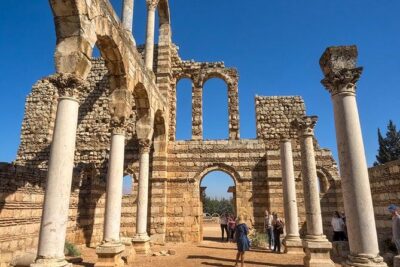
Anjar, Baalbek & Ksara Day Trip – With Lunch (4G on Board)
Read our review →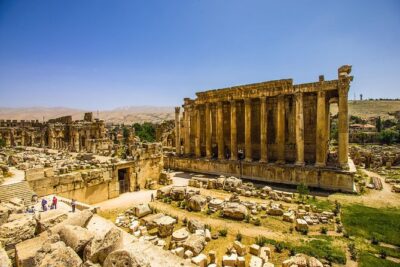
Private Anjar and Baalbek Tour from Beirut with Departure Ticket
Read our review →
Guided Private Full Day Tour to Baalbek, Anjar and Chateau Ksara
Read our review →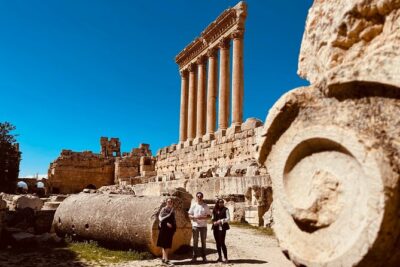
Lebanon tour Baalbek ruins & Ksara w/pick-up, lunch,guide+entries
Read our review →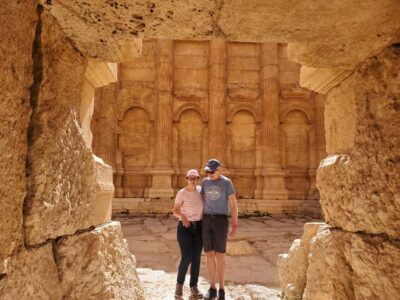
Baalbek Temples & Ksara Caves w/pick-up,guide, entries+lunch
Read our review →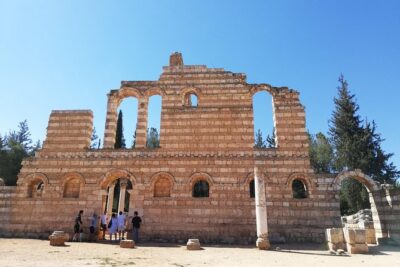
Small Group Tours to Baalbek, Anjar & Chateau Ksara with lunch and Tickets
Read our review →Browse the lists this tour appears in