
Review · BAALBEK & ANJAR DAY TRIPS
Anjar, Baalbeck and Ksara
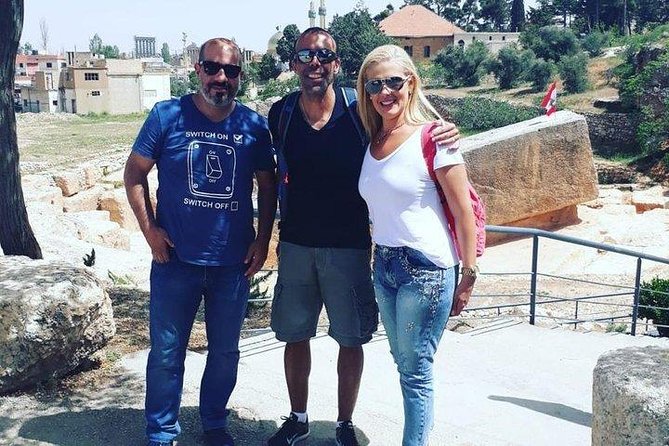
Lebanon’s past fits into one long day. This private trip links three very different sights: Anjar’s planned Umayyad ruins, Baalbeck’s enormous Roman temples, and Château Ksara’s wine-making tradition in the Beqaa Valley. I like the strong mix of archaeology and local culture, and I like that the private format lets your group travel with one guide rather than follow a large coach crowd.
The tour also gets high marks for Fadi Eid’s punctual, adaptable service, prompt WhatsApp replies, and clean vehicles. The main caution is the day’s length. Eight to nine hours is a lot of road and sightseeing, and the supplied itinerary gives detailed timing only for Baalbeck, so you should confirm the exact order, time at each stop, and what the wine visit includes before paying.
In This Review
- Five useful things to know before booking
- Why this three-stop route works
- Anjar’s broad avenues and fortified walls
- Baalbeck and the scale of Heliopolis
- Château Ksara and Lebanon’s wine tradition
- What the private format is worth at $140
- Timing, meeting point, and planning details
- Who will enjoy this day most
- My booking verdict
- FAQ
- Where does the tour start?
- Where does the tour finish?
- How long does the tour last?
- Is pickup available?
- Is this a private tour?
- What is the price?
- Which places does the tour visit?
- What is special about Anjar?
- What is special about Baalbeck?
- What is Château Ksara known for?
- Can I cancel for a full refund?
Five useful things to know before booking
- Baalbeck is the day’s major archaeological prize: You see the Roman city of Heliopolis, including some of the largest and best-preserved Roman remains in Lebanon.
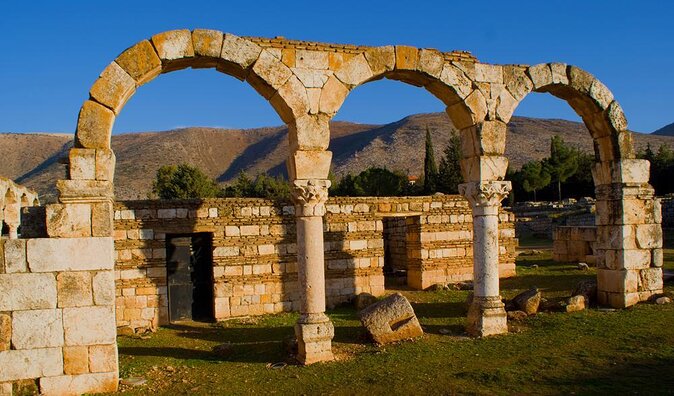
- Anjar feels different from Baalbeck: Its broad avenues, fortified walls, mosques, palaces, baths, storehouses, and homes reveal a planned city rather than a single monumental temple complex.
- Ksara adds a taste of modern Lebanon: Château Ksara began in 1857 under Jesuit priests and later produced Lebanon’s first dry wine.
- The tour is private: Only your group takes part, which is useful for questions, photo stops, and adjusting the pace.
- Pickup is offered in Beirut: The listed meeting point is Promedz Lebanon S.A.L. on Phoenicia Street at the Sfeir Building, and the tour returns there.
- The price is $140 per person: That can be fair for a full private day, especially if transport and guiding are included, but check the exact inclusions.
Why this three-stop route works
The best feature of this outing is contrast. Anjar and Baalbeck are not interchangeable ruins, and Ksara changes the mood again. You move from a fortified city with wide streets, to monumental Roman stonework, to a working Lebanese wine tradition.
That variety matters because a full day devoted only to ruins can begin to blur together. Here, the architecture has different stories and different scales. Anjar invites you to think about urban planning. Baalbeck overwhelms you with size. Ksara gives you a cultural stop that is easier on the feet and connected to the region’s agricultural life.
You also get the comfort of a private vehicle. A group of only your own companions can make the trip feel less rigid. If one person wants more time with the stones or another wants to keep the wine stop short, you can ask Fadi about the day’s pace. His past work has been praised for punctual departures, flexibility, and arranging tailored tours at short notice.
Still, private does not mean unstructured. The stated duration is about eight to nine hours, with the activity operating from 8:00 a.m. to 5:00 p.m. The Beqaa Valley route requires a substantial day away from Beirut, so an early start is sensible. The exact pickup time is not supplied, and you should confirm it directly.
More Baalbek and Anjar day trips:
- Guided Small-Group Tour to Baalbek, Anjar and Ksara with Lunch
★ 5.0 · 511 reviews - Anjar, Baalbek & Ksara Day Trip – With Lunch (4G on Board)
★ 4.5 · 181 reviews - Baalbek – Anjar – Ksara Trip From Beirut
★ 4.5 · 80 reviews
Anjar’s broad avenues and fortified walls
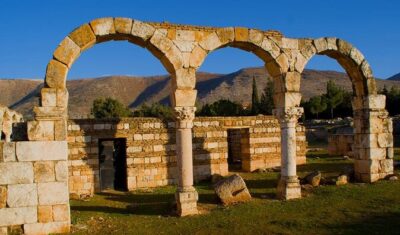
Anjar is the quieter opening act, at least in the way the sites are described. Its ruins cover about 114,000 square meters and are enclosed by stone walls more than two meters thick and seven meters high. That scale helps you understand that this was not simply a small roadside settlement.
The city’s layout is one of its chief attractions. Wide avenues divide the remains, with mosques, palaces, baths, storehouses, and residences placed along the urban plan. Instead of looking at one famous monument, you get a sense of how a whole city was arranged.
I would pay attention to the street pattern and the defensive walls. They give Anjar a more orderly, almost diagram-like quality than Baalbeck. The remains can help you picture daily movement through a city: people crossing avenues, goods moving toward storage areas, and residents living around public buildings.
The supplied information does not give a separate visit length for Anjar. That matters because the day already includes two other major stops. Ask how long you will have to walk around the site and whether the guide will provide a full explanation or a shorter orientation.
Anjar is a good fit if you enjoy seeing how cities functioned, not just photographing grand columns. It may be less immediately dramatic than Baalbeck, but its size and plan make it valuable. Give it enough attention rather than treating it as a quick photo stop.
Baalbeck and the scale of Heliopolis

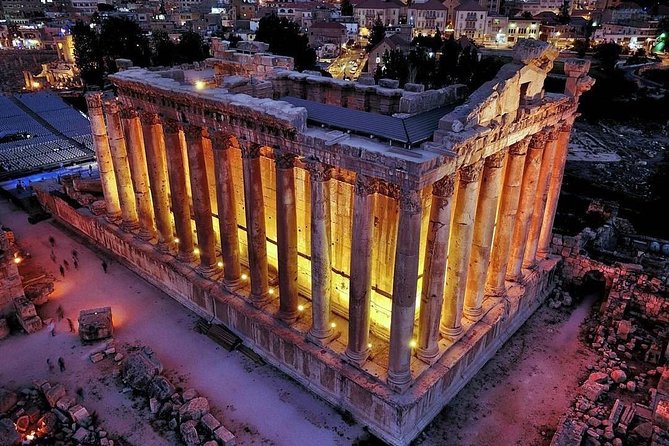
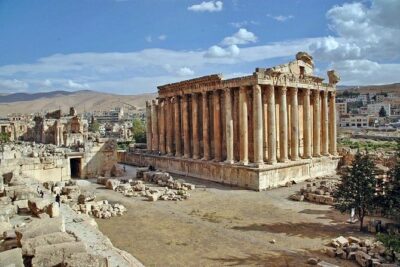
Baalbeck is the centerpiece. The ruins belonged to Heliopolis, the Roman city built around a group of temples and other public structures. The site is described as Lebanon’s greatest Roman treasure, and its fame comes from a simple fact: the surviving stones are astonishingly large and well preserved.
You do not need an advanced background in Roman history to appreciate the place. The scale speaks for itself. Large columns, platforms, and temple remains show the resources and engineering skill that went into creating a major religious center.
This is where a good guide makes a real difference. Without context, Baalbeck can become a series of huge stones and impressive photographs. With Fadi or another guide explaining what you are seeing, you can better understand how the Roman city fit into the region and why the complex is counted among the ancient world’s great sites.
The listed itinerary gives Baalbeck an eight-hour tour duration, but that wording appears to describe the overall activity rather than time spent only at the ruins. Do not read it as an eight-hour Baalbeck visit. The full outing is advertised at roughly eight to nine hours and includes Anjar and Ksara.
The practical drawback is exposure to a large archaeological site after a long drive. Wear shoes suitable for uneven ground, and keep your expectations realistic about how much detail you can absorb in one day. The supplied information does not specify walking difficulty, shade, or facilities, so ask the operator if those points matter to you.
The ticket information says admission is free for the Baalbeck stop. That likely means no separate admission charge is listed for this activity, but the page does not spell out every inclusion. Confirm whether entry fees, food, wine tasting, and transport are all covered by the $140 price.
Château Ksara and Lebanon’s wine tradition

Ksara gives the day a welcome change of pace. Château Ksara is a wine company in the Beqaa Valley, founded in 1857 by Jesuit priests. It later developed Lebanon’s first dry wine, making the stop more than a generic tasting added to a sightseeing route.
For you, the appeal is the connection between place and product. The Beqaa Valley is not just the setting for the ruins. It is also a wine-producing region with a long commercial tradition. A tasting gives you a way to experience present-day Lebanon after spending the day with ancient stone.
The tour description says you will taste wines before returning to Beirut. It does not state how many wines are included, whether a cellar visit is part of the stop, or whether food accompanies the tasting. Ask those questions if wine is a major reason you are booking.
If you do not drink wine, check whether the stop can be shortened or adapted. The tour is private, and the provider has a record of tailoring itineraries, but no specific alternative is promised in the supplied details.
Ksara is also a useful pause between archaeological visits. You can shift from temples and walls to a local business with a long history. That makes the full day feel more rounded than a simple ruins circuit.
More Wine Tours in Beirut:
- Guided Private Full Day Tour to Baalbek, Anjar and Chateau Ksara
★ 5.0 · 60 reviews - Lebanon tour Baalbek ruins & Ksara w/pick-up, lunch,guide+entries
★ 5.0 · 35 reviews - Baalbek Temples & Ksara Caves w/pick-up,guide, entries+lunch
★ 4.9 · 34 reviews - Small Group Tours to Baalbek, Anjar & Chateau Ksara with lunch and Tickets
★ 5.0 · 29 reviews
What the private format is worth at $140
At $140 per person, the value depends heavily on group size and inclusions. For one person or a couple, it is a fairly substantial day-trip price. For a small private group, the cost may make more sense because you are paying for dedicated transport, a driver-guide, and a schedule built around your party.
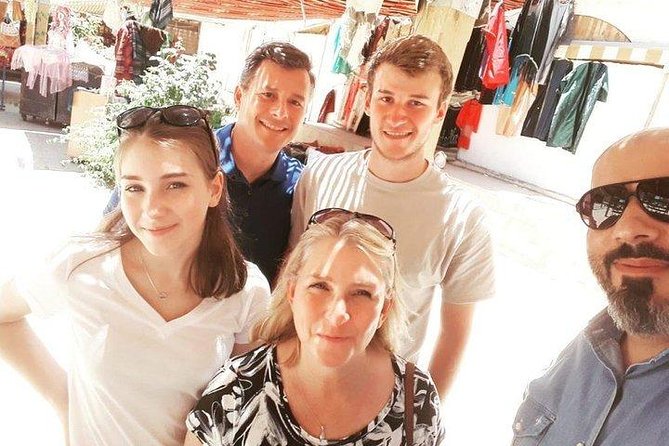
The private format is the strongest reason to choose this over a standard group excursion. You avoid being tied to strangers and can ask for explanations as you go. Fadi has been praised for being reliable, adaptable, and willing to arrange changes, including last-minute additions to a trip. Those qualities are especially helpful on a long day with several stops.
The clean vehicles and on-time service described by past customers also matter. A long road day feels much better when the vehicle is comfortable and the driver is dependable. Fadi’s English has been praised, too, which should help if you want discussion rather than a silent transfer between sites.
I would still ask for a written list of inclusions. The supplied details confirm pickup, return transport, a private group, and wine tasting in the description. They do not clearly state meals, entrance fees for every stop, or the number of tasting pours.
The value is strongest for people who want convenience and personal attention. If you prefer to arrange public transport and explore at your own pace, $140 may feel high. If you have limited time in Lebanon and want three major experiences linked in one day, the price is easier to justify.
Timing, meeting point, and planning details
The listed starting point is Promedz Lebanon S.A.L., Phoenicia Street, Sfeir Building, Beirut. The activity ends back at that same meeting point. Pickup is offered, but the listing does not explain whether pickup is available from every Beirut hotel or only selected locations, so confirm your exact address.
The stated operating hours are 8:00 a.m. to 5:00 p.m., Monday through Sunday, with the date range shown as August 30, 2019 through June 18, 2026. Since opening information can change, check the current schedule when you book.
Confirmation is sent at booking. The tour is near public transportation, although the experience itself is built around private transport. Most people can participate, but the available information does not provide a detailed accessibility assessment for the ruins.
Plan for a full day away from Beirut. Keep your morning free, avoid scheduling a tight evening commitment, and confirm the expected return time. The operator’s flexibility is a plus, but road conditions and time spent at the sites can affect the schedule.
Cancellation is free up to 24 hours before the start time for a full refund. Within 24 hours, cancellations and changes are not accepted for a refund. Those cut-off times use local time.
Who will enjoy this day most
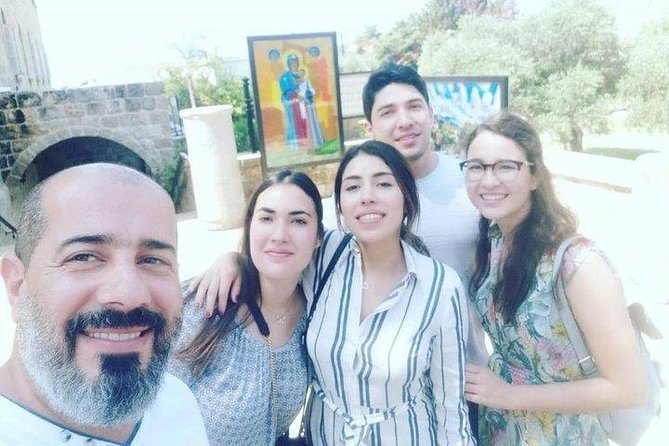
I would choose this tour if you want Lebanon’s ancient sites without arranging several separate trips. It suits first-time visitors who want a broad introduction, couples or families who value a private vehicle, and small groups that prefer to ask questions freely.
It is especially good for anyone interested in architecture. Anjar gives you urban design, Baalbeck gives you monumental Roman construction, and Ksara gives you a working wine tradition with roots reaching back to 1857.
The day is less suitable if you want slow, scholarly exploration of each archaeological site. Three stops in eight to nine hours means compromises. You may not get every corner of Anjar, every structure at Baalbeck, and a long tasting at Ksara.
It may also be a poor match if you dislike long road days or do not want a wine stop. The private setup helps, but it cannot remove the distance between Beirut and the Beqaa Valley.
My booking verdict
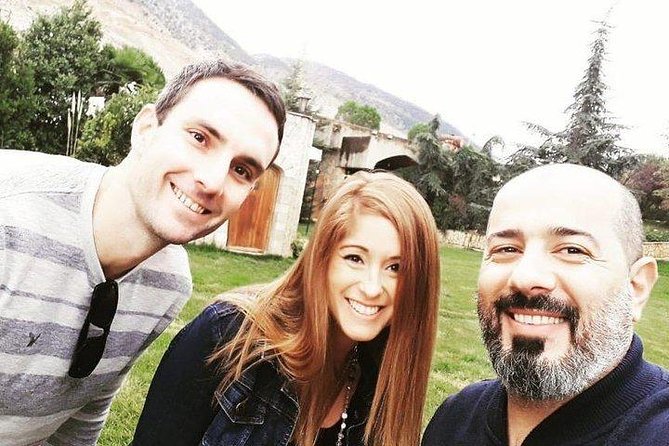
Book this tour if you want maximum variety in one private day. Baalbeck supplies the unforgettable scale, Anjar adds a different kind of ancient city, and Ksara connects the outing to Lebanon’s modern wine culture.
Before booking, send Fadi a short message confirming pickup, the order of Anjar, Baalbeck, and Ksara, the time planned at each stop, and exactly what the $140 includes. If those details suit you, the private format and Fadi’s praised reliability make this a strong choice for seeing several of Lebanon’s most important sights efficiently.
FAQ
Where does the tour start?
The listed meeting point is Promedz Lebanon S.A.L. on Phoenicia Street, Sfeir Building, in Beirut, Lebanon.
Where does the tour finish?
The activity ends back at the meeting point in Beirut.
How long does the tour last?
The tour lasts approximately eight to nine hours. Baalbeck is listed with an eight-hour activity duration, which appears to refer to the full day rather than only the time at the ruins.
Is pickup available?
Yes. Pickup is offered, but the supplied details do not specify whether every Beirut hotel is covered. Confirm your address with the provider.
Is this a private tour?
Yes. Only your group participates in the activity.
What is the price?
The listed price is $140 per person.
Which places does the tour visit?
The experience is described as visiting Anjar, Baalbeck, and Château Ksara in Lebanon’s Beqaa Valley.
What is special about Anjar?
Anjar is a large planned city with wide avenues, mosques, palaces, baths, storehouses, and residences. Its ruins cover about 114,000 square meters and are surrounded by fortified stone walls.
What is special about Baalbeck?
Baalbeck contains the ancient Roman city of Heliopolis and some of the largest and best-preserved Roman ruins in Lebanon.
What is Château Ksara known for?
Château Ksara was founded by Jesuit priests in 1857 and developed the first dry wine in Lebanon. The tour description includes a wine tasting before the return to Beirut.
Can I cancel for a full refund?
Yes. You can cancel at least 24 hours before the experience start time for a full refund. Cancellations or changes made within 24 hours are not refunded or accepted.
Just added around Beirut
- Private Full-Day Tour to Jeita Grotto, Harissa and Saint Charbel from Beirut★ 5.0 · 3 reviews
- Beirut to Jeita Grotto and Byblos: Daily Tours with Lunch★ 5.0 · 3 reviews
- PRIVATE city tour of Old Sidon & Historic Tyre★ 5.0 · 3 reviews
- Journey Through Time: Half-Day Private Tour to Baalbek★ 5.0 · 3 reviews
- Small-Group Tour to Sidon, Tyre and Maghdouche with Lunch and Tickets★ 4.5 · 3 reviews
- Hike Chouwen★ 5.0 · 3 reviews
- Beirut to Sidon, Tyre and Maghdouché: Daily Tours with Lunch★ 5.0 · 3 reviews
- Private Full-Day Tour to Byblos and Tripoli from Beirut★ 5.0 · 3 reviews
Baalbek & Anjar Day Trips, compared.
Guided Small-Group Tour to Baalbek, Anjar and Ksara with Lunch
Read our review →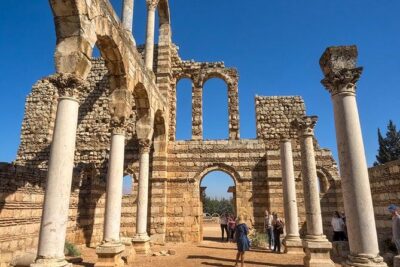
Anjar, Baalbek & Ksara Day Trip – With Lunch (4G on Board)
Read our review →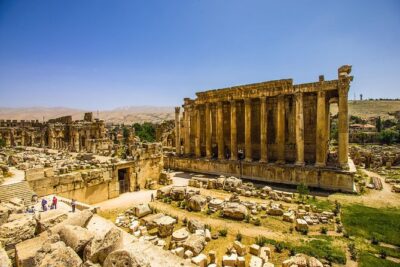
Private Anjar and Baalbek Tour from Beirut with Departure Ticket
Read our review →
Guided Private Full Day Tour to Baalbek, Anjar and Chateau Ksara
Read our review →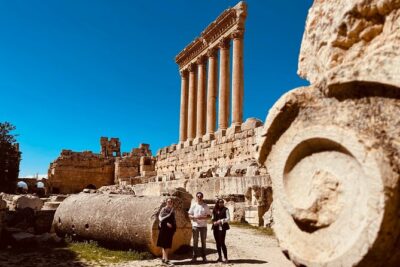
Lebanon tour Baalbek ruins & Ksara w/pick-up, lunch,guide+entries
Read our review →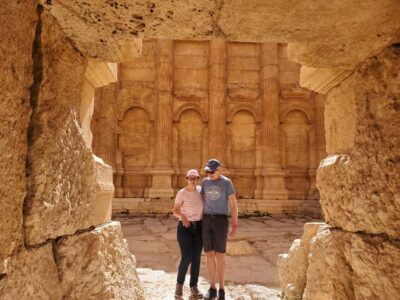
Baalbek Temples & Ksara Caves w/pick-up,guide, entries+lunch
Read our review →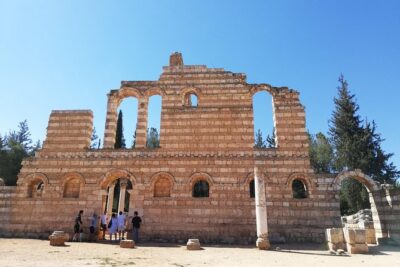
Small Group Tours to Baalbek, Anjar & Chateau Ksara with lunch and Tickets
Read our review →Browse the lists this tour appears in