
Review · BEIRUT
Authentic Lebanese Cooking Lesson and Meal with Tania’s Family in Beirut
Food opens doors in Beirut. This three-hour private cooking experience takes you into Tania’s family home in Forn El Chebbak, where you prepare five Lebanese dishes, talk about daily life, and sit down to eat with the people who made the meal. I like the small family setting and the chance to learn from Tania’s mother, who has cooked traditional recipes for years. I also like the use of produce grown by Tania’s father, a retired butcher and keen gardener.
The main consideration is practical: you must make your own way to the meeting point, since hotel pickup and drop-off are not included. The $100 price is not cheap for a three-hour activity, but it covers a private lesson, a full home-cooked meal, drinks, local alcohol, and the rare chance to spend time with a Lebanese family in their own kitchen.
In This Review
- Key points to know before booking
- A Beirut food experience built around family
- Arriving at Forn El Chebbak at 11:00
- Cooking five Lebanese dishes with Tania’s mother
- Learning from a butcher, gardener, and food specialist
- Sitting down to a Lebanese family meal
- Arak, soft drinks, and the social side of lunch
- What the private format adds
- The strongest parts of the experience
- Who should book this experience?
- Should you book Tania’s family cooking class?
- FAQ
- Where does the cooking experience start?
- How long does the activity last?
- Is the experience private?
- How many dishes will I learn to cook?
- Is a vegetarian option available?
- Are drinks included?
- Is hotel transportation provided?
Key points to know before booking
- Five Lebanese dishes are prepared during the lesson, with recipes and kitchen tips shared by Tania and her mother.
- Tania’s parents take part, bringing experience in home cooking, meat, gardening, and family food traditions.
- Produce may come from the family garden, including fruits and vegetables grown outside Beirut by Tania’s father.
- The meal includes soft drinks and one or two glasses of arak, Lebanon’s best-known anise-flavored spirit.
- The experience is fully private, so only your own group participates.
- Vegetarian meals and dietary requests are possible, but you need to advise Tania when booking.
A Beirut food experience built around family
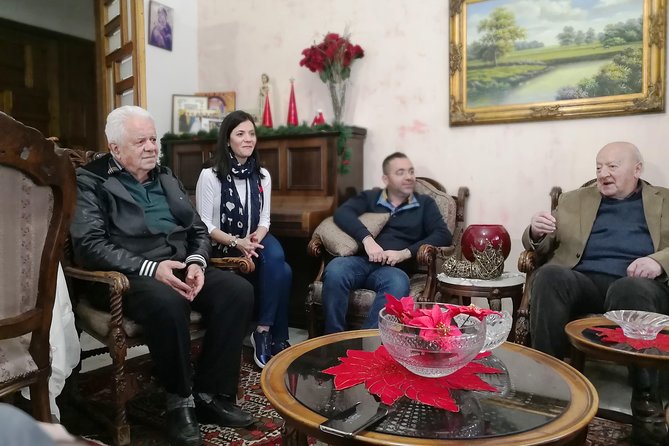
Many food tours show you what to eat. This one gives you time with the people who cook it. You meet Tania, an agronomist and food safety specialist with a strong interest in food, travel, music, and culture. She sings, plays piano, and brings a broad view of Lebanese cuisine to the table.
Her parents are part of the experience, too. Tania’s mother is the family’s longtime home chef, while her father is a former butcher who takes meat seriously and grows fruit and vegetables in his garden on the outskirts of Beirut. That combination gives the lesson a useful balance: you learn both the home-cooking side of Lebanese food and the care that goes into choosing and growing ingredients.
I like this setup because it avoids the polished feel of a restaurant demonstration. You are not simply watching a chef prepare a plate. You are in an intimate kitchen, helping with the food while conversation moves between cooking, family customs, gardening, and everyday life.
The private format matters. Your group can ask questions, work at its own pace, and discuss subjects that may not fit into a large class. It also makes the experience a better choice for couples, families, and small groups who want something personal rather than a standard food walk.
More Cooking Classes in Beirut:
- Private Lebanese Cooking Class in Beirut with Amal + Transfers
★ 5.0 · 20 reviews - Traveling Spoon Lebanese Mezze Private Online Cooking Class
★ 5.0 · 4 reviews
Arriving at Forn El Chebbak at 11:00
The experience starts at 11:00 a.m. in Forn El Chebbak, a Beirut-area meeting point. You need to arrange your own transportation because hotel pickup and return are not provided. Allow enough time to reach the address, particularly if you are unfamiliar with the area or are relying on local traffic conditions.
Starting late in the morning works well for the format. You are not rushing through breakfast, and the timing gives you a proper midday meal after the cooking. Since the activity lasts about three hours, expect the visit to run into the early afternoon.
The exact route to the home is not described, so confirm the meeting instructions after booking. The practical point is simple: treat Forn El Chebbak as your start and finish location, not as a hotel pickup zone.
Once you arrive, the experience begins with a warm welcome. One personal touch mentioned in the feedback is coffee with Tania and her parents at the start. That small pause helps set the tone before the cooking begins, and it gives you a chance to settle into the family atmosphere rather than rushing straight to the cutting board.
Cooking five Lebanese dishes with Tania’s mother
The heart of the activity is the hands-on lesson. You prepare five authentic Lebanese dishes with guidance from Tania and her mother. The exact menu can vary, but dishes specifically connected with this experience include hummus, baba ghanoush, eggplant salad, stuffed zucchini, and kibbeh. One meal also included kibbeh naye, a raw kibbeh preparation.
That list gives you a good sense of the range. Hummus and baba ghanoush teach you about basic dips, texture, seasoning, and the role of lemon, garlic, tahini, and smoky eggplant in Lebanese food. Eggplant salad adds another lesson in handling a central ingredient without turning every dish into the same soft puree.
Stuffed zucchini shows the more patient side of home cooking. Kibbeh introduces a dish with a stronger connection to meat preparation and Lebanese family tradition. If kibbeh naye is served or prepared for your group, be sure to discuss it in advance if you have concerns about raw meat or dietary restrictions. The information provided does not promise that every dish appears at every visit, so ask about the planned menu when you book.
Tania’s mother is particularly important here. She has cooked family recipes throughout her life and shares the sort of practical tips that are hard to pick up from a recipe card. You may learn not just what goes into a dish, but how a Lebanese family judges texture, balances flavors, handles vegetables, or knows when something is ready.
The class is not presented as a formal professional kitchen course. It is better understood as a working family lesson. You should expect conversation and participation rather than a strict demonstration followed by a timed test. That relaxed approach is a strength for most people, though anyone seeking advanced culinary training may find the format less technical.
Learning from a butcher, gardener, and food specialist
The family’s different backgrounds add substance to the meal. Tania’s training as an agronomist and food safety specialist gives her a useful perspective on ingredients and preparation. Her father’s former work as a butcher makes meat an important part of the family’s food knowledge.
His garden also gives the experience a clear connection to local produce. Much of the food used at home comes from the garden and is described as local, fresh, and organic. You may hear how fruits and vegetables are grown, how the family uses its harvest, and why fresh ingredients matter in Lebanese cooking.
I like this part because it widens the lesson beyond recipes. You get a look at how food moves from garden to kitchen to table. That connection is especially valuable in a city visit, where it can be easy to experience Beirut only through restaurants, traffic, and sightseeing stops.
The available details do not promise a garden visit, so do not book this expecting a farm tour. The garden is part of the family’s food story, not a separate scheduled stop. Its value comes through conversation and the ingredients used at home.
A different idea for your next day out:
- Guided Small-Group Tour to Baalbek, Anjar and Ksara with Lunch
★ 5.0 · 511 reviews - Guided Small-Group Tour to Jeita, Harissa, Byblos with Lunch
★ 5.0 · 361 reviews - Paragliding Trip Over Lebanon – Jounieh Bay
★ 5.0 · 257 reviews - Jeita Grotto,Harissa&Byblos Full-Day PRIVATE-CAR Trip from Beirut
★ 5.0 · 222 reviews
Sitting down to a Lebanese family meal
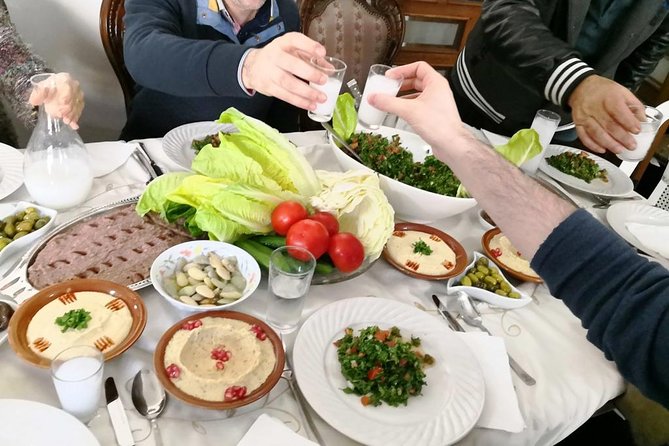
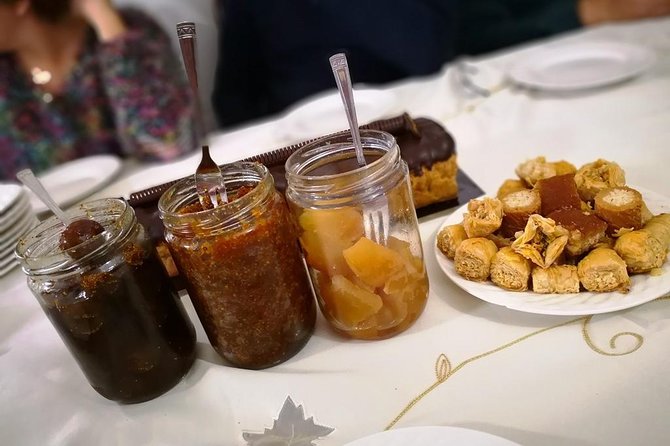
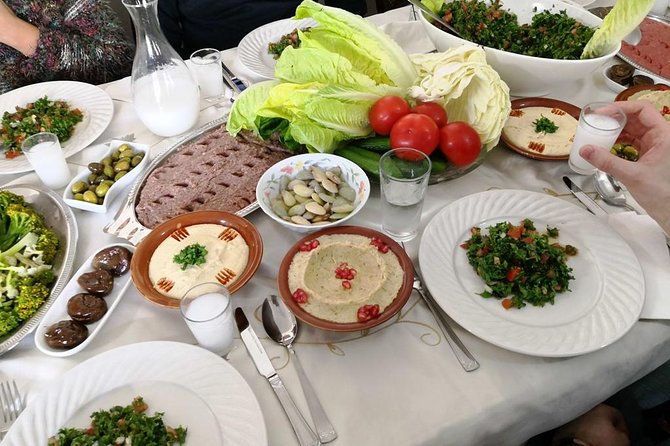
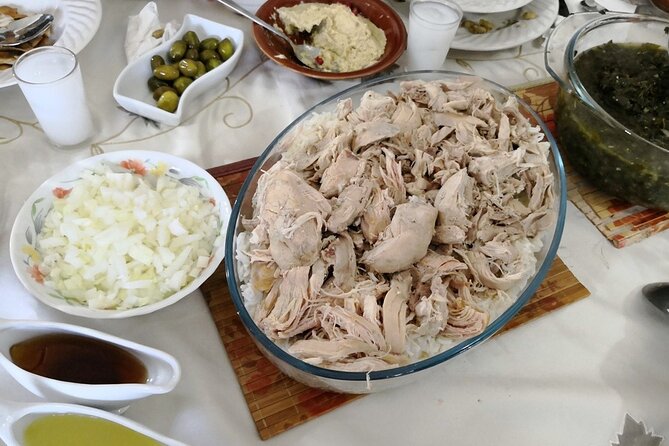
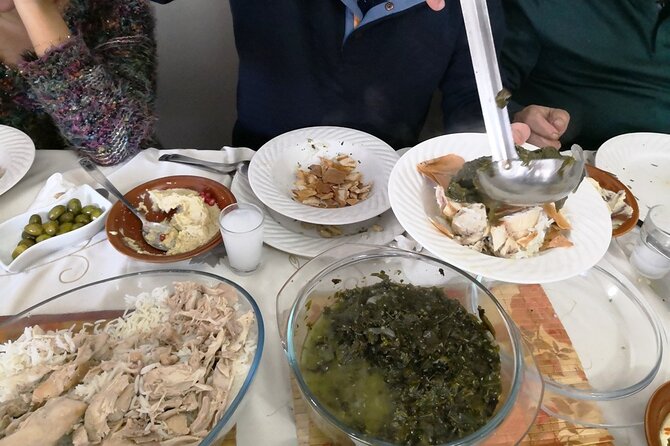
After the cooking, you eat what you have helped prepare. The meal is home-cooked and shared with Tania and her parents, making it more than a quick tasting session. You have time to talk about food, customs, family life, and the ways people eat together in Lebanon.
This is where the experience earns much of its price. In a restaurant, $100 can buy a very good meal for one person, but it rarely includes several hours of personal instruction and conversation with a local family. Here, the meal is the final part of a larger exchange.
The atmosphere appears to be warm and social. One French-speaking participant described feeling like part of the family while talking with Tania and her mother over coffee and food. That does not mean every group will have exactly the same conversation, but it does show what the format is designed to provide: a shared table, not a quick service encounter.
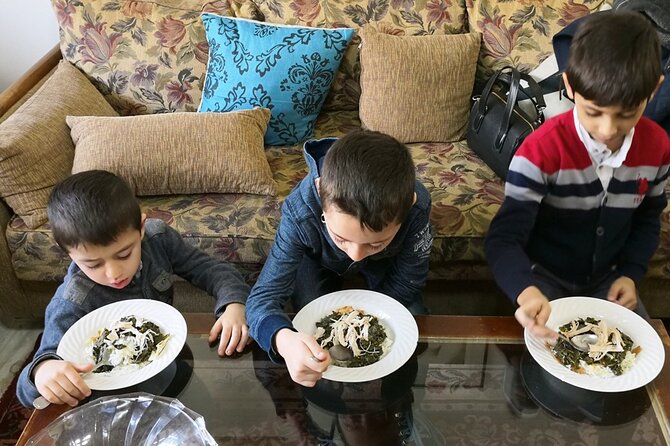
You should arrive hungry. The cooking itself is part of the meal, and the three-hour schedule leaves room for both preparation and eating. If you are booking for children or anyone with a limited appetite, mention that when discussing your group’s needs.
Arak, soft drinks, and the social side of lunch
The experience includes non-alcoholic drinks and one or two glasses of local alcohol, specifically arak. Arak is an anise-flavored spirit commonly associated with Lebanese meals. It is often enjoyed slowly with food, and here it fits the social nature of the gathering.
You do not have to make alcohol the center of the experience. If you do not drink, non-alcoholic beverages are included. If alcohol matters to you, remember that the amount is modest, not an open bar.
The drink is best understood as part of the meal ritual. It gives Tania and her family another way to explain local habits, but the real focus remains the food and conversation. You can also ask about your preferences ahead of time, especially if your group includes anyone who avoids alcohol.
What the private format adds
This is a private activity, and only your own group participates. That makes it easier to ask direct questions about recipes, Lebanese customs, gardening, meat, or the family’s own way of eating.
A private class is also useful for dietary planning. Vegetarian food is available if requested, and the provider asks you to share allergies, restrictions, and cooking preferences when booking. Do not wait until you arrive. The family needs advance notice to shape the menu safely and sensibly.
The private setting can also be more comfortable for mixed groups. One person may want to focus on cooking while another prefers conversation. Since there is no larger class to keep moving, the visit can feel less hurried.
The tradeoff is that a private experience costs more per person than a large group class. At $100 each, the price is best justified when you value access to the home, family conversation, and personal instruction. If your only goal is to eat Lebanese food cheaply, a restaurant will cost less.
The strongest parts of the experience
The most praised element is the hospitality. The welcome from Tania and her parents sets the tone, and the family takes an active role rather than leaving Tania to handle every part of the visit alone.
The second strength is the cooking itself. The menu reaches beyond one famous dish and may include dips, eggplant, stuffed vegetables, and meat preparations. Tania’s mother’s long experience with family recipes gives the lesson a sense of continuity.
The third is the conversation. Tania’s work in food safety and agriculture gives you more to discuss than recipes alone. Her parents add personal experience from butchery, gardening, and home cooking.
The fourth is the feeling of eating together. You help create the meal, then share it with the family. That simple sequence is why the experience feels more personal than a normal Beirut food stop.
The experience has a perfect five-star rating from 62 ratings and is recommended by 100 percent of participants. Those numbers point to a very consistent level of satisfaction, especially around hospitality, family warmth, and the chance to learn.
Who should book this experience?
I would recommend it most strongly to people who plan trips around food and conversation. It suits couples, families, and small private groups who want to spend time with local people rather than move quickly between sightseeing stops.
It is also a good choice if you have already seen Beirut’s main sights and want a slower activity with cultural context. The class gives you a different view of the city through the home, the kitchen, and the family table.
Vegetarians can book with advance notice. People with allergies or special preferences should provide details at the time of booking. Anyone uncomfortable with raw meat should ask whether kibbeh naye is part of the planned menu.
You may want to skip it if you dislike group conversation, do not enjoy participating in meal preparation, or want a tightly structured culinary course. You should also think carefully about the $100 price if you mainly want a meal rather than a personal cultural experience.
The cancellation terms are fairly strict close to the date. You can receive a full refund if you cancel at least two full days before the 11:00 a.m. start time. Changes or cancellations inside that period are not accepted for a refund.
Should you book Tania’s family cooking class?
Yes, if you want a personal food experience in Beirut and value the people behind the meal as much as the dishes themselves. The private setting, five-dish lesson, family recipes, garden produce, and shared lunch make this a strong choice for a meaningful half-day.
Book it with a clear idea of what you are paying for. You are not buying the city’s cheapest lunch. You are paying for access to Tania, her mother’s cooking, her father’s food and garden experience, and a place at the family table. If that sounds like your kind of Beirut memory, it is worth the $100.
FAQ
Where does the cooking experience start?
It starts in Forn El Chebbak, Lebanon, at 11:00 a.m.
How long does the activity last?
The experience lasts approximately three hours and ends back at the meeting point.
Is the experience private?
Yes. Only your own group participates in this private, personalized activity.
How many dishes will I learn to cook?
You will learn to prepare five authentic Lebanese dishes.
Is a vegetarian option available?
Yes. A vegetarian option is available, but you should request it when booking.
Are drinks included?
Yes. Non-alcoholic beverages and one or two glasses of local alcohol, including arak, are included.
Is hotel transportation provided?
No. Hotel pickup and drop-off are not included, so you must arrange transportation to and from Forn El Chebbak.
Just added around Beirut
- Private Full-Day Tour to Jeita Grotto, Harissa and Saint Charbel from Beirut★ 5.0 · 3 reviews
- Beirut to Jeita Grotto and Byblos: Daily Tours with Lunch★ 5.0 · 3 reviews
- PRIVATE city tour of Old Sidon & Historic Tyre★ 5.0 · 3 reviews
- Journey Through Time: Half-Day Private Tour to Baalbek★ 5.0 · 3 reviews
- Small-Group Tour to Sidon, Tyre and Maghdouche with Lunch and Tickets★ 4.5 · 3 reviews
- Hike Chouwen★ 5.0 · 3 reviews
- Beirut to Sidon, Tyre and Maghdouché: Daily Tours with Lunch★ 5.0 · 3 reviews
- Private Full-Day Tour to Byblos and Tripoli from Beirut★ 5.0 · 3 reviews