
Review · BEIRUT
BEYOND BEIRUT
Beirut rewards curiosity. I like that Beyond Beirut takes you past polished sights into old buildings, small churches, Roman remains, street art, and everyday streets, while Joanna, the named guide, brings clear context to Lebanon’s difficult modern past. I also like the private format, which lets the walk bend around your interests instead of forcing everyone through a fixed script. The main drawback is practical: six hours on foot can be tiring, and the route is not suitable for wheelchair users.
This is not a tidy highlights tour. You may move from a restored downtown block to a crumbling façade, then from ancient stonework to a painted wall or a local café. I would choose it if you want Beirut explained, not simply photographed, but I would bring water, snacks, sturdy shoes, and patience for an urban walk that may feel raw at times.
In This Review
- What makes this Beirut walk different
- Beirut without the postcard filter
- Starting at Beirut Souks or your accommodation
- Ancient stone beside modern Beirut
- Downtown, ruins, and the marks of conflict
- Street art, forgotten spaces, and local texture
- Gemmayzeh food stops and a traditional ice cream break
- Raouche and the Mediterranean views
- What $110 per group really buys you
- Who will enjoy this most
- Final call: should you book Beyond Beirut?
- FAQ
- Where does the tour start?
- How long does Beyond Beirut last?
- What does the price include?
- Are food and drinks included?
- What languages are available?
- Is this a private tour?
- Is the tour wheelchair accessible?
- Can I cancel for a full refund?
What makes this Beirut walk different
- Roman details hiding in modern Beirut: Look for ancient mosaics, Roman Baths, and ruins placed beside later buildings and busy city streets.
- Joanna’s personal approach: She has been praised for explaining Beirut’s history, politics, current situation, and daily life in a warm, flexible way.
- A private group for up to four: At $110 per group, the price can be strong value for two to four people who want a tailored outing.
- Famous sights plus overlooked corners: The route can include Mohammad Al-Amin Mosque, downtown, Pigeon Rocks, Gemmayzeh, small churches, street art, and places absent from standard guidebooks.
- A walking tour with included entrances: You do not pay separate entry fees for stops covered by the tour, but food and drinks are your responsibility.
- Four guide languages: You can request English, French, Portuguese, or Arabic.
Beirut without the postcard filter
Many city tours give you a clean sequence of major sights. This one is more interested in contrast. Beirut can place an ancient fragment beside a new tower, a traditional Lebanese house beside a contemporary wall painting, and a damaged building beside a carefully rebuilt district. That mixture is the point.
I like this approach because Beirut makes more sense when you see its layers together. A mosque, a Roman site, a café, a war-scarred building, and a Mediterranean viewpoint are not isolated attractions. They help you understand how the city has been built, damaged, repaired, and lived in over time.
The tour description is frank about its tone. You should not expect a polished version of Beirut with every rough edge removed. Some streets and buildings may feel neglected. Some stories involve war and political conflict. For the right person, that honesty is useful. If you want only monuments, shopping, and easy photo stops, this may feel too serious or too unpredictable.
Trips travellers in Beirut tend to pair with this one:
- Guided Small-Group Tour to Baalbek, Anjar and Ksara with Lunch
★ 5.0 · 511 reviews - Guided Small-Group Tour to Jeita, Harissa, Byblos with Lunch
★ 5.0 · 361 reviews - Paragliding Trip Over Lebanon – Jounieh Bay
★ 5.0 · 257 reviews
Starting at Beirut Souks or your accommodation
You have two pickup choices listed: Beirut Souks or your hotel or accommodation. If you choose pickup, wait in the lobby at the scheduled time. That small detail matters in Beirut, where a clear meeting point saves time before a long walk.
The private group size is up to four people. That makes this a good fit for a couple, family, or small group of friends. A private walk also gives you room to ask about subjects that interest you, such as architecture, Lebanese politics, religion, the civil war, food, or local neighborhoods.
Joanna’s strongest quality appears to be flexibility. One guest had poor weather, yet the tour was reshaped around personal requests. That tells me this is not simply a guide reciting the same speech at every corner. Still, flexibility has limits. The experience is six hours, and the exact route may change with weather, interests, access, or timing.
One detail needs checking before you book: the activity information gives a duration of six hours, while the itinerary display includes a 12-hour wording. Treat six hours as the stated tour length, but confirm the start and end time when you reserve. That is especially important if you have a dinner booking, airport transfer, or another activity afterward.
Ancient stone beside modern Beirut
The most appealing part of the walk is the way it connects old remains to the current city. A Roman mosaic or the Roman Baths might be easy to miss if you are focused only on major façades. With a guide pointing them out, these fragments become clues rather than random pieces of old stone.
The Roman Baths are also a good example of Beirut’s unusual visual rhythm. Ancient remains sit within a modern capital, not behind some distant archaeological fence. You can look at old foundations and then continue through streets shaped by much later events.
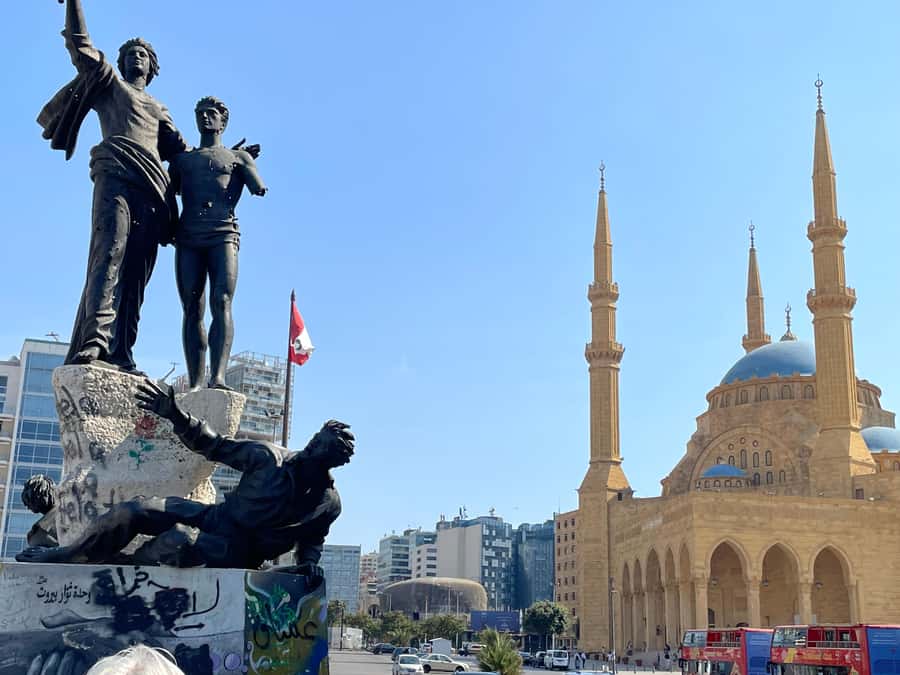
The Mohammad Al-Amin Mosque provides a very different kind of landmark. Its scale and formal design offer a clear contrast with the smaller structures and worn surfaces found elsewhere on the route. You get a major city sight, but the value comes from the surrounding explanation: how it fits into downtown, how Beirut’s religious and civic spaces relate to one another, and how rebuilding has changed the center.
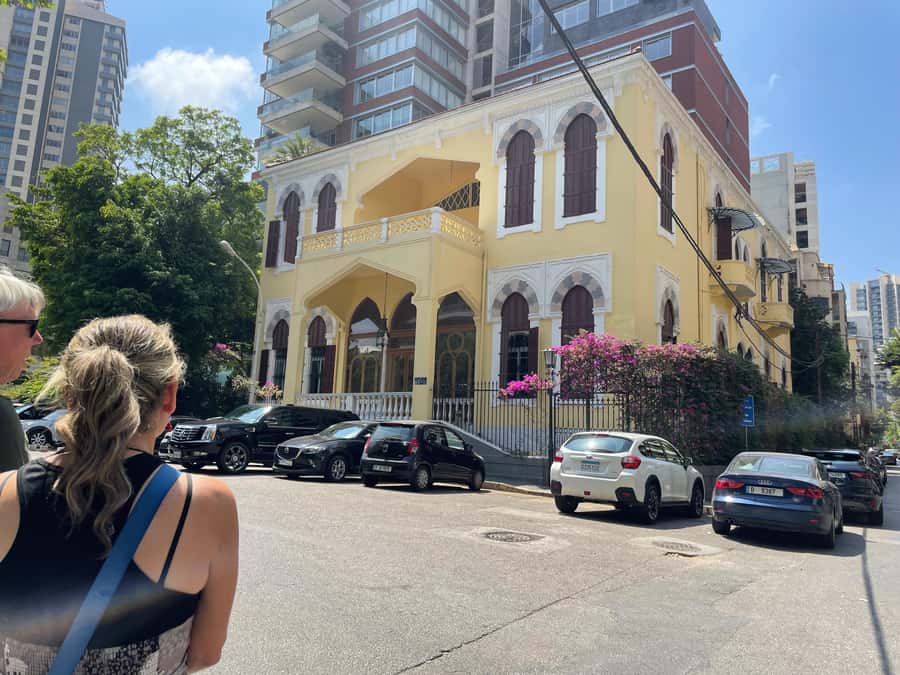
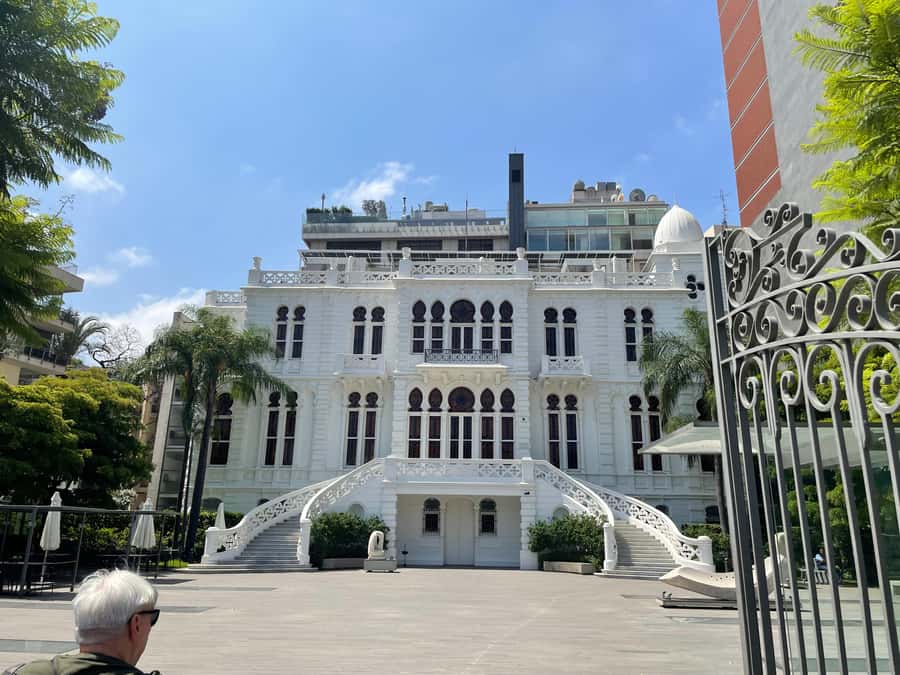
The tour can also include small churches and traditional Lebanese houses. These are the kinds of places you might pass without understanding their importance. They give the walk a human scale and keep it from becoming a checklist of grand buildings.
Downtown, ruins, and the marks of conflict
Downtown Beirut is not just a place to admire reconstruction. It is also a place to ask what was lost, what was restored, and who the rebuilt center serves today. The guide’s discussion of Lebanon’s modern history and political background is one of the strongest reasons to choose this experience.
You will see remains of war alongside newer construction. The tour does not treat those marks as decorative photo props. They are part of the city’s recent story, and a good explanation helps you read damaged façades with care.
This subject can be emotionally heavy. You may hear about periods when war shaped ordinary life, neighborhoods, buildings, and public memory. I would not book this walk expecting light entertainment from beginning to end. It has cafés, views, and pleasant stops, but it also asks you to pay attention.
The reward is a better sense of Beirut as a living city rather than a museum. A guide can explain why a building looks the way it does, why a district was rebuilt, or how older architecture survived beside newer projects. That context is difficult to get from a map or a quick internet search.
A different idea for your next day out:
- Jeita Grotto,Harissa&Byblos Full-Day PRIVATE-CAR Trip from Beirut
★ 5.0 · 222 reviews - First Paragliding Club in Lebanon – Since 1992
★ 5.0 · 193 reviews - Anjar, Baalbek & Ksara Day Trip – With Lunch (4G on Board)
★ 4.5 · 181 reviews - Jeita Grotto – Harissa – Byblos Trip
★ 5.0 · 169 reviews
Street art, forgotten spaces, and local texture
The unusual side of the tour comes through its smaller discoveries. You might see spray-painted walls, forgotten spaces, odd corners, crumbling façades, and storefronts that do not appear in a standard sightseeing plan. These details are not necessarily grand. That is precisely why they can be memorable.
I like the promise of moving through hidden alleyways and less polished streets. Beirut’s character is often easiest to sense in places that were not designed for tourism. A small church, a family-run café, an old house, or a wall painting can tell you more about daily life than another formal viewpoint.
Do keep your expectations realistic. The word unconventional does not mean every stop will be a secret monument. Some finds may be interesting because of their story or setting rather than their beauty. You may also encounter uneven pavement, traffic, noise, and crowded city streets. Wear comfortable shoes and stay alert while walking.
A charged smartphone and camera are useful. Bring cash as well, since food and drinks are not included and you may want to make purchases during a break. The activity also asks you to bring water, food, and a hat. Those are sensible supplies for six hours outside.
Gemmayzeh food stops and a traditional ice cream break
Food is not included, but the experience can include time for lunch and a stop at a traditional ice cream shop. One particularly appealing part of the route is a restaurant break in Gemmayzeh, a district associated here with Lebanese daily life, dining, and older architecture.
This is where the private format helps. You can ask Joanna for restaurant suggestions in Beirut and elsewhere in Lebanon, rather than treating lunch as a rushed fuel stop. If you have dietary needs or strong preferences, tell the provider before the tour, since the supplied information does not specify menus or dietary arrangements.
The ice cream stop adds a welcome change of pace. After several hours of ruins, politics, architecture, and war history, a simple local treat can make the day feel less like a lecture. Again, you pay for food and drinks yourself.
Do not assume every meal or snack is included in the $110. The price covers the private tour and entrances within the tour, not your lunch, ice cream, water, or other purchases.
Raouche and the Mediterranean views
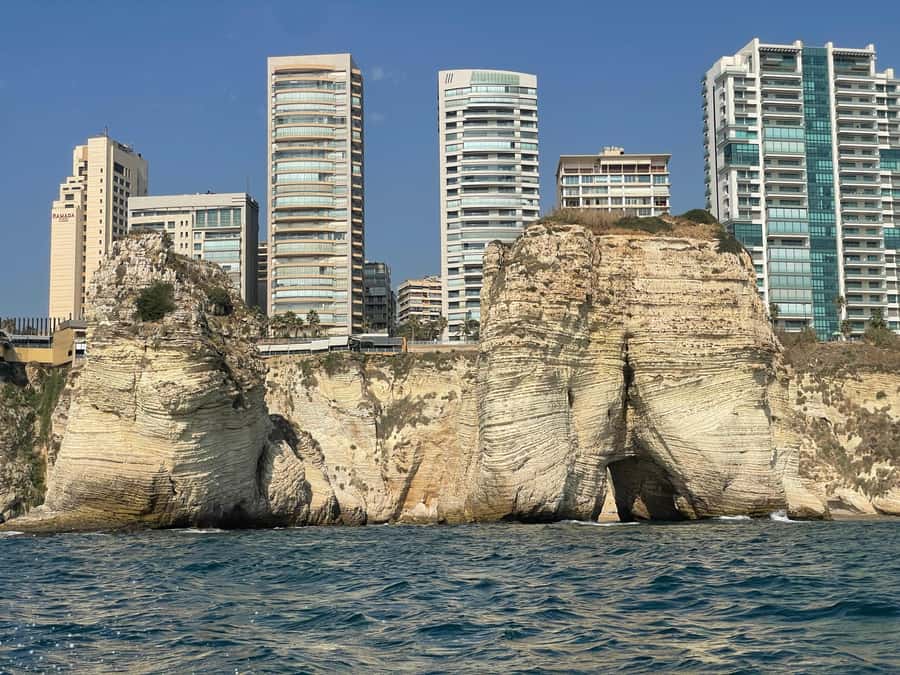
Pigeon Rocks in Raouche gives the walk a dramatic natural finish or midpoint, depending on the route. After the dense streets and old structures of central Beirut, the open view toward the Mediterranean changes the mood.
You can expect a photo stop and scenic views on the way, but the experience remains a walking tour rather than a dedicated sightseeing drive. The route description does not promise a vehicle transfer between every district, so ask how the day is arranged if long distances or mobility are a concern.
Raouche is valuable because it shows Beirut facing outward. The sea view does not erase the city’s problems, but it gives you another piece of the place: coastline, public space, and a broad horizon after hours spent among buildings and narrow streets.
Bring a hat and water, especially in warm weather. Weather can affect the day, and one guest’s experience was adjusted when conditions did not cooperate. That flexibility is encouraging, but no walking tour can guarantee clear skies or identical views.
What $110 per group really buys you
The price is $110 for a private group of up to four people. For one person, that is a fairly expensive day out. For four, it works out to $27.50 each before food and drinks, which is good value if you want a private guide and several included entrances.
The value is not mainly in the number of stops. It comes from interpretation and access to places you may not notice alone. Several people praised the guide’s ability to reveal small churches, Roman mosaics, street art, lesser-known buildings, cafés, and traces of modern conflict.
You also get a route that can respond to requests. That matters if you have already seen the main downtown sights and want more architecture, or if you want the famous landmarks explained rather than skipped. It is less valuable if you prefer a fixed schedule, a large social group, or a low-cost self-guided walk.
The four-hour? No, the stated duration is six hours, so plan for a substantial part of your day. The price includes entrances within the tour, but no food or beverages. Ask the provider to clarify the timing because of the conflicting 12-hour wording in the activity details.
Who will enjoy this most
I would recommend Beyond Beirut to you if you:
- Want Beirut’s history and current political setting explained in plain language.
- Prefer a private guide who can adjust the route.
- Enjoy architecture, archaeology, street art, local districts, and imperfect urban spaces.
- Want both major sights and places you would likely miss alone.
- Are comfortable walking for six hours.
- Appreciate direct discussion of war and rebuilding.
- Are traveling with one to three companions, so the group price makes better financial sense.
I would be cautious if you use a wheelchair, since the activity is not suitable for wheelchair users. I would also think twice if you dislike uneven urban routes, serious historical discussion, or plans that may shift during the day.
The tour is available with a live guide in English, French, Portuguese, or Arabic. Confirm your preferred language at booking rather than assuming it will be available at every starting time.
Final call: should you book Beyond Beirut?
Book this tour if you want Beirut to make sense beyond its famous buildings. The strongest reasons are Joanna’s warm, flexible guiding style, the private group setting, and the mix of Roman remains, religious buildings, street art, war traces, local cafés, Gemmayzeh, and Pigeon Rocks.
Skip it if you want a short, predictable route with minimal walking or no difficult history. This is an urban experience with rough edges, and that is part of its value.
For two to four people, $110 is a reasonable price for six hours of private attention and included entrances. Bring water, food, cash, a hat, a charged phone, and shoes you can trust. Most important, confirm the start and finish times, then arrive ready to look up from the main sights and notice what Beirut usually keeps just out of view.
FAQ
Where does the tour start?
Pickup is available from Beirut Souks or from your hotel or accommodation. If using accommodation pickup, wait in the lobby at the scheduled time.
How long does Beyond Beirut last?
The stated duration is six hours. The activity details also contain a 12-hour itinerary wording, so confirm the exact schedule before booking.
What does the price include?
The price is $110 per private group of up to four people. The tour is walking-based, and entrances within the tour are included.
Are food and drinks included?
No. Food and beverages are not included. You should bring water and food, and carry cash for purchases.
What languages are available?
The live guide languages are English, French, Portuguese, and Arabic.
Is this a private tour?
Yes. The activity is offered for a private group of up to four people.
Is the tour wheelchair accessible?
No. The activity is not suitable for wheelchair users.
Can I cancel for a full refund?
Yes. You can cancel up to 24 hours in advance for a full refund. You can also reserve now and pay later.
Just added around Beirut
- Private Full-Day Tour to Jeita Grotto, Harissa and Saint Charbel from Beirut★ 5.0 · 3 reviews
- Beirut to Jeita Grotto and Byblos: Daily Tours with Lunch★ 5.0 · 3 reviews
- PRIVATE city tour of Old Sidon & Historic Tyre★ 5.0 · 3 reviews
- Journey Through Time: Half-Day Private Tour to Baalbek★ 5.0 · 3 reviews
- Small-Group Tour to Sidon, Tyre and Maghdouche with Lunch and Tickets★ 4.5 · 3 reviews
- Hike Chouwen★ 5.0 · 3 reviews
- Beirut to Sidon, Tyre and Maghdouché: Daily Tours with Lunch★ 5.0 · 3 reviews
- Private Full-Day Tour to Byblos and Tripoli from Beirut★ 5.0 · 3 reviews