
Review · BAALBEK & ANJAR DAY TRIPS
Exclusive Excursion: Discover Baalbek, Anjar, and Chateau Ksara
Ancient temples, Umayyad ruins, and Lebanese wine fit one day. This private Beirut excursion takes you east into the Bekaa Valley, combining two UNESCO-listed sites with a cellar visit at Chateau Ksara. I like the door-to-door transport and the sensible pairing of major ruins with local wine. I also like that your group travels alone, with a tour leader and local guide rather than being folded into a large bus tour.
The main drawback is the pace. Eight hours is enough for a strong introduction, but not for a slow archaeological visit. Baalbek receives about an hour, Anjar about 45 minutes, and Chateau Ksara about an hour, so you will need to keep moving. Lunch is not included, and the long driving day may feel tiring if you want extended time at each site.
In This Review
- Five things to know before you go
- Why this Beirut day trip works
- Reaching Baalbek and the Roman sanctuary
- A short stop at the Mosque of Sayeda Khawla
- The Stone of the Pregnant Woman and Roman engineering
- Anjar, the Umayyad city in the Bekaa Valley
- Chateau Ksara and Lebanon’s oldest winery
- How the timing feels over eight hours
- What the $70 price really includes
- Who should choose this excursion
- Practical booking advice
- Should you book the Baalbek, Anjar, and Ksara tour?
- FAQ
- Where does the excursion begin?
- How long does the experience last?
- Is transportation private?
- Are hotel pickup and drop-off included?
- Are admission tickets included?
- Is lunch included?
- Does the tour include wine-tasting?
- How much does the excursion cost?
- Can I cancel for a full refund?
Five things to know before you go
- Private transport solves the wine problem: You can taste at Chateau Ksara without worrying about driving back to Beirut.
- Baalbek is the main event: Its Roman temples and huge stonework give the day its greatest visual impact.
- Anjar changes the historical focus: The site shifts from Roman religion to an 8th-century Umayyad trading city.
- The Stone of the Pregnant Woman is a quick but useful stop: You get a close look at one of antiquity’s largest quarried blocks.
- The $70 price covers more than admission: It includes hotel pickup, drop-off, an air-conditioned vehicle, a tour leader, and a local guide, but not lunch or site tickets.
- This is a true private outing: Only your own group participates, and confirmation arrives when you book.
Why this Beirut day trip works
Lebanon packs several major chapters of history into a relatively small area. This excursion takes you from Beirut toward the Bekaa Valley, where Roman imperial power, early Islamic rule, and modern Lebanese winemaking meet on one route.
I like the design of the day because the stops do not all feel alike. Baalbek gives you monumental architecture. Anjar offers a more compact city plan and a different period. Chateau Ksara provides a modern local tradition, with wine produced in the same broad valley that supported older settlements.
The private format matters here. You receive hotel pickup and drop-off, travel in an air-conditioned vehicle, and have a tour leader and local guide with you. You are not tied to the interests of a large group. If you want to ask about a temple detail, a religious site, or the wine-making process, you have a better chance of getting a direct answer.
The cost is $70 per person. That is a useful value if you are traveling with several people and want private transport, especially because wine-tasting and driving are a poor combination. The price does not include lunch or admission tickets, so you should treat $70 as the transport and guiding cost rather than the full cost of the day.
More Baalbek and Anjar day trips:
- Guided Small-Group Tour to Baalbek, Anjar and Ksara with Lunch
★ 5.0 · 511 reviews - Anjar, Baalbek & Ksara Day Trip – With Lunch (4G on Board)
★ 4.5 · 181 reviews - Baalbek – Anjar – Ksara Trip From Beirut
★ 4.5 · 80 reviews
Reaching Baalbek and the Roman sanctuary
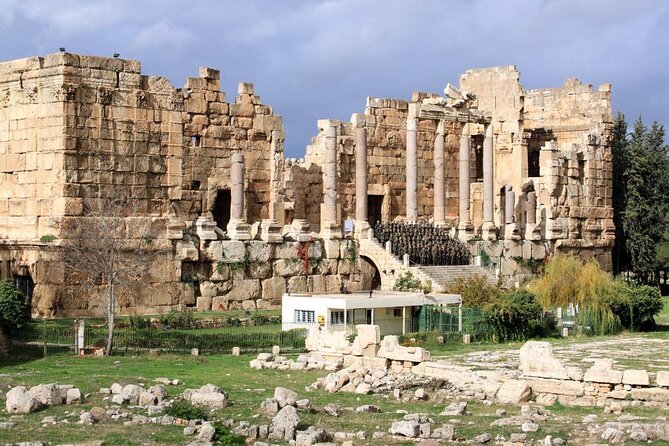
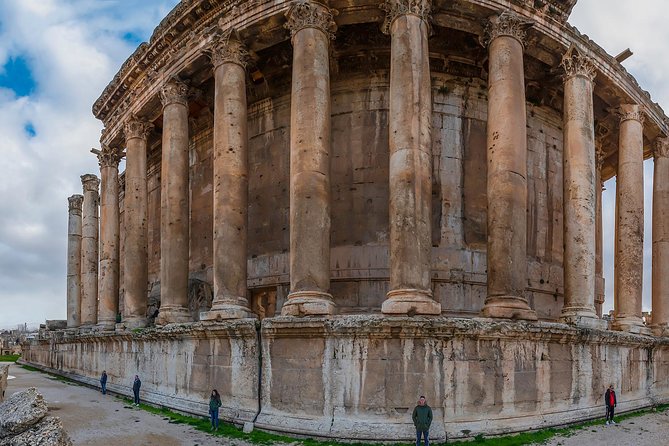
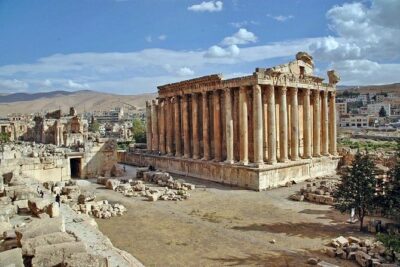
Baalbek sits at about 1,150 meters, at the foot of the southwestern slope of the Anti-Lebanon range and beside the fertile Bekaa Valley. The setting helps explain why this place became important. It was not simply a collection of isolated temples. It was a major sanctuary drawing pilgrims to worship a Romanized version of a much older Phoenician religious tradition.
The Roman complex reached its peak over more than two centuries. The scale is the first thing you notice. Massive foundations, tall columns, broad platforms, and enormous carved stones show how much labor and planning went into the site.
The principal gods were known as Jupiter, Venus, and Bacchus, together called the Triad of Heliopolis. Their names sound Roman, but the worship here grew from an older local cult. That blend is one of Baalbek’s most interesting features. You are looking at imperial Roman architecture built around a religious tradition with Phoenician roots.
The planned visit gives you about one hour at the temples. That is enough to see the main structures and understand the site’s scale, but it is not a leisurely archaeological study. I would use the time carefully. Listen for the explanation of the sanctuary’s purpose, look closely at the construction, and keep a few minutes to absorb the proportions without rushing from one photo to the next.
Admission is not included, so budget for the entrance fee separately. The supplied information does not give the current ticket price, and fees can change.
A short stop at the Mosque of Sayeda Khawla
The route also includes the Mosque of Sayeda Khawla in Baalbek. The mosque is built at the site believed to be the burial place of Sayyida Khawla, the daughter of Imam al-Hussein, grandson of the Prophet Muhammad.
According to local belief, Khawla died and was buried here when the caravan of captives from Karbala passed through Baalbek. This stop adds a living religious dimension to a day otherwise dominated by ancient stonework.
The information provided does not assign a separate visit length to the mosque. Your guide can place it within the Baalbek portion of the day, so expect the timing to depend on the group’s schedule and the amount of explanation you want. It is worth treating this as more than a photo stop. The site shows that Baalbek remains a place of religious meaning, not only an archaeological attraction.
The Stone of the Pregnant Woman and Roman engineering
The Stone of the Pregnant Woman receives about 15 minutes, and admission is free. It is a short stop, but it addresses the question many people have after seeing Baalbek: how did ancient builders move stones of such size?
The stone is a worked Roman monolith. Along with another nearby block, it ranks among the largest stones ever quarried. Both were likely intended for the Roman temple complex. Their size reflects the extreme scale of construction at Baalbek, where the builders used giant blocks in a way that was exceptional even in antiquity.
Do not expect a full museum visit here. The value comes from seeing the block at close range and connecting it to the engineering demands of the temples. Your 15 minutes should be enough for a brief explanation and photographs.
This stop also gives the day a change of rhythm. After the formal temple complex, you move to a single piece of stone that makes the construction challenge easier to picture. It is simple, direct, and memorable.
More Wine Tours in Beirut:
- Guided Private Full Day Tour to Baalbek, Anjar and Chateau Ksara
★ 5.0 · 60 reviews - Lebanon tour Baalbek ruins & Ksara w/pick-up, lunch,guide+entries
★ 5.0 · 35 reviews - Baalbek Temples & Ksara Caves w/pick-up,guide, entries+lunch
★ 4.9 · 34 reviews - Small Group Tours to Baalbek, Anjar & Chateau Ksara with lunch and Tickets
★ 5.0 · 29 reviews
Anjar, the Umayyad city in the Bekaa Valley
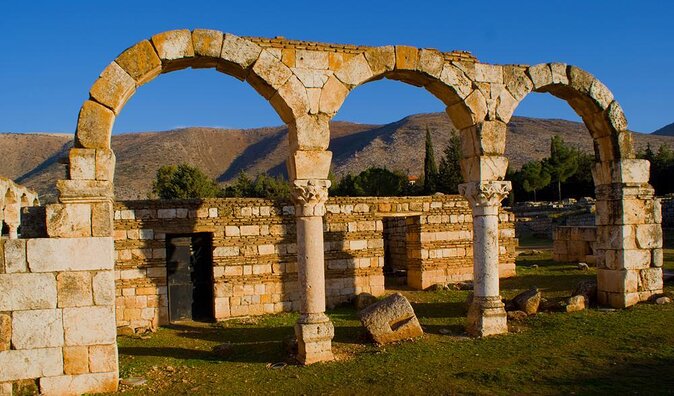
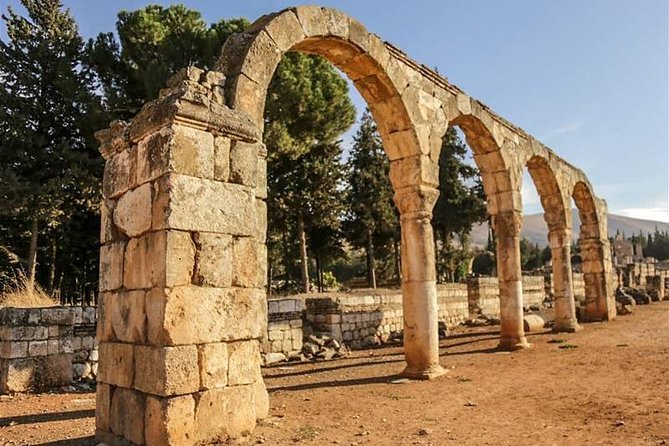
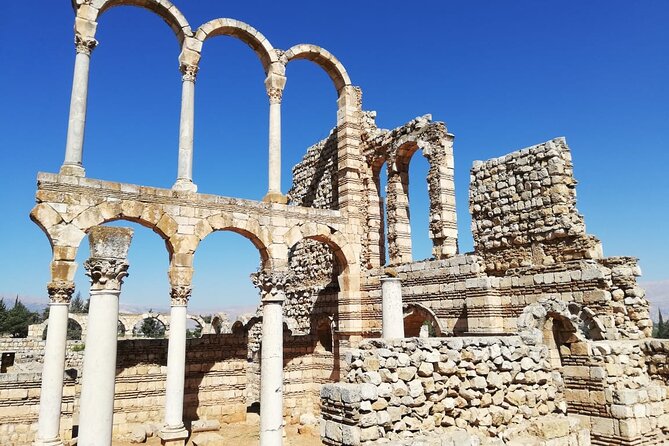
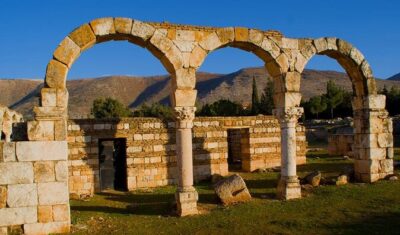
Anjar shifts the story by several centuries. The ruins belong to the Umayyad period and provide evidence of an inland commercial center positioned at the crossroads of important routes.
One road linked Beirut with Damascus. Another crossed the Bekaa and connected Homs with Tiberiade. That location helps explain why the city was built here. Anjar was not only a residence or religious site. It was planned as a place of trade and administration.
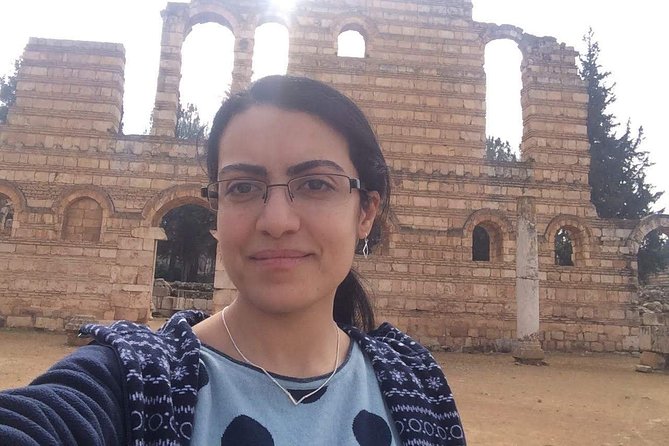
Archaeologists discovered the ancient city only in the late 1940s. Today, you can see the remains of the city walls, the Umayyad palace, harems, a mosque, the caliph’s great palace, thermal baths, and rows of pillars.
The site also contains Roman architectural elements. That does not make Anjar Roman. Instead, it shows how architectural ideas and building materials could continue across political and cultural changes. The contrast with Baalbek is useful: Baalbek represents the monumental religious power of the Roman world, while Anjar gives you a clearer sense of an organized Islamic city.
The planned visit lasts about 45 minutes. That is enough to establish the layout and see the key structures, though you should not expect to examine every wall or column in detail. If you enjoy ruins, you may wish the stop were longer. Still, its compact plan makes Anjar a practical addition to a one-day route.
Admission is not included. Ask your guide about the ticket before entering so you know what additional costs to expect.
Chateau Ksara and Lebanon’s oldest winery
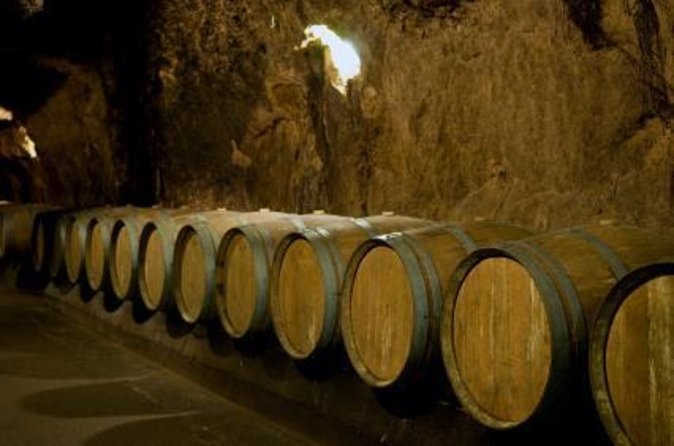
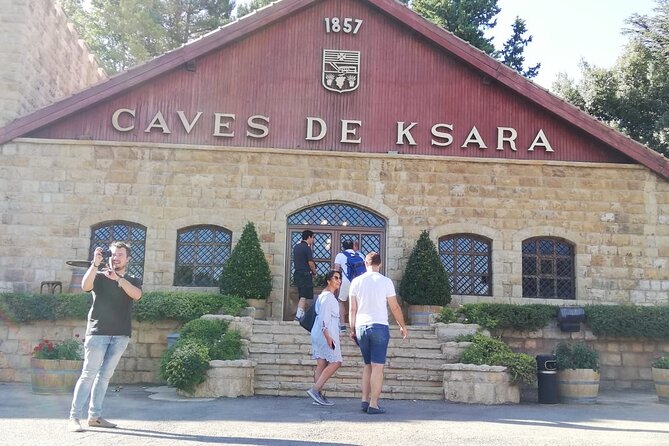
After the archaeological sites, Chateau Ksara gives the day a more relaxed finish. The winery was founded in 1857 by Jesuit priests and developed Lebanon’s first dry wine. It now produces about three million bottles a year, with exports reaching more than 40 countries.
The visit includes a cellar tour and wine-tasting, with about one hour scheduled. The cellar adds substance to the tasting. You are not simply handed a glass and sent on your way. You get a sense of the winery’s long connection to the Bekaa Valley and its role in Lebanon’s modern food and drink culture.
I especially like this stop because it avoids making the day a history-only excursion. After Roman temples and an Umayyad city, wine gives you a present-day connection to the region. You can taste Lebanese products while learning how a winery with roots in the 19th century developed into a large exporter.
The winery visit is also where private transport becomes most useful. You can sample the wines and leave the driving to someone else. The tour description does not specify the number of wines poured, the tasting menu, or the cellar conditions, so do not assume a large tasting flight or a full meal.
Chateau Ksara admission is not included, just like the archaeological sites. Confirm the added entrance and tasting charges when booking. The supplied information also confirms that lunch is not included. You should plan your meal around the day rather than expect the wine visit to provide one.
How the timing feels over eight hours
The excursion begins at 8:30 a.m. and lasts about eight hours. The listed sightseeing time adds up to roughly three hours: one hour at Baalbek, 15 minutes at the stone, 45 minutes at Anjar, and one hour at Chateau Ksara. The remaining time is used for transfers, pickup and drop-off, and the movement between sites.
That balance is normal for a route leaving Beirut and reaching several places in the Bekaa Valley. You will spend a meaningful part of the day in the vehicle. The air-conditioning and private format make that easier, especially compared with a crowded coach.
The schedule is best for you if you want a broad look at the region in one day. It is less suitable if you prefer to spend half a day at Baalbek alone, linger over lunch, or study every archaeological feature in detail.
Because only your group participates, the day may feel more adaptable than a standard group excursion. Still, the supplied schedule is fairly full. Private does not mean unlimited time. You should discuss your priorities with the tour leader at the start, while recognizing that the route still has fixed stops and an approximate eight-hour limit.
What the $70 price really includes
At $70 per person, the experience offers good value for visitors who want a private vehicle and guide support for a long day outside Beirut. The package includes:
- Hotel pickup and drop-off
- Comfortable private transportation
- An air-conditioned vehicle
- A tour leader
- A local guide
- Participation only by your own group
The strongest value comes from the transport. You avoid arranging separate taxis or trying to coordinate several distant sites yourself. You also avoid driving after wine-tasting.
The price is less attractive if you already have a car, driver, and guide arranged. You must also add lunch and admission fees. Since the ticket prices are not provided, calculate those extras before you book.
The private setup may be especially worthwhile for families, couples, or small groups with shared interests. A group discount is offered, though the amount is not stated. Ask for the exact rate rather than assuming how much you will save.
Who should choose this excursion
I would choose this tour if you have limited time in Lebanon and want three distinct experiences in one day. It suits you if Baalbek is a priority, but you also want to see a less familiar archaeological site and sample Lebanese wine.
It is a good match for:
- First-time visitors based in Beirut
- Small groups that value private transport
- History fans who want Roman and Umayyad sites together
- Wine drinkers who do not want to drive
- Visitors who prefer a guided route to independent planning
You may want another arrangement if you need extensive accessibility details, long museum visits, or a leisurely meal. The information confirms that most people can participate, but it does not provide specific accessibility details for the ruins, vehicle, or winery.
The tour has a five-star rating from six submitted ratings, and the strongest praise centers on the guides, the beauty of Baalbek, and the wine at Ksara. That is encouraging, but the small number means you should still judge the experience by its format and schedule. The day’s success will depend heavily on the guide’s explanations and on how comfortable you are with several hours of road travel.
Practical booking advice
Confirmation is provided at the time of booking. Pickup is offered, and the start time is 8:30 a.m., so give your hotel details accurately and be ready at the agreed pickup point.
Bring money or a payment method for the costs not covered by the tour. That means lunch and admission tickets at Baalbek, Anjar, and Chateau Ksara. The Stone of the Pregnant Woman has free admission.
Free cancellation is available if you cancel at least 24 hours before the experience begins. A cancellation made within 24 hours is not refunded, and changes in that final 24-hour period are not accepted. The cutoff follows local time.
Should you book the Baalbek, Anjar, and Ksara tour?
Book it if you want an efficient private day from Beirut with strong historical variety and a wine stop at the end. Baalbek is the main reason to go, but Anjar keeps the day from becoming a single-site visit, while Chateau Ksara adds a distinctly Lebanese taste to the route.
I would book with two expectations: you will spend a lot of time on the road, and you will need to pay extra for lunch and admissions. If that trade-off suits you, $70 per person is a fair price for private transfers, guide support, and a route that would be awkward to arrange independently.
FAQ
Where does the excursion begin?
The excursion begins in Beirut, with a start time of 8:30 a.m. Hotel pickup is offered.
How long does the experience last?
The excursion lasts approximately eight hours.
Is transportation private?
Yes. The tour provides comfortable private transportation in an air-conditioned vehicle, and only your group participates.
Are hotel pickup and drop-off included?
Yes. Hotel pickup and drop-off are included.
Are admission tickets included?
No. Admission tickets for the Temples of Baalbek, the Umayyad ruins of Anjar, and Chateau Ksara are not included. Admission to the Stone of the Pregnant Woman is free.
Is lunch included?
No. Lunch is not included in the tour price.
Does the tour include wine-tasting?
Yes. The Chateau Ksara visit includes a tour of the cellars and wine-tasting.
How much does the excursion cost?
The listed price is $70 per person. Group discounts are offered, but the exact discount amount is not stated.
Can I cancel for a full refund?
Yes, if you cancel at least 24 hours before the experience start time. Cancellations made less than 24 hours in advance are not refunded.
Just added around Beirut
- Private Full-Day Tour to Jeita Grotto, Harissa and Saint Charbel from Beirut★ 5.0 · 3 reviews
- Beirut to Jeita Grotto and Byblos: Daily Tours with Lunch★ 5.0 · 3 reviews
- PRIVATE city tour of Old Sidon & Historic Tyre★ 5.0 · 3 reviews
- Journey Through Time: Half-Day Private Tour to Baalbek★ 5.0 · 3 reviews
- Small-Group Tour to Sidon, Tyre and Maghdouche with Lunch and Tickets★ 4.5 · 3 reviews
- Beirut to Sidon, Tyre and Maghdouché: Daily Tours with Lunch★ 5.0 · 3 reviews
- Hike Chouwen★ 5.0 · 3 reviews
- Private Full-Day Tour to Byblos and Tripoli from Beirut★ 5.0 · 3 reviews
Baalbek & Anjar Day Trips, compared.
Guided Small-Group Tour to Baalbek, Anjar and Ksara with Lunch
Read our review →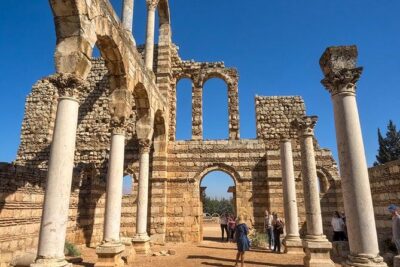
Anjar, Baalbek & Ksara Day Trip – With Lunch (4G on Board)
Read our review →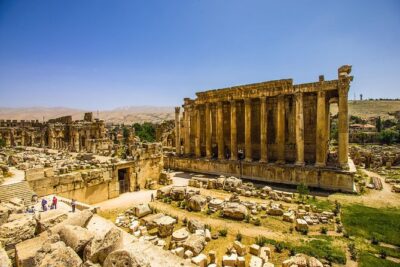
Private Anjar and Baalbek Tour from Beirut with Departure Ticket
Read our review →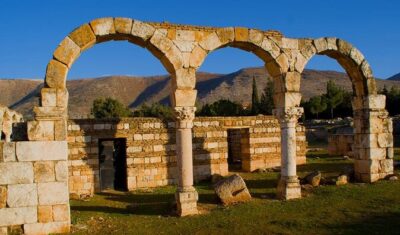
Guided Private Full Day Tour to Baalbek, Anjar and Chateau Ksara
Read our review →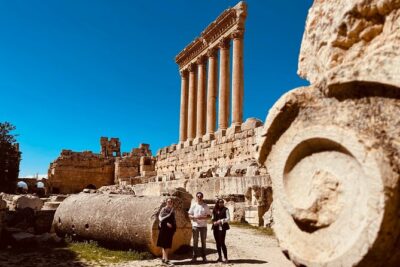
Lebanon tour Baalbek ruins & Ksara w/pick-up, lunch,guide+entries
Read our review →
Baalbek Temples & Ksara Caves w/pick-up,guide, entries+lunch
Read our review →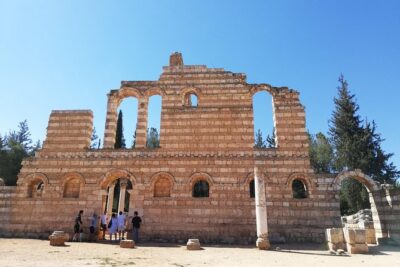
Small Group Tours to Baalbek, Anjar & Chateau Ksara with lunch and Tickets
Read our review →Browse the lists this tour appears in