
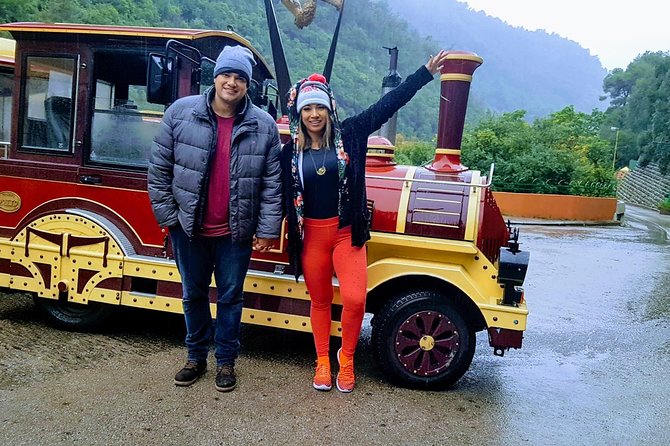
Review · BAALBEK & ANJAR DAY TRIPS
Full-Day Private Trip to Jeita Grotto, Baalbek and Chateau Ksara
Roman ruins, underground caves, and Lebanese wine make an unusual trio. This private 9-hour trip links Jeita Grotto, Baalbek, and Chateau Ksara without asking you to manage Lebanon’s roads yourself. I like the door-to-door pickup and the mix of nature, ancient history, and food culture. I also like that Baalbek includes a local guide, while you explore Jeita at your own pace.
The main drawback is the schedule. Beirut to Baalbek is a long drive, and entrance fees, lunch, and some site charges are not included in the $69.45 price. You will need an early start, sensible planning, and enough energy for a very full day.
In This Review
- Key points at a glance
- Why this route works so well in one day
- Jeita Grotto: Lebanon’s underground opening act
- Baalbek: the reason to accept the long drive
- Temple of Jupiter and the massive foundation stones
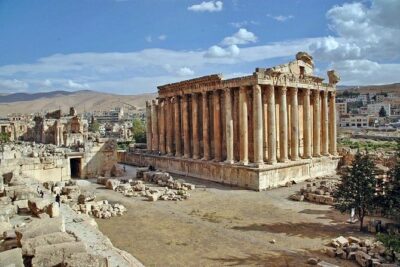
- Temple of Bacchus, the best-preserved major building
- Temple of Venus and the wider Baalbek setting
- Chateau Ksara: a short taste of Lebanese wine
- Private transport and the value of $69.45
- Who will enjoy this trip most?
- Practical advice before you book
- Should you book the Jeita, Baalbek and Ksara day?
- FAQ
- What is included in the tour price?
- Are entrance fees included?
- Is lunch included?
- What time does the tour begin?
- How long does the experience last?
- Is the tour private?
- Is a local guide provided at Baalbek?
- Can I cancel for a full refund?
Key points at a glance
- Three very different sights in one day: Jeita Grotto offers caves and an underground river, Baalbek brings colossal Roman temples, and Chateau Ksara finishes the day with Lebanese wine.
- Private transport makes the route easier: Hotel pickup and drop-off are included, with an air-conditioned vehicle and a dedicated tour leader.
- Baalbek gets the strongest guiding support: A local guide explains the Roman sanctuary, its gods, and the massive stones that still puzzle visitors.
- Wine tasting is included, but not every winery cost: The package includes tasting, while listed admission fees are generally excluded, so confirm exactly what your booking covers.
- The price can be good for a private day: At $69.45 per person, value improves when two or more people share the vehicle and guide.
- Expect a packed schedule: Jeita is planned for about 90 minutes, Baalbek for several sightseeing segments, and Chateau Ksara for about 45 minutes.
Why this route works so well in one day
I like this trip because it avoids the usual single-theme day. Jeita Grotto gives you Lebanon’s natural side. Baalbek supplies the grand ancient monuments. Chateau Ksara adds a modern pleasure, with wine made in the Beqaa Valley.
That variety matters. A full day spent only at ruins can become tiring, while a day focused only on scenery can leave you wanting more cultural context. Here, the rhythm changes several times. You move from cool caves to open archaeological grounds, then to a winery.
You also avoid arranging several separate taxis or tours. The private vehicle handles the long route, and hotel pickup and drop-off remove a layer of practical stress. This is especially useful when you are staying in Beirut and want to see Baalbek without organizing the journey yourself.
Still, do not mistake the itinerary for a relaxed countryside outing. Nine hours is an estimate, and road time can make the day feel longer. The listed stops at Baalbek overlap in subject, since several describe the same temple complex from different angles. In practice, you should think of Baalbek as one substantial archaeological visit with several major monuments, not four entirely separate attractions.
More Baalbek and Anjar day trips:
- Guided Small-Group Tour to Baalbek, Anjar and Ksara with Lunch
★ 5.0 · 511 reviews - Anjar, Baalbek & Ksara Day Trip – With Lunch (4G on Board)
★ 4.5 · 181 reviews - Baalbek – Anjar – Ksara Trip From Beirut
★ 4.5 · 80 reviews
Jeita Grotto: Lebanon’s underground opening act
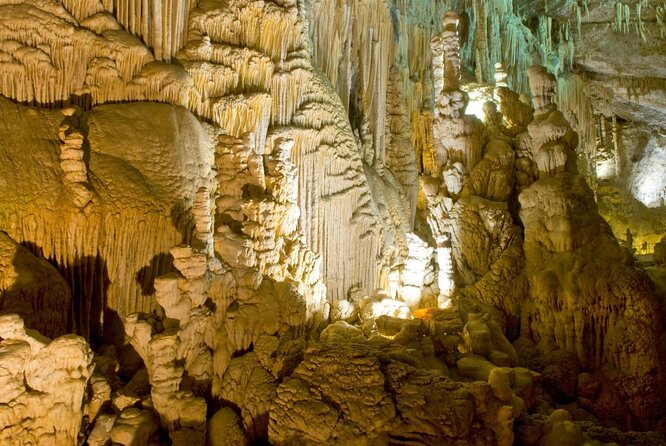
Jeita Grotto is the first major stop, with about 90 minutes planned. The site consists of two connected limestone cave systems, formed over millions of years. The upper cave reaches about 2,130 meters, while the lower gallery extends about 6,200 meters below it.
The upper section is known for its mineral formations. You can expect stalactites, stalagmites, columns, curtains, draperies, ponds, and mushroom-shaped formations. The lower gallery has an underground river and lake, and the visit includes both walking and a boat ride when operating conditions allow.
That combination is what makes Jeita more than a simple cave walk. You first see the stone formations from paths inside the upper gallery, then experience the lower cave from the water. The change in setting gives the stop a sense of movement, even though the visit itself is fairly short.
The tour lets you explore Jeita independently rather than assigning a guide to walk beside you. I see that as a benefit if you like to stop for photographs, read signs, or move at your own pace. The tradeoff is that you may receive less explanation here than at Baalbek.
Admission is not included. Build that extra cost into your budget, and allow some flexibility because the exact cave experience can depend on site operations. You should also wear shoes suited to walking on potentially damp surfaces. The cave is 300 meters above sea level, with a height difference of 305 meters across the system, so this is not a completely flat sightseeing stop.
Baalbek: the reason to accept the long drive
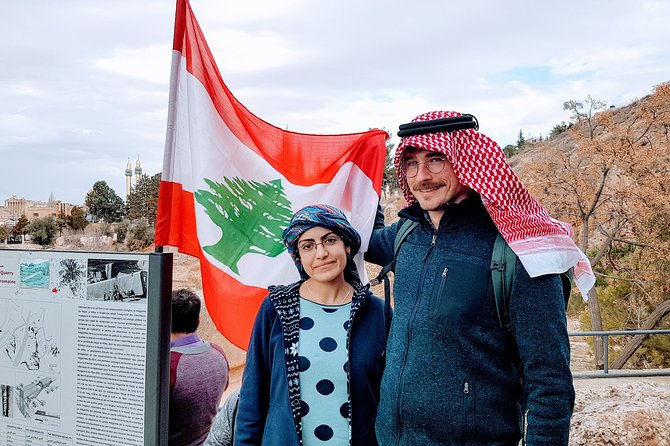
Baalbek is the heart of the day. The Roman sanctuary was known as Heliopolis during the Hellenistic period and later served as a major religious center dedicated to the Heliopolitan triad: Jupiter, Venus, and Bacchus.
The site became a UNESCO World Heritage property in 1984. Its scale is hard to grasp from photographs. The ruins include some of the largest Roman temple remains ever built, and the surviving columns, platforms, stairways, and carved stonework show how ambitious the builders were.
This is where the local guide matters most. Baalbek is not a site you should rush through with only a few labels and a camera. The guide can connect the scattered ruins to the ancient religious complex and explain why the sanctuary drew pilgrims during Roman times.
The scheduled Baalbek material is divided into several 30-minute and 90-minute segments. Do not read that as a series of separate tours. It is a structured visit to the same archaeological complex, including the Temple of Jupiter, Temple of Bacchus, Temple of Venus, and the enormous stones outside the main sanctuary.
The complex sits at about 1,150 meters in the Beqaa Valley near the Anti-Lebanon range. That altitude and the open setting mean you should prepare for sun, wind, or cooler conditions depending on the day. I would bring water, sun protection, and comfortable footwear. There is a lot to look at, and the site rewards slow walking.
Temple of Jupiter and the massive foundation stones
The Temple of Jupiter was the largest temple in the Roman world dedicated to Jupiter Heliopolitanus. Construction probably began around 16 BC and was nearly complete by about AD 60.
Only part of the temple survives, but the scale of the platform remains remarkable. Three enormous foundation blocks are among the heaviest stones ever used in construction. Even if you are not an ancient architecture enthusiast, these stones make the site memorable because they raise a simple question: how did builders move them?
The temple once served as an oracle. That detail helps explain the sanctuary’s importance. This was not merely a grand building meant to impress; it was a religious center drawing people from across the region.
More Jeita Grotto tours:
- Guided Small-Group Tour to Jeita, Harissa, Byblos with Lunch
★ 5.0 · 361 reviews - Jeita Grotto,Harissa&Byblos Full-Day PRIVATE-CAR Trip from Beirut
★ 5.0 · 222 reviews - Jeita Grotto – Harissa – Byblos Trip
★ 5.0 · 169 reviews - Byblos, Jeita Grotto & Harissa Day Trip -With Lunch (4G on Board)
★ 4.5 · 145 reviews
Temple of Bacchus, the best-preserved major building
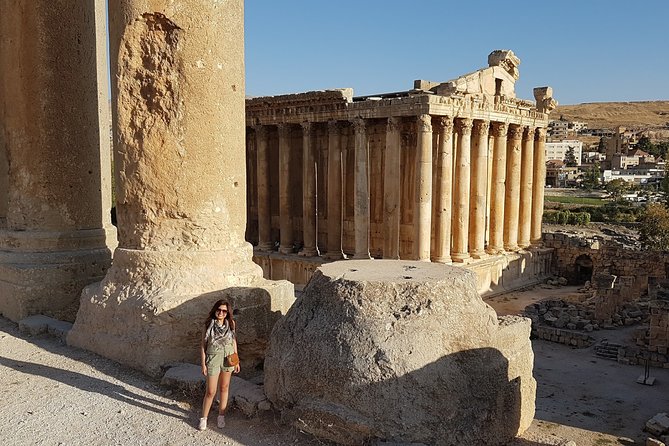
The Temple of Bacchus is one of the finest-preserved large Roman temples at Baalbek. Its carved decoration dates to the second century CE, although the exact age of the temple is not known.
This is likely the building that makes the strongest visual impression. Its columns and detailed ornament remain remarkably clear, giving you a better sense of what Roman temple architecture looked like than many ruined sites can offer.
The temple was dedicated to Bacchus, the Roman god associated with wine, which creates a neat link to the final stop at Chateau Ksara. The connection is symbolic rather than direct, but it gives the day a pleasing shape: ancient worship of Bacchus followed by Lebanese wine in the Beqaa Valley.
Temple of Venus and the wider Baalbek setting
The Temple of Venus dates from the third century and has an unusual horseshoe-shaped platform. Its circular shrine includes five niches decorated with dove and shell motifs, details that support its connection with Venus.
It is smaller than the Jupiter and Bacchus temples, but it helps show that Baalbek was a larger religious complex rather than a pair of isolated ruins. You get a better feel for the site by seeing its different buildings and sacred spaces together.
The itinerary also includes the Stone of the Pregnant Woman, a worked Roman monolith near the quarry area. It is one of the largest ancient stone blocks known, along with another nearby monolith. The 15-minute visit is brief, but the stop adds useful context to the engineering challenge behind Baalbek.
You may also pass or stop near the Mosque of Sayyida Khawla. It is believed to mark the burial place of Sayyida Khawla, the daughter of Imam al-Hussein. This adds a later religious layer to the day, showing that Baalbek remains more than an archaeological site.
Chateau Ksara: a short taste of Lebanese wine
Chateau Ksara comes last, with about 45 minutes planned. The winery was founded in 1857 by Jesuit priests and developed Lebanon’s first dry wine. Today, it produces about three million bottles each year and exports to more than 40 countries.
The stop includes a winery visit and wine tasting. It is a useful way to encounter Lebanon beyond its ancient monuments, especially since the Beqaa Valley has long been tied to agriculture and wine production.
I like the placement at the end of the route. After a morning in caves and several hours around Roman stonework, a tasting provides a more relaxed finish. The tasting also gives you a chance to sample French-style Lebanese wines without arranging a separate winery visit.
The limitation is time. Forty-five minutes is enough for a short tour and tasting, but not for a long meal or a slow winery afternoon. Lunch is not included, so you should ask your provider how the day handles the midday meal. The supplied details do not specify a restaurant or lunch break.
The wording around fees deserves attention. Wine tasting is included in the package description, while Chateau Ksara admission is listed as excluded. Before departure, confirm whether the tasting, cellar visit, or any entrance charge is covered under your exact booking. That small check can prevent an awkward surprise.
Private transport and the value of $69.45
The listed price is $69.45 per person. For a private 9-hour day with hotel pickup, hotel drop-off, an air-conditioned vehicle, a tour leader, and a local Baalbek guide, that can be a fair deal, particularly if you are traveling with companions and sharing the cost.
The price is less generous if you are alone and must pay for all excluded admissions and lunch on top. The trip is not an all-inclusive ticket. Jeita admission is excluded, Baalbek site fees are described as excluded in the main stop details, and lunch is specifically not included.
Private travel has another advantage beyond comfort: flexibility. The operator has handled schedule changes well in the past, and the office has been praised for confirming pickup the night before. Guides and drivers named in past bookings include Hassan, Makram, Kaleeb, Ahmad, and Kimal. The specific person assigned to your trip may differ, but the pattern is useful: confirm the guide’s name and role before departure.
Some drivers have been praised for being on time, kind, safe, and helpful. That is important on a route with long stretches between Beirut, Baalbek, and the winery. You are not simply buying transportation; you are buying a day that is easier to coordinate.
Who will enjoy this trip most?
I would recommend it to someone visiting Lebanon for the first time who wants major sights without building a complicated independent route. It suits couples, families, and small groups who value a private vehicle and want several types of experience in one day.
History fans will be happiest at Baalbek. Cave lovers will appreciate Jeita. Anyone curious about Lebanese wine gets a worthwhile introduction at Chateau Ksara.
You should think twice if you dislike long drives, want lots of free time, or prefer to spend an entire day at one place. Baalbek deserves more than a rushed glance, and the schedule leaves little room for lingering at every temple.
The trip is also a good fit for people who want a guide at the most complex site but prefer independent time at Jeita. That balance can feel more natural than having a guide narrate every minute of the day.
Practical advice before you book
Start time is 8:30 am, and hotel pickup is offered. Confirm the pickup time and location in advance, even though the operator generally sends a confirmation message the night before.
Ask three direct questions before paying:
- Which entrance fees are included in my specific booking?
- Is the Chateau Ksara tasting included, and are there extra winery charges?
- How is lunch handled during the nine-hour schedule?
Wear comfortable shoes for Jeita and Baalbek. Bring water and sun protection for the open archaeological grounds. Keep your schedule flexible, since the advertised duration is approximate.
Free cancellation is available if you cancel at least 24 hours before the start time. Inside that window, the amount paid is not refunded, and late changes are not accepted.
Should you book the Jeita, Baalbek and Ksara day?
Book it if you want Lebanon’s biggest variety in one private day. Jeita Grotto, Baalbek, and Chateau Ksara each offer something different, and the private transport removes much of the route-planning burden.
I would book with realistic expectations. This is an efficient sightseeing day, not a slow retreat. Confirm the excluded fees and lunch plan, accept that Baalbek will be the longest and most demanding stop, and use the local guide to understand the ruins rather than simply photograph them.
At $69.45 per person, the trip offers especially good value for a small group. Solo visitors should calculate the added entrance fees and food before deciding. If Baalbek is high on your Lebanon list and you want Jeita and wine added without arranging three separate outings, this is a sensible choice.
FAQ
What is included in the tour price?
The package includes private transportation, hotel pickup and drop-off, a tour leader, a local guide in Baalbek, and an air-conditioned vehicle. Wine tasting is included in the tour description.
Are entrance fees included?
No. Jeita Grotto admission is not included, and the main tour information states that entrance fees are excluded. Baalbek and Chateau Ksara fee details should be confirmed for your specific booking because the stop information lists some charges as excluded.
Is lunch included?
No. Lunch is not included in the tour price.
What time does the tour begin?
The scheduled start time is 8:30 am.
How long does the experience last?
The tour lasts approximately nine hours.
Is the tour private?
Yes. Only your group participates in the private activity.
Is a local guide provided at Baalbek?
Yes. A local guide in Baalbek is included.
Can I cancel for a full refund?
Yes, if you cancel at least 24 hours before the experience start time. Cancellations made less than 24 hours before the start time are not refunded, and late changes are not accepted.
More Wine Tours in Beirut
- Guided Private Full Day Tour to Baalbek, Anjar and Chateau Ksara
★ 5.0 · 60 reviews - Lebanon tour Baalbek ruins & Ksara w/pick-up, lunch,guide+entries
★ 5.0 · 35 reviews - Baalbek Temples & Ksara Caves w/pick-up,guide, entries+lunch
★ 4.9 · 34 reviews - Small Group Tours to Baalbek, Anjar & Chateau Ksara with lunch and Tickets
★ 5.0 · 29 reviews
Just added around Beirut
- Private Full-Day Tour to Jeita Grotto, Harissa and Saint Charbel from Beirut★ 5.0 · 3 reviews
- Beirut to Jeita Grotto and Byblos: Daily Tours with Lunch★ 5.0 · 3 reviews
- PRIVATE city tour of Old Sidon & Historic Tyre★ 5.0 · 3 reviews
- Journey Through Time: Half-Day Private Tour to Baalbek★ 5.0 · 3 reviews
- Small-Group Tour to Sidon, Tyre and Maghdouche with Lunch and Tickets★ 4.5 · 3 reviews
- Beirut to Sidon, Tyre and Maghdouché: Daily Tours with Lunch★ 5.0 · 3 reviews
- Hike Chouwen★ 5.0 · 3 reviews
- Private Full-Day Tour to Byblos and Tripoli from Beirut★ 5.0 · 3 reviews
Baalbek & Anjar Day Trips, compared.
Guided Small-Group Tour to Baalbek, Anjar and Ksara with Lunch
Read our review →
Anjar, Baalbek & Ksara Day Trip – With Lunch (4G on Board)
Read our review →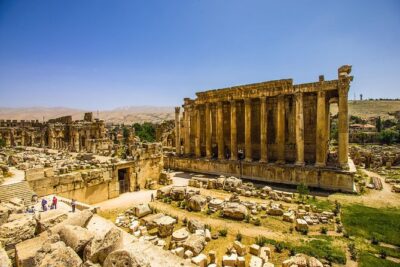
Private Anjar and Baalbek Tour from Beirut with Departure Ticket
Read our review →
Guided Private Full Day Tour to Baalbek, Anjar and Chateau Ksara
Read our review →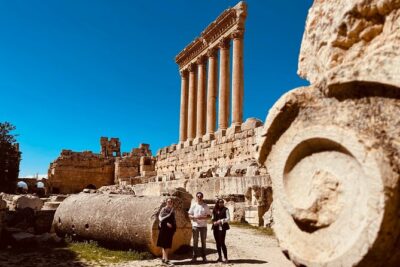
Lebanon tour Baalbek ruins & Ksara w/pick-up, lunch,guide+entries
Read our review →
Baalbek Temples & Ksara Caves w/pick-up,guide, entries+lunch
Read our review →
Small Group Tours to Baalbek, Anjar & Chateau Ksara with lunch and Tickets
Read our review →Browse the lists this tour appears in