
Review · JEITA GROTTO TOURS
Small Group Tours to Jeita Grotto and Byblos with tickets
See Lebanon’s wonders in one day. This six-hour tour links the natural drama of Jeita Grotto with the ancient Phoenician city of Byblos, making it a strong choice if your time in Beirut is short. I especially like the included entrance fees and the small group limit of 15 people.
I also like the clear mix of nature, archaeology, shopping, and sea views. The main drawback is the pace: with several stops packed into one day, you will get a useful introduction rather than a slow, deeply focused visit to every site.
Albert, the tour host praised for being punctual, friendly, and well informed, helped make an early start worthwhile. If you want a relaxed lunch or hours to wander Byblos on your own, this may feel too tightly scheduled.
In This Review
- Key points to know before booking
- Why this Beirut day trip works
- Entering Jeita Grotto after the 8:00 start
- Walking through Byblos, a city with 5,000 years of roots
- Byblos Castle and the view over the ruins
- The old souk, cobblestones, and a short shopping pause
- Byblos Port and the city’s maritime past
- What the $60 price really includes
- Who will enjoy this six-hour itinerary
- Booking, cancellation, and practical expectations
- Should you book the Jeita Grotto and Byblos tour?
- FAQ
- How long does the Jeita Grotto and Byblos tour last?
- What time does the tour start?
- Is pickup available?
- What is included in the price?
- Is lunch included?
- How many people can join the tour?
Key points to know before booking

- Jeita Grotto is the visual high point: You spend about two hours at Lebanon’s famous cave complex, with admission covered.
- Byblos adds thousands of years of history: The city has roots reaching back to Neolithic times and is linked to the development of the Phoenician alphabet.
- The group is capped at 15 people: That is small enough for a more personal day than a large coach tour.
- The Crusader castle gives the best archaeological overview: From the top of its square keep, you can look across the ancient ruins toward the sea.
- You visit more than just ruins: The route includes the old souk and Byblos Port, giving the day some local color.
- The $60 price covers the important basics: You get an air-conditioned vehicle, a local guide, a tour leader, and entrance fees, but lunch is extra.
Why this Beirut day trip works

Lebanon packs an unusual amount of history into a small area, but arranging Jeita Grotto and Byblos independently can take time. This outing handles the transport between Beirut and the two main sights, giving you a practical way to see both without hiring a private car or piecing together separate admissions.
The tour begins at 8:00 a.m. and lasts about six hours. That early departure matters. You get moving before the day becomes too far along, and arriving early at Jeita can make the first stop feel less rushed. Albert was noted for being punctual, friendly, and well informed, and that kind of reliable start is especially useful when the schedule includes several separate places.
The vehicle is air-conditioned, a welcome feature in Lebanon’s warmer months. The maximum group size is 15, so you should expect a small-group setting rather than a giant bus. You still need to keep an eye on the clock, though. The listed visits add up to just over five hours, leaving the remaining time for driving, transitions, and organizing the group.
More Jeita Grotto tours:
- Guided Small-Group Tour to Jeita, Harissa, Byblos with Lunch
★ 5.0 · 361 reviews - Jeita Grotto,Harissa&Byblos Full-Day PRIVATE-CAR Trip from Beirut
★ 5.0 · 222 reviews - Jeita Grotto – Harissa – Byblos Trip
★ 5.0 · 169 reviews
Entering Jeita Grotto after the 8:00 start
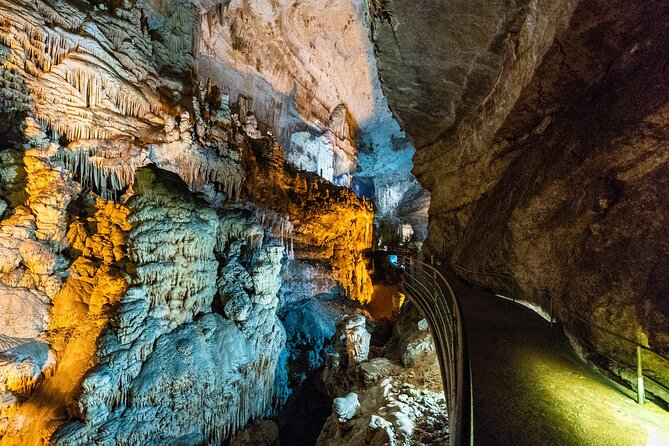
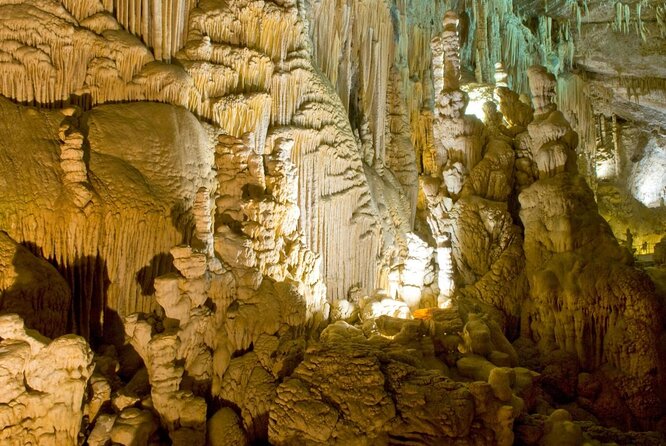
Jeita Grotto is the tour’s main natural attraction. Located about 18 kilometers from Beirut, it is part of a natural reserve and was nominated for the world’s seven wonders. The site is known for its striking cave scenery, and you have roughly two hours here, with the admission ticket included.
This is not a quick roadside photo stop. Two hours gives you time to take in the scale and unusual shapes of the grotto rather than simply arriving, snapping a picture, and leaving. The experience is built around the cave formations and the setting, so this will appeal most if you enjoy dramatic natural sites as much as historic monuments.
I like that the ticket is already covered. Jeita Grotto is the kind of place where a separate admission step could slow down a compact day, especially with a group. Having the guide and tickets arranged lets you focus on the visit itself.
The trade-off is that the schedule gives Jeita a fixed window. If the caves are the chief reason you want to go, you may wish you had more than two hours. The tour has to continue to Byblos, and the later stops depend on keeping the morning moving.
The early arrival is one of the most useful practical details. The tour’s experience with reaching Jeita early suggests that the first group through can have a calmer visit. I would treat the 8:00 start as part of the value, not an inconvenience. Sleeping late would cost you the best chance of a smoother beginning.
Walking through Byblos, a city with 5,000 years of roots
After Jeita, the tour turns from natural scenery to one of the Mediterranean’s oldest urban sites. Byblos has been inhabited since Neolithic times, with origins tracing back to about 5000 BC. The city is closely tied to Phoenician culture and to the development and spread of the Phoenician alphabet.
You have about two hours in Byblos itself. That gives you time to understand the city as more than a collection of old stones. Byblos connects everyday trade, writing, seafaring, and settlement across thousands of years. The site’s importance comes not only from its age, but from its role in the story of the Mediterranean.
I find this pairing with Jeita especially effective. The grotto gives you a powerful natural setting first, while Byblos supplies the human story afterward. One stop is about geology and scenery. The other is about people, language, trade, and long-term settlement.
Still, two hours is not enough for every corner of Byblos. You will get a broad introduction, but you should not expect a detailed archaeological study or a long period for independent wandering. The guide’s role matters here. A clear explanation can turn a field of ruins into a readable place, while a rushed visit can make the remains blur together.
The tour does not list a separate admission charge for the general Byblos stop. That keeps the day simple, although the included ticket for Byblos Castle is the more important paid entry within the archaeological area.
Byblos Castle and the view over the ruins
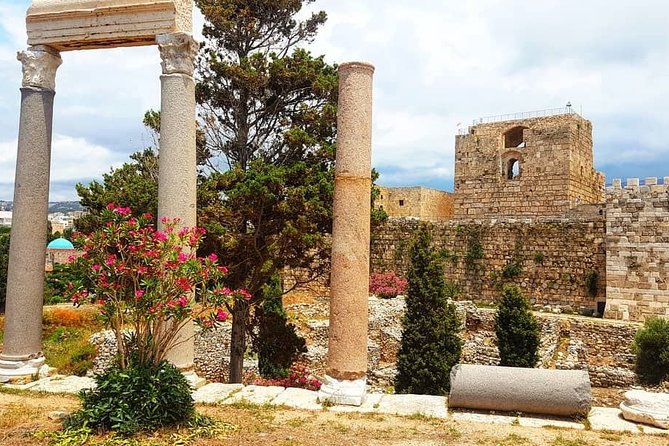
Byblos Castle is the most substantial historic structure on the route. The restored 12th-century Crusader castle sits inside the archaeological site and is surrounded by a dry moat about 10 meters wide. Its square keep provides an excellent view over the remains below and toward the sea.
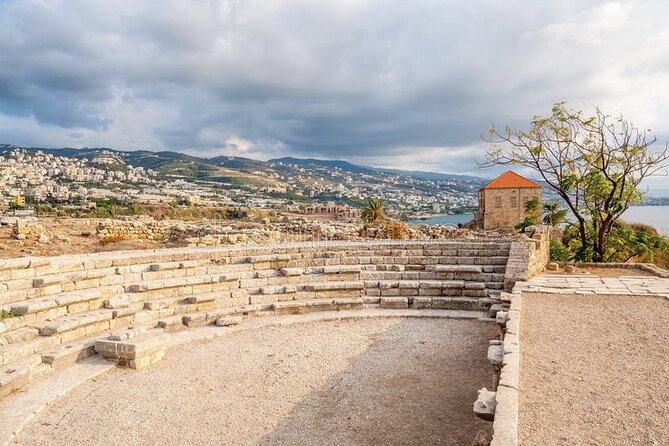
The castle gives you a useful sense of place. From the top, you can see the layers of Byblos spread around you, including Bronze Age dwellings below the walls. You can also look toward the area associated with the Temple of Baalat Gebal and the Temple of the Obelisks.
This is where the tour’s historical material becomes easiest to understand visually. Instead of hearing only about different periods, you can look across the site and see how the castle, temples, dwellings, and shoreline fit together. The sea-facing view also helps explain why Byblos became an important port and trading center.
The castle includes a small museum and a room with information panels outlining the city’s past. Those displays are useful if you want a little more context than the outdoor ruins provide. I would allow time to read at least some of the panels, but remember that the castle visit is scheduled for about one hour.
The included entrance ticket is a real advantage here. You are not paying extra at each major sight, and the castle is the one Byblos stop where admission is specifically covered. The only caution is that the best viewpoint is at the top of the keep, so the castle may be less comfortable for anyone who prefers to avoid climbing or uneven historic sites. The available information does not give detailed accessibility conditions, so you should ask before booking if that is important for you.
More Byblos tours:
- Byblos, Jeita Grotto & Harissa Day Trip -With Lunch (4G on Board)
★ 4.5 · 145 reviews - Semi-Private Tour to Jeita Grotto, Harissa & Byblos with Lunch
★ 5.0 · 52 reviews - Small Group Tour to Jeita Grotto, Harisa & Byblos with Hotel pickup
★ 5.0 · 49 reviews - Private Guided Tour to Jeita Grotto through Harissa and Byblos
★ 5.0 · 48 reviews
The old souk, cobblestones, and a short shopping pause
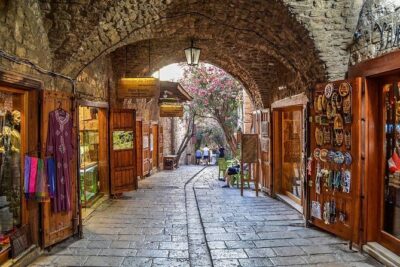
The old souk receives about 10 minutes, making it a brief but pleasant change of pace after the archaeological site. This old market runs along cobblestone streets and offers souvenirs and antiques, along with traditional architecture to look at as you walk.
Ten minutes is enough for a quick orientation and perhaps a fast browse. It is not enough for a serious shopping session, careful antique hunting, or a long café stop. If you see something you want, you may need to decide quickly, since the group schedule continues.
I like the souk’s place in the itinerary because it keeps Byblos from feeling like an archaeology-only visit. You get a glimpse of the living town, not just its ancient remains. At the same time, the short timing tells you exactly what this tour is designed to do: sample several sides of Byblos rather than leave you in one district for an entire afternoon.
Byblos Port and the city’s maritime past
The final stop is Byblos Port, also allotted about 10 minutes. Lebanese tradition considers it the oldest port in the world, and around 3000 BC it was an important timber-shipping center in the eastern Mediterranean.
The port is a compact stop, but it adds a valuable piece to the story. Byblos was not simply an inland settlement with old temples. Its connection to the sea helped support trade and links across the eastern Mediterranean. The port gives the city a physical connection to the maritime world described at the archaeological site.
Again, do not expect a long waterfront break. Ten minutes is enough to see the port and take in the setting, but not enough for a leisurely meal, a long walk, or extended photography. Since lunch is not included, the limited port stop also means you should not count on eating here unless the tour leader provides time outside the listed schedule.
What the $60 price really includes
At $60 per person, this tour offers solid value if you want to combine Beirut, Jeita, and Byblos in a single outing. The price includes an air-conditioned vehicle, a local guide, a tour leader, and all entrance fees. Jeita Grotto and Byblos Castle are the key included admissions, and those costs can otherwise make an independently arranged day less predictable.
The small group limit also matters. With no more than 15 people, you should have a better chance of hearing the guide and staying organized than you would on a large coach. It does not mean a private tour, and the day still follows a shared timetable, but it offers a useful middle ground between independence and convenience.
Pickup is offered, and the starting time is 8:00 a.m. The exact pickup arrangement is not detailed here, so confirm the meeting point and timing when you book. A mobile ticket is provided, and confirmation is sent at booking.
Lunch is not included. That is the main extra cost to plan for, along with any personal purchases at the old souk. Since the schedule is compact, do not assume you will have a long restaurant stop unless the tour provider confirms it.
Who will enjoy this six-hour itinerary
I would recommend this tour to you if you have only one day for sightseeing around Beirut and want two major destinations handled in one outing. It is also a good fit if you prefer having a guide explain the sites rather than sorting out the transport and history by yourself.
The tour suits first-time visitors especially well. Jeita gives you an immediate natural highlight, while Byblos introduces Lebanon’s ancient cities, Phoenician connections, castle architecture, port traditions, and modern market streets. You return with a broad sense of the area instead of seeing only one type of attraction.
It is less suited to you if your ideal day means lingering. The itinerary gives two hours to Jeita, two hours to Byblos, one hour to the castle, and only 10 minutes each at the souk and port. That is efficient, but not leisurely.
I would also think carefully about the schedule if you want a full lunch break or extensive shopping. Those needs are not built into the stated inclusions. The strongest reason to choose this experience is the range of sights, not free time.
Booking, cancellation, and practical expectations
Most people can take part, and the group is limited to 15. The tour offers free cancellation if you cancel at least 24 hours before the local start time. Cancellations made within 24 hours are not refunded, and changes inside that period are not accepted.
Because the day begins at 8:00 a.m., I would confirm your pickup details before the morning of departure. The positive note about Albert’s punctuality makes an early start feel worthwhile, but punctuality works both ways on a multi-stop tour. Arrive ready to leave at the agreed time.
Bring a plan for lunch and keep your schedule open for the full six hours. The tour includes the main entry fees, so you do not need to budget for those separately, but lunch and souvenirs remain your responsibility.
Should you book the Jeita Grotto and Byblos tour?
Book it if you want an efficient introduction to two of Lebanon’s most important day-trip sights from Beirut. The combination is excellent: Jeita supplies unforgettable cave scenery, while Byblos brings together Phoenician history, ancient ruins, a Crusader castle, a market, and a port.
The $60 fee is reasonable for the included vehicle, guide, tour leader, small group size, and entrance tickets. Albert’s punctual and friendly hosting is another encouraging detail, especially for an early departure.
Skip it if you want to spend a full day at Byblos, shop slowly, linger over lunch, or study Jeita at length. This is a well-packed sampler, not a slow archaeological expedition. For a one-day visitor who values range, structure, and predictable costs, I would book it.
FAQ
How long does the Jeita Grotto and Byblos tour last?
The tour lasts approximately six hours.
What time does the tour start?
The stated start time is 8:00 a.m.
Is pickup available?
Yes, pickup is offered. Confirm the exact pickup details when booking.
What is included in the price?
The price includes an air-conditioned vehicle, all entrance fees, a local guide, and a tour leader.
Is lunch included?
No. Lunch is not included in the tour price.
How many people can join the tour?
The group has a maximum of 15 travelers.
Just added around Beirut
- Private Full-Day Tour to Jeita Grotto, Harissa and Saint Charbel from Beirut★ 5.0 · 3 reviews
- Beirut to Jeita Grotto and Byblos: Daily Tours with Lunch★ 5.0 · 3 reviews
- PRIVATE city tour of Old Sidon & Historic Tyre★ 5.0 · 3 reviews
- Journey Through Time: Half-Day Private Tour to Baalbek★ 5.0 · 3 reviews
- Small-Group Tour to Sidon, Tyre and Maghdouche with Lunch and Tickets★ 4.5 · 3 reviews
- Hike Chouwen★ 5.0 · 3 reviews
- Beirut to Sidon, Tyre and Maghdouché: Daily Tours with Lunch★ 5.0 · 3 reviews
- Private Full-Day Tour to Byblos and Tripoli from Beirut★ 5.0 · 3 reviews
Jeita Grotto Tours, compared.

Guided Small-Group Tour to Jeita, Harissa, Byblos with Lunch
Read our review →
Jeita Grotto,Harissa&Byblos Full-Day PRIVATE-CAR Trip from Beirut
Read our review →
Byblos, Jeita Grotto & Harissa Day Trip -With Lunch (4G on Board)
Read our review →
Semi-Private Tour to Jeita Grotto, Harissa & Byblos with Lunch
Read our review →
Small Group Tour to Jeita Grotto, Harisa & Byblos with Hotel pickup
Read our review →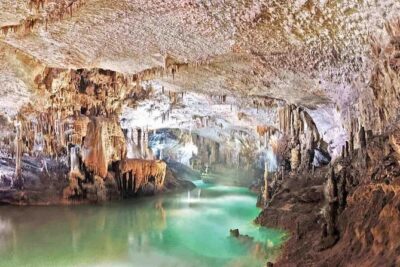
Private Guided Tour to Jeita Grotto through Harissa and Byblos
Read our review →
Browse the lists this tour appears in