
Review · HISTORICAL TOURS
Exploring Beirut’s Past: A Private Guided Historical Tour
Beirut remembers everything. This private tour links archaeology, faith, seaside views, and war history in one well-planned day. I like the two-hour National Museum visit, which gives you a strong base for understanding Lebanon, and I like the comfort of private transport with hotel pickup and drop-off. The main drawback is that many downtown stops last only 10 minutes, so you get a quick look rather than a long visit.
I also appreciate the personal format. Your guide can explain the city in context, while the driver handles Beirut’s roads. Past tours have been especially praised for guides Pierre and Susan, along with driver Nasser. Still, central Beirut can face security restrictions or protests, and the exact route may need to change.
In This Review
- Key points to know before booking
- Why this Beirut tour works as a first look
- Two hours inside the National Museum of Beirut
- Pigeon Rocks and the Corniche in ten-minute snapshots
- Zaitunay Bay and Beirut’s modern waterfront
- The Holiday Inn and the visible marks of war
- Downtown Beirut’s religious landmarks
- Martyrs’ Square and Place de l’Étoile
- Beirut Souks and the Roman Berytus Baths
- What $75 includes and where the value lies
- Who should book this private Beirut tour?
- Should you book it?
- FAQ
- How long does the Beirut historical tour last?
- What is the price?
- Is hotel pickup included?
- Is the tour private?
- Is transportation provided?
- Is the National Museum admission included?
- Are meals included?
- What is the cancellation policy?
Key points to know before booking
- The National Museum gets the most time: Allow two hours for Lebanon’s finest archaeological collection.
- You travel privately: Only your group participates, with hotel pickup, drop-off, and air-conditioned transport.
- The route covers several Beiruts: Ancient Berytus, Ottoman-era memory, modern waterfront development, and civil-war scars all appear.
- The Holiday Inn is a powerful war landmark: The abandoned hotel remains tied to the Battle of the Hotels during the Lebanese Civil War.
- Most downtown stops are brief: Expect about 10 minutes at each major landmark, usually enough for context and photographs.
- The price is $75 per person: That is a fair rate if you value private transport and a guide, especially for a small group.
Why this Beirut tour works as a first look
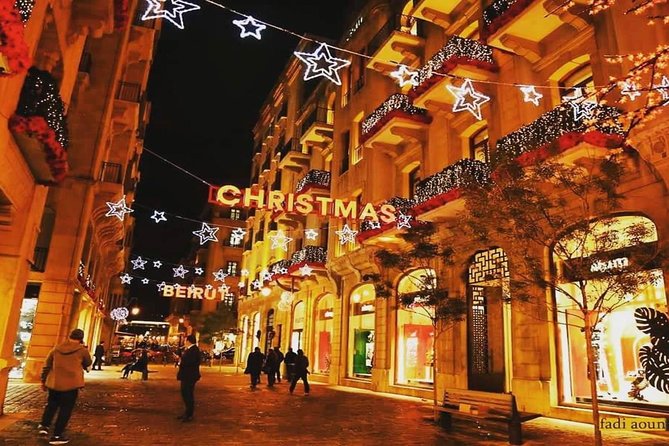
Beirut is not a city you understand from one postcard view. Its story runs from Roman law and ancient trade to Ottoman rule, religious communities, modern commerce, civil conflict, and a renewed waterfront. This five-hour outing brings those layers together without making you arrange several separate visits.
I like the way the day begins at the National Museum rather than at a viewpoint. The museum gives you the vocabulary for the rest of the route: Roman, Byzantine, Islamic, and later periods all become easier to place after you have seen actual objects and archaeological remains.
The private setup matters in Beirut. You are not tied to a large group’s pace, and your guide can adjust the explanation to your interests. If you want more time with ancient artifacts, religious buildings, or wartime history, you have a better chance of shaping the conversation.
The tradeoff is pace. The tour is advertised at about five hours, but the listed stops include many 10-minute visits. Transport between sites, traffic, hotel pickup, and the museum account for much of the day. Think of this as a guided orientation with one substantial museum visit, not a slow walking tour with long interior visits everywhere.
More Historical Tours in Beirut:
- PRIVATE Beirut Historical Walking Half Day Tour
★ 5.0 · 27 reviews - Historical Beirut Tour (AM) Half Day – (4G on Board)
★ 4.0 · 16 reviews - Temple of Eshmun – Mleeta Landmark – Beaufort Castle
★ 5.0 · 9 reviews
Two hours inside the National Museum of Beirut
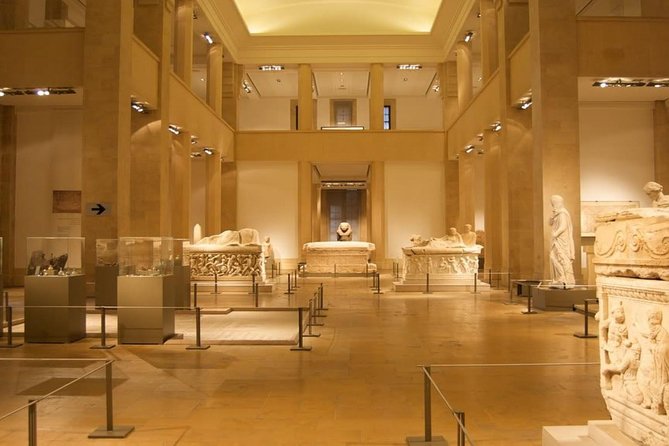
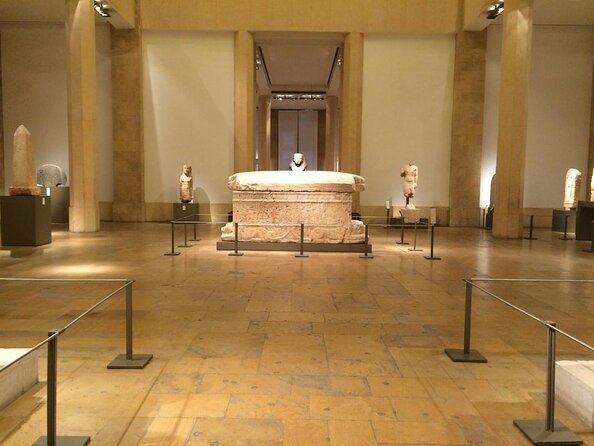
The National Museum is the heart of the experience. It is Lebanon’s principal archaeology museum, with objects gathered from excavations across the country. I would treat the two-hour visit as the main historical lesson of the day, not as a warm-up before the outdoor sights.
Lebanon sits at a cultural crossroads, and the collection reflects that position. Ancient civilizations influenced the country through trade, conquest, religion, and daily contact. The museum helps you see those connections in material form rather than hearing a string of dates.
Your guide’s explanations are particularly useful here. Without context, a museum filled with stone, metal, glass, and funerary objects can feel like a long procession of labels. With a guide, you can connect the collection to Beirut’s place in the eastern Mediterranean and understand why archaeological work across Lebanon matters.
This is the one stop where the entrance fee is not included. The tour information does not give the admission price, so confirm the current cost when booking or before departure. Set aside the full two hours if you enjoy archaeology. If museums are not your thing, tell your guide early, since the museum occupies a large share of the day.
Past bookings have singled out this stop as the best part of the tour. That makes sense: it provides the clearest foundation for everything that follows.
Pigeon Rocks and the Corniche in ten-minute snapshots
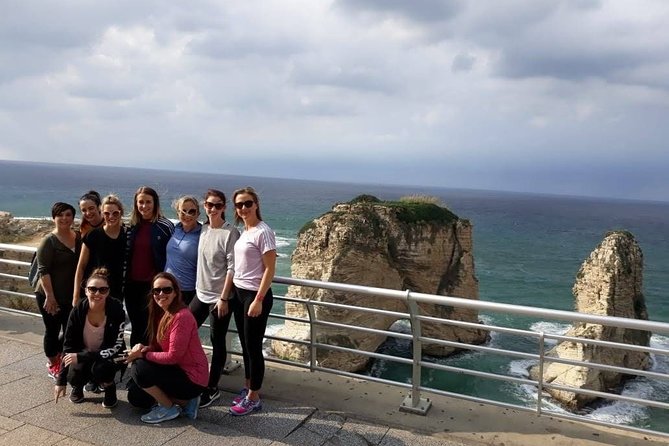
At Raouche, Pigeon Rocks rise from the Mediterranean at Beirut’s western tip. The two large formations are among the city’s most recognizable sights, and the stop gives you a sharp change of mood after the museum.
You will have about 10 minutes here, so use it well. This is a viewpoint stop, not a boat trip or a long coastal walk. You can take in the rocks, sea, and city setting, then let your guide explain why Raouche is such a familiar part of Beirut’s identity.
The nearby Al Manara Corniche extends from Ramlet al Bayda toward the Saint George marina. Palm trees line the promenade, with views toward the Mediterranean, Pigeon Rocks, and the summits of Mount Lebanon to the east. Again, the planned visit is about 10 minutes.
I like these short coastal pauses because they keep the tour from becoming a nonstop history lesson. You get a sense of Beirut as a seaside city, not only as a collection of ruins and monuments. The drawback is simple: ten minutes is not enough for a leisurely stroll along the Corniche.
Zaitunay Bay and Beirut’s modern waterfront
Zaitunay Bay presents a newer side of the capital. The waterfront promenade includes shops and restaurants and is promoted as a leisure destination. Its polished setting contrasts with the archaeological museum and the damaged buildings you see later.
The visit lasts roughly 10 minutes and admission is free. You are not being given a meal or shopping period here, and meals are not included in the tour. Instead, the stop shows how Beirut continues to build commercial and leisure spaces beside older parts of the city.
I find this contrast useful. A city’s past is not only found in museums. It also appears in how the waterfront is used today, how new districts are presented, and how modern Beirut positions itself beside its older center.
More tours and day trips worth a look
- Jeita Grotto,Harissa&Byblos Full-Day PRIVATE-CAR Trip from Beirut
★ 5.0 · 222 reviews - Private Anjar and Baalbek Tour from Beirut with Departure Ticket
★ 5.0 · 79 reviews - Guided Private Full Day Tour to Baalbek, Anjar and Chateau Ksara
★ 5.0 · 60 reviews - Semi-Private Tour to Jeita Grotto, Harissa & Byblos with Lunch
★ 5.0 · 52 reviews
The Holiday Inn and the visible marks of war
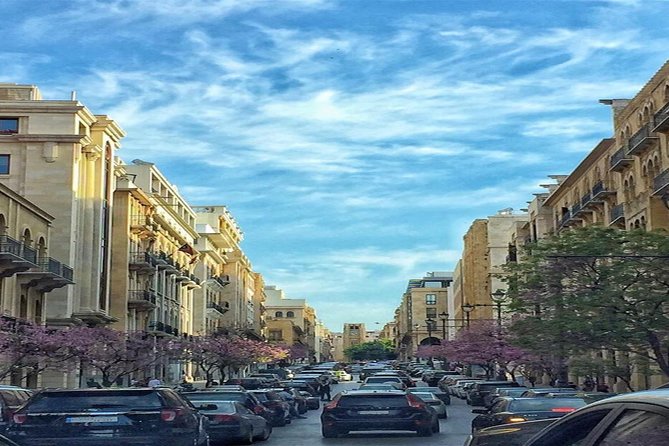
The abandoned Holiday Inn is one of the tour’s most serious stops. Built between 1971 and 1974, when Beirut was enjoying a major economic and tourist boom, the hotel was caught in the Lebanese Civil War soon after opening.
It became part of the Battle of the Hotels, a long conflict in which armed groups fought for control of luxury hotels in central Beirut. The fighting involved more than 25,000 combatants across the wider battle. The Holiday Inn was one of the major buildings drawn into that struggle, along with the famous Phoenicia hotel.
The structure remains empty and largely untouched decades later. That gives the stop a force that a restored museum cannot always match. Bullet damage, abandonment, and the building’s prominent location make the war feel connected to the modern city rather than safely sealed in the past.
The tour information does not specify a visit duration for the Holiday Inn, so expect a guide-led exterior look rather than assume interior access. This is also a place for respectful attention. It is a reminder of suffering, not simply an unusual photo stop.
If you want only ancient history, this part may feel heavy. I think it is essential for understanding Beirut, because the city’s recent past still shapes its buildings, streets, and public memory.
Downtown Beirut’s religious landmarks
The downtown section gathers several important religious buildings within a compact area. The quick stops work best when your guide provides the links between them.
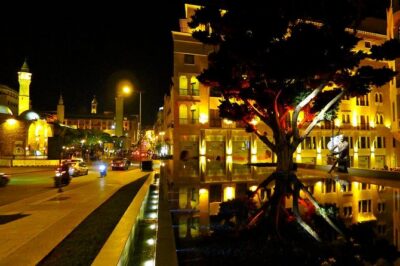
The Mohammad Al-Amin Mosque, also called the Blue Mosque, is Lebanon’s largest mosque. Opened in 2008 near Martyrs’ Square, it has four minarets about 65 meters high, several domes covered in light blue tiles, and tall arches. The building is hard to miss, with its amber-colored exterior and strong presence in the center of Beirut.
You have about 10 minutes and no admission fee is listed. That is enough to see the exterior and hear the basic story, but not enough for a slow architectural study. If entering a religious building is possible, follow your guide’s instructions on dress and conduct. The supplied tour details do not promise interior access.
The Al-Omari Grand Mosque carries a much older story. It was built in the age of Omar Bin El Khattab in 635 AD, later became the Church of Saint John under the Crusaders, and returned to use as a grand mosque under the Mamluks in 1291. Civil-war damage led to restoration completed in 2004.
That sequence tells you something important about Beirut. Buildings changed function as rulers and communities changed. The mosque is not just an Islamic monument, but also a physical record of the city’s layered religious past.
The Greek Orthodox Cathedral of Saint George adds another layer. It is the seat of the Greek Orthodox Metropolitan bishop of Beirut and is regarded as the city’s oldest church. The first Christian temple at this location dates to the mid-sixth century and is linked with Beirut’s famous law school.
With only 10 minutes at each site, you will not get a full architectural tour. Still, the trio works well together. You see how Beirut’s center contains Islamic, Christian, Ottoman, Mamluk, Crusader, and modern references within a small area.
Martyrs’ Square and Place de l’Étoile
Martyrs’ Square is a central downtown space with a painful name. It recalls the Ottoman executions of Lebanese nationalists on May 6, 1916, ordered by Jamal Pasha during World War I. The square was historically known as Al Burj or Place des Cannons.
The stop lasts about 10 minutes. I would listen closely here, because the meaning of the square matters more than its appearance. Public spaces often carry the memory of political repression, and this one connects Beirut to the final years of Ottoman rule and the rise of Lebanese nationalism.
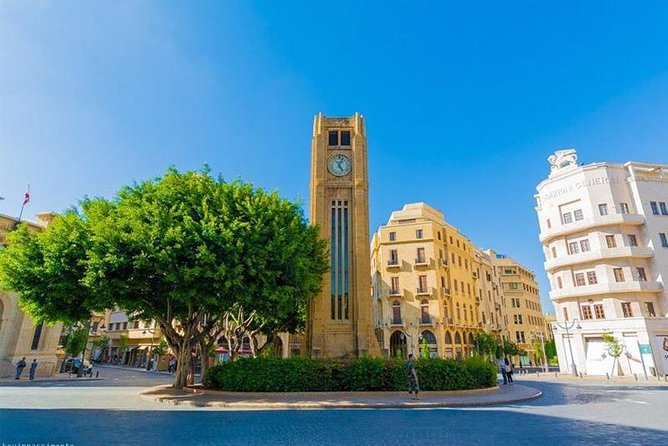
Place de l’Étoile, also called Nejme Square, offers a different mood. It is the central square of the downtown area, surrounded by the Lebanese Parliament and related buildings, two cathedrals, a museum, cafes, and restaurants.
Its most famous feature is the four-faced Rolex clock from 1930. The architecture and clock have made the square a recognizable symbol of Beirut. Your 10-minute stop should give you time to see the layout and take photographs, though not to sit down for coffee.
These squares are useful because they show Beirut as a political and civic center. The tour does not treat history as a line of ancient ruins. It brings you to places where national identity, religion, public memory, and daily city life meet.
Beirut Souks and the Roman Berytus Baths
Beirut Souks is the commercial stop, with more than 200 shops, 25 restaurants and cafes, an entertainment center, and a cinema complex. The planned visit is about 10 minutes, so do not count on a full shopping session.
Its value is mainly visual and urban. You see a modern commercial district in the city center, then soon return to the ancient world at the Roman baths. That quick shift captures Beirut’s unusual mix better than a route focused on only one period.
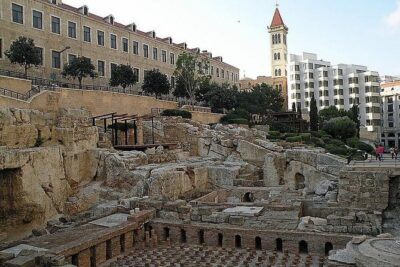
The Roman Berytus baths are the final major historical stop. They are the largest outdoor archaeological sight in downtown Beirut and were discovered in 1968 and 1969. Restoration took place in the mid-1990s.
Ancient Berytus had four major bath complexes. The first was created in the early first century under Augustus. A major earthquake in 551 AD destroyed the baths, but the surviving remains still show the scale and importance of Roman public life.
One bath area is now used for artistic performances and concerts. That modern use is a nice detail: the site has not been reduced to silent stones behind a barrier. It remains part of Beirut’s cultural center.
The planned visit is about 10 minutes and admission is listed as free. I would ask your guide to point out the layout and explain how the baths fit into Roman Beirut. On your own, the remains may be easy to underestimate.
What $75 includes and where the value lies
The price is $75 per person. For a private five-hour tour with hotel pickup and drop-off, a tour leader, a professional guide, and an air-conditioned vehicle, that is a reasonable price if you are traveling with at least one companion and want a structured introduction to Beirut.
The value is less about admission savings. Most listed stops are free, and the National Museum ticket is not included. You are paying for the vehicle, the driver, the guide’s time, and the ability to keep the outing private.
That private format can be especially useful if you have limited time in Beirut. You do not need to work out the order of widely separated sites or manage transport between the museum, coast, and downtown. You also have a better chance of asking questions as the day develops.
For a solo visitor, $75 is a larger personal expense. For a couple or small group, it becomes easier to justify. Group discounts are offered, though the exact discount is not specified, so ask for the current rate.
No meals are included. Since the schedule is already full, plan to eat before or after the tour unless your guide confirms a change. The official opening hours listed for the experience are Tuesday through Sunday, 8:30 AM to 1:00 PM, with special date ranges shown through June 18, 2026. Confirm the exact operating day when you reserve.
Confirmation is provided at booking, and free cancellation is available up to 24 hours before the start time. Inside that 24-hour window, the amount paid is not refunded and changes are not accepted.
Who should book this private Beirut tour?
I would choose this tour if you want Beirut’s main historical themes in one day and prefer a guide to connect the pieces. It suits first-time visitors, history enthusiasts, couples, families who want private transport, and anyone with only a short stay.
It is also a good fit if the National Museum is high on your list. The museum receives the longest visit and has been the most praised part of the experience. Ask for extra explanation there if archaeology is your main interest.
I would hesitate if you want long walks, extended meals, or deep visits inside every monument. The coastal viewpoints and downtown landmarks move quickly, and the route is more about coverage and context than lingering.
Security conditions can affect the center. One earlier tour had to avoid parts of downtown because of tight security and protests, while the guide still provided a useful day and made the National Museum the main focus. That is a practical reminder to stay flexible. In Beirut, a good private guide is valuable partly because the route can respond to conditions.
Should you book it?
Book this experience if you want a well-rounded first introduction to Beirut with a serious museum visit, private transport, and clear historical storytelling. The best parts are the National Museum, the Holiday Inn, and the sequence of religious and civic landmarks in the center.
Skip it if your priority is free time at the Corniche, shopping, or a slow architectural tour. The many 10-minute stops are useful but brisk.
For most first visits, I think the $75 price is justified by the private vehicle, hotel service, and guide. When booking, request a guide who can give extra time to the National Museum and explain the civil-war landmarks with care. Names previously associated with strong tours include Pierre and Susan, with Nasser handling the driving on one well-regarded outing, though guide assignments are not guaranteed.
FAQ
How long does the Beirut historical tour last?
The tour lasts approximately five hours.
What is the price?
The listed price is $75 per person. Group discounts are available, but the exact discount is not specified.
Is hotel pickup included?
Yes. Hotel pickup and drop-off are included.
Is the tour private?
Yes. Only your group participates in the activity.
Is transportation provided?
Yes. The tour includes private transportation in an air-conditioned vehicle.
Is the National Museum admission included?
No. Admission to the National Museum of Beirut is not included. The other listed stops show free admission.
Are meals included?
No. Meals are not included in the tour price.
What is the cancellation policy?
You can cancel at least 24 hours before the start time for a full refund. Cancellations or changes made less than 24 hours before the start time are not accepted and are not refunded.
Just added around Beirut
- Private Full-Day Tour to Jeita Grotto, Harissa and Saint Charbel from Beirut★ 5.0 · 3 reviews
- Beirut to Jeita Grotto and Byblos: Daily Tours with Lunch★ 5.0 · 3 reviews
- PRIVATE city tour of Old Sidon & Historic Tyre★ 5.0 · 3 reviews
- Journey Through Time: Half-Day Private Tour to Baalbek★ 5.0 · 3 reviews
- Small-Group Tour to Sidon, Tyre and Maghdouche with Lunch and Tickets★ 4.5 · 3 reviews
- Beirut to Sidon, Tyre and Maghdouché: Daily Tours with Lunch★ 5.0 · 3 reviews
- Hike Chouwen★ 5.0 · 3 reviews
- Private Full-Day Tour to Byblos and Tripoli from Beirut★ 5.0 · 3 reviews
Historical Tours, compared.
Historical Beirut Tour (AM) Half Day – (4G on Board)
Read our review →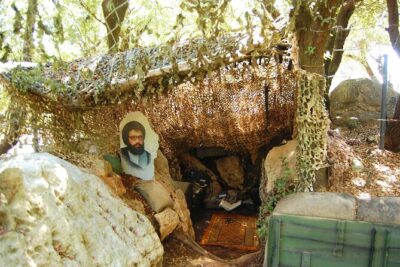
Temple of Eshmun – Mleeta Landmark – Beaufort Castle
Read our review →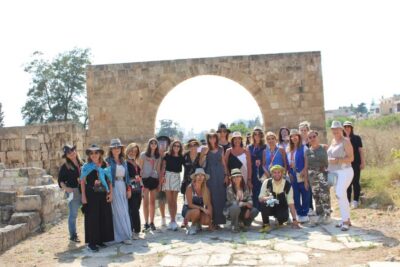
Sidon & Tyre Unesco Heritage w/pick-up, guide, entries+lunch
Read our review →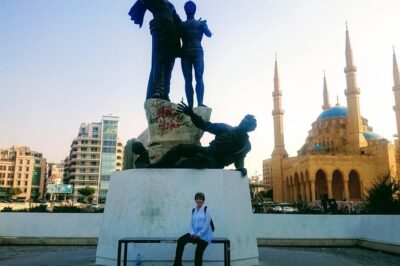
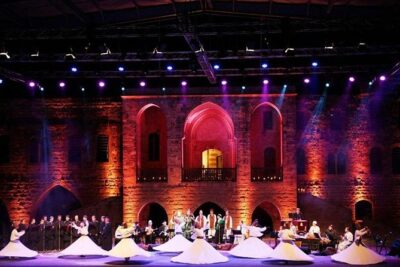
PRIVATE tour to Beirut history museum, Beiteddine & Deir elQamar
Read our review →
Baalbek, Anjar & Wine: A Journey Through Lebanon’s Heritage
Read our review →
Browse the lists this tour appears in