
Review · HISTORICAL TOURS
PRIVATE Beirut Historical Walking Half Day Tour
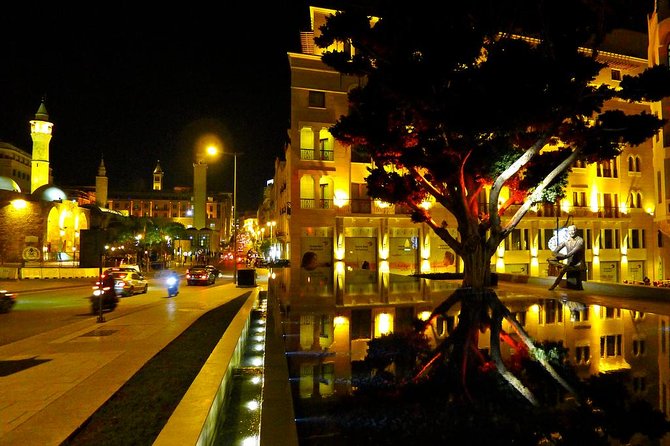
Beirut’s story is written in stones, scars, and sea views. This private half-day outing gives you a useful introduction to the city, pairing the National Museum with a guided walk through rebuilt downtown, then ending at Raouche’s famous Pigeon Rocks. I especially like the door-to-door pickup and the chance to hear Beirut’s complicated past explained by a local guide who lived through part of it. The main consideration is timing: three to four hours is enough for an overview, but not enough for a slow museum visit and a detailed exploration of every downtown corner.
The tour works best for a first day in Beirut, or for anyone with only a morning available. Guide Dave, also identified as David in guest feedback, receives repeated praise for his clear explanations, flexible approach, and personal knowledge of the city. You should expect history to lead the conversation, with the walking portion offering the most human look at Beirut. Downtown walking can be warm and busy, and lunch is not included, so plan your energy and appetite accordingly.
In This Review
- Key details before you book
- Why this half-day Beirut tour works
- Starting with Lebanon’s past at the National Museum
- Reading downtown Beirut block by block
- Place des Martyrs and Beirut’s religious landmarks
- Beirut Souks and the shape of the rebuilt city
- A short drive to Pigeon Rocks in Raouche
- What the private vehicle adds
- Is $93.34 per person a fair price?
- Who will get the most from this experience?
- Should you book the Beirut Historical Walking Half Day Tour?
- FAQ
- How long does the Beirut Historical Walking Half Day Tour last?
- What time does the tour start?
- Is hotel pickup included?
- Is this a private tour?
- Is admission to the National Museum included?
- Is lunch included?
- What is the cancellation policy?
Key details before you book
- The National Museum comes first: Begin with Lebanon’s major archaeological collection before walking through central Beirut.
- A private guide shapes the day: Your group travels alone, giving you room to ask questions and adjust the pace.
- The history is personal: Dave’s own experience growing up in Beirut adds context to the city’s civil-war period and later rebuilding.
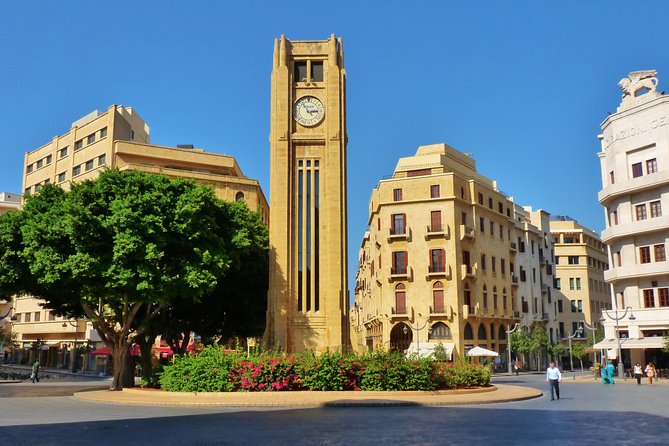
- Downtown packs in major sights: See Place des Martyrs, the Mohammad Al-Amin Mosque, St. George’s Maronite Cathedral, Roman baths, Star Square, Parliament, and the Government Palace area.
- The finish is scenic: A short drive brings you to Pigeon Rocks and the Beirut Corniche.
- The price includes transport: At $93.34 per person, the value depends on group size, since private transportation and a guide are included.
Why this half-day Beirut tour works
Beirut can feel hard to read at first. Ancient ruins sit beside polished buildings, religious landmarks share the same few blocks, and parts of downtown have been rebuilt more than once. A guide helps connect those pieces instead of leaving you with a collection of attractive but disconnected stops.
I like the structure here. The National Museum gives you a historical foundation, the downtown walk shows how that history sits in the modern city, and Raouche provides a clean visual ending. You move from objects, to streets, to the sea.
The private format is another real advantage. Since only your group participates, you can ask about politics, religion, architecture, daily life, or the civil war without trying to squeeze your questions into a large group. Several comments praise Dave’s ability to explain difficult subjects clearly and keep the discussion interesting rather than turning it into a lecture.
The drawback is the compressed schedule. The published stop lengths suggest a fuller outing, while the overall duration is listed as approximately three to four hours. In practice, traffic, museum pacing, and questions can affect how long you spend at each place. If you want every gallery room, a long coffee break, and a leisurely downtown wander, book a longer experience or plan to return independently.
More Historical Tours in Beirut:
- Historical Beirut Tour (AM) Half Day – (4G on Board)
★ 4.0 · 16 reviews - Temple of Eshmun – Mleeta Landmark – Beaufort Castle
★ 5.0 · 9 reviews - Guided Half-Day Private Beirut Historical Tour
★ 5.0 · 6 reviews
Starting with Lebanon’s past at the National Museum
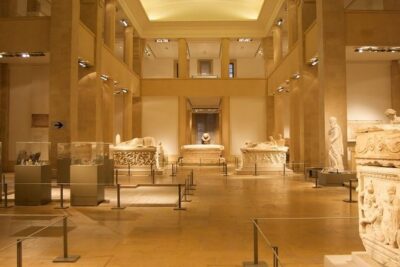
The first major stop is the National Museum of Beirut, located on the eastern side of the city. The museum was built in the 1940s, suffered severe damage during the civil war, and was revived in the 1990s. That story makes the building more than a container for archaeological objects. Its own survival reflects Beirut’s long cycle of destruction and rebuilding.
The museum visit is important because it gives you a timeline before you see the city streets. You can look at Lebanon’s ancient material culture, then better understand why Roman remains, religious buildings, and modern political landmarks matter downtown.
A short introductory briefing and audio presentation may be part of the opening. These help explain Beirut’s layout and the complicated political history of Lebanon before you begin the museum visit. One particularly useful feature is the map used at the start, which can help you follow the city’s different districts during the drive and walk.
The museum is not simply a quick photo stop. If ancient history interests you, this may be the strongest part of the day. The tradeoff is obvious: spending longer with the collection leaves less time for the downtown walk and the seaside stops. Tell Dave early if you prefer archaeology, modern history, or city life, so the conversation can lean toward your interests.
Reading downtown Beirut block by block
After the museum, the focus shifts to Solidere and central Beirut. Downtown was badly damaged during the civil war and restored in the 1990s. That restoration gives the area a polished appearance, but it also raises questions about what was preserved, what was rebuilt, and how the city presents its past.
This is where a guide adds real value. On your own, you might admire the clean streets and grand buildings without understanding the layers beneath them. Dave’s explanations connect the visible architecture with Beirut’s political and social changes, including his own memories of growing up in the city.
The route includes the Parliament House and the Government Palace area, along with historic streets and civic buildings. You will not just be looking at facades. The point is to see how government, commerce, religion, archaeology, and public memory meet in a small central area.
The walk is described as lasting about two hours, though the full experience is shorter than the combined stop times suggest. Wear comfortable shoes and bring water. The tour includes walking through several central sites, and the amount of time spent at each one can depend on access, traffic, and your questions.
Place des Martyrs and Beirut’s religious landmarks
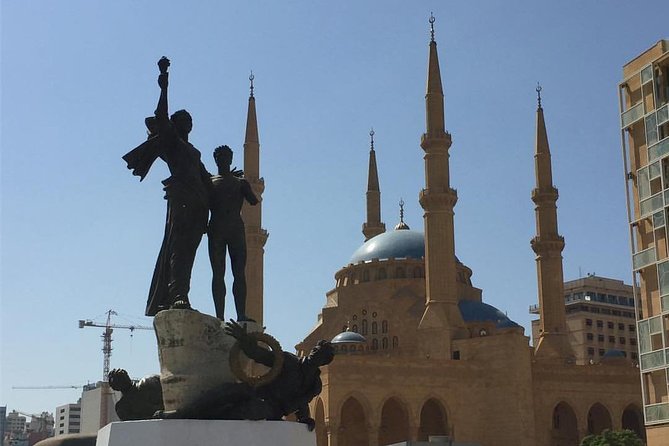
Place des Martyrs is one of the key downtown stops. Its name recalls the public memory of Lebanon’s political past, and its position near major religious and civic buildings makes it a useful place to discuss Beirut’s mix of communities.
From here, the route takes in the Mohammad Al-Amin Mosque and St. George’s Maronite Cathedral. Seeing these two major places of worship near one another offers a quick lesson in Lebanon’s religious diversity. The contrast in design and use also gives the walk more depth than a standard sightseeing circuit.
The itinerary includes the Roman bath remains and Star Square as well. Roman ruins in the middle of the capital are a good reminder that Beirut is not organized into tidy historical periods. Ancient, Ottoman, modern, and postwar elements can appear within a short walk.
I would pay close attention during this section. These stops may look brief on a map, but the guide’s explanation is what makes them meaningful. Dave is praised for answering questions and making connections between different eras. That is especially useful in a city where a single square can carry religious, political, and archaeological importance.
More Walking Tours in Beirut:
- Beirut Full Day Walking Tour
★ 5.0 · 14 reviews - Beirut: Private Walking Tour With A Guide (Private tour)
★ 4.9 · 9 reviews
Beirut Souks and the shape of the rebuilt city

The Beirut Souks were completely demolished during Lebanon’s wars and rebuilt in the 1990s as an open-air shopping area in the central district. Today, the setting is modern and commercial, but the site also represents Beirut’s effort to restore its downtown after years of damage.
This stop helps you see the difference between historic survival and modern reconstruction. Some parts of Beirut retain old walls, ruins, or religious buildings. The souks show a newer version of the city, designed for shopping and public use after the conflict.
Admission is free. Do not expect the souks to function like a preserved medieval market. This is a restored shopping district, not an untouched old quarter. I would treat it as an architectural and urban-planning stop rather than the best place to hunt for traditional market life.
The souks also offer a practical pause in the walk. If your group needs a moment indoors or wants to discuss lunch plans, this is likely the most convenient part of the downtown section. Lunch itself is not included, so you should not count on the tour price covering a meal.
A short drive to Pigeon Rocks in Raouche
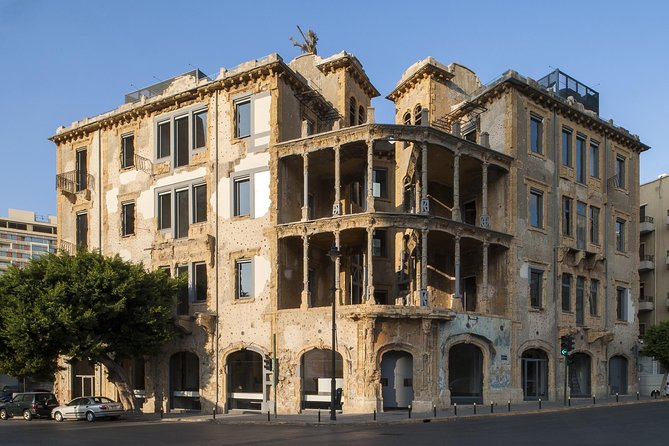
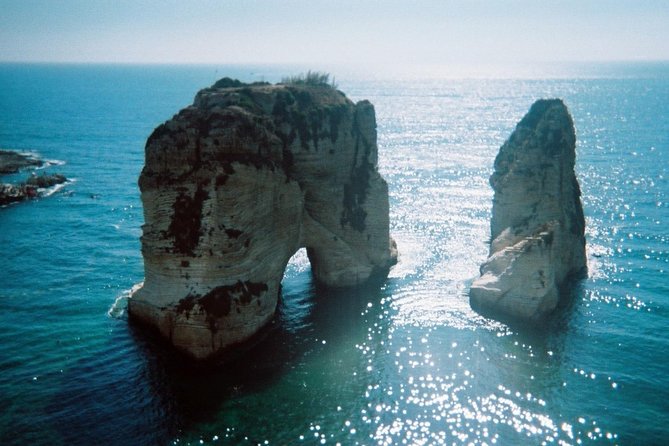
The final major sight is Pigeon Rocks in Raouche, one of Beirut’s best-known symbols. The natural rock formations rise from the sea near the Corniche, giving you a sharp change of mood after the dense history of downtown.
The scheduled visit is brief, around 15 minutes. That is enough for photographs and a look at the view, but not enough for an extended seaside stroll. If the rocks are a priority for you, ask about the exact timing during the morning briefing. A private tour gives you more opportunity to discuss small adjustments, though the day still has to fit within its approximate duration.
The nearby Corniche is another short stop, also listed at about 15 minutes. The route may include a sunset view, though the stated start time is 9:00 a.m., so the exact light and timing depend on the day’s schedule. Think of this as a scenic finish, not a long coastal outing.
Pigeon Rocks are especially useful at the end because they provide a simple image of Beirut after a morning of complex explanations. You finish with open water, sea air, and a landmark that most first-time visitors want to see.
What the private vehicle adds
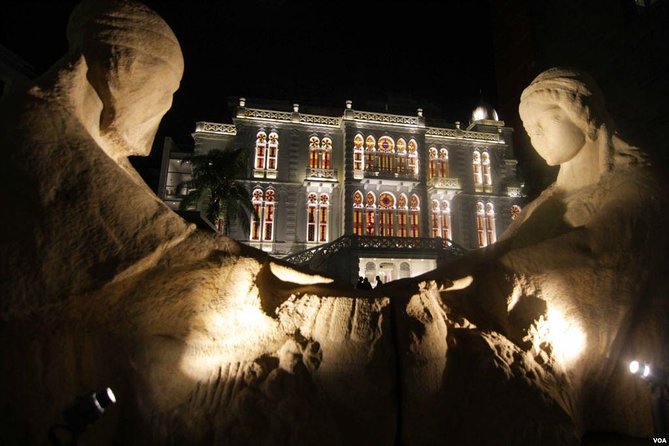
Round-trip pickup and drop-off from Beirut city hotels are included, along with an air-conditioned vehicle. That matters in Beirut, where crossing the city between the museum, downtown, and Raouche would otherwise take planning and local transport knowledge.
The vehicle also lets you cover more ground than a walking-only tour. The museum is away from the central walking route, and Pigeon Rocks are in Raouche, so the drive links together areas that would be awkward to combine on foot in half a day.
The driver-guide arrangement is convenient, but it is worth understanding the format. The guide is responsible for both the explanations and the movement between stops. Traffic or a longer discussion at the museum may affect the amount of time available elsewhere.
Pickup is offered, but the information specifies Beirut city pickup and drop-off. If you are staying outside the city, confirm the arrangement before booking. Confirmation is normally provided at booking, subject to availability when you book within 12 hours of departure.
Is $93.34 per person a fair price?
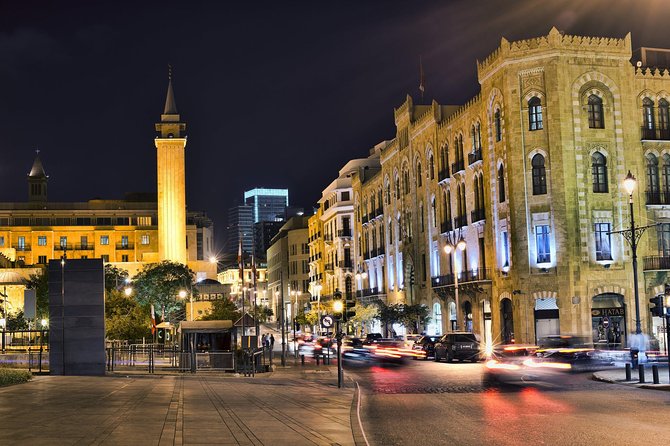
At $93.34 per person, this is not the cheapest way to see central Beirut. It is also not simply a short walking tour. The price includes a private group experience, an air-conditioned vehicle, a driver-guide, city pickup and drop-off, entrance fees, and taxes.
The value improves when shared by several people, because you receive private transport and guiding without joining a large group. Group discounts are also offered, though the exact savings are not specified. For one person or a couple, the cost is easier to justify if you value convenience and a personal history lesson.
The National Museum admission is included, as are the fees and taxes listed for the experience. Lunch is extra. The free stops, including the souks, Pigeon Rocks, and the Corniche, do not reduce the overall value, since the main expense is the guide and transportation rather than entrance tickets.
I would compare this with the cost and effort of arranging a car, finding the museum, navigating downtown, and hiring separate guidance. For a short first visit, the package is practical. If you already know Beirut well and only want the Corniche or the museum, it may feel expensive.
Who will get the most from this experience?
This tour suits you if you want historical context rather than a checklist of photographs. It is particularly useful for a first visit, a short stay, or a morning between other plans.
You will probably enjoy it most if you:
- Have three to four hours available
- Want to combine the museum, downtown, and Raouche
- Prefer a private setting
- Like asking detailed questions
- Want door-to-door transportation
- Are interested in Lebanon’s political and social history
It may be less suitable if you want a relaxed full-day pace. The route covers several important sites, but each receives only a limited amount of time. It is also not designed as a food tour, shopping tour, or long coastal walk.
Most people can participate, and the activity requires a minimum number of guests to operate even though it is private for your group. Free cancellation is available up to 24 hours before the start time. Changes or cancellations made less than 24 hours before departure are not accepted for a refund.
Should you book the Beirut Historical Walking Half Day Tour?
I would book this tour if you want a strong first framework for understanding Beirut. The best feature is not any single monument. It is the way Dave links the National Museum, war-damaged downtown, religious landmarks, Roman remains, reconstructed souks, and Pigeon Rocks into one readable morning.
Choose it especially if you have limited time or prefer not to manage transport in the city. The private format, included pickup, and repeated praise for Dave’s clear and personal storytelling make it a solid choice for history-minded visitors.
Skip it if you need a slow museum day, a long lunch, or extensive independent shopping. For everyone else, the tour offers a sensible balance: a serious look at Beirut’s past, a walk through its rebuilt center, and a memorable view of the sea.
FAQ
How long does the Beirut Historical Walking Half Day Tour last?
The experience lasts approximately three to four hours. The listed schedule includes visits to the National Museum, downtown Beirut, the souks, Pigeon Rocks, and the Corniche.
What time does the tour start?
The stated start time is 9:00 a.m.
Is hotel pickup included?
Yes. Pickup and drop-off from hotels in Beirut city are included.
Is this a private tour?
Yes. Only your group participates in the activity.
Is admission to the National Museum included?
Yes. Admission fees and all listed taxes are included in the tour price.
Is lunch included?
No. Lunch is not included.
What is the cancellation policy?
You can cancel up to 24 hours before the experience start time for a full refund. Cancellations or changes made less than 24 hours before the start time are not accepted for a refund.
Just added around Beirut
- Private Full-Day Tour to Jeita Grotto, Harissa and Saint Charbel from Beirut★ 5.0 · 3 reviews
- Beirut to Jeita Grotto and Byblos: Daily Tours with Lunch★ 5.0 · 3 reviews
- PRIVATE city tour of Old Sidon & Historic Tyre★ 5.0 · 3 reviews
- Journey Through Time: Half-Day Private Tour to Baalbek★ 5.0 · 3 reviews
- Small-Group Tour to Sidon, Tyre and Maghdouche with Lunch and Tickets★ 4.5 · 3 reviews
- Beirut to Sidon, Tyre and Maghdouché: Daily Tours with Lunch★ 5.0 · 3 reviews
- Hike Chouwen★ 5.0 · 3 reviews
- Private Full-Day Tour to Byblos and Tripoli from Beirut★ 5.0 · 3 reviews
Historical Tours, compared.
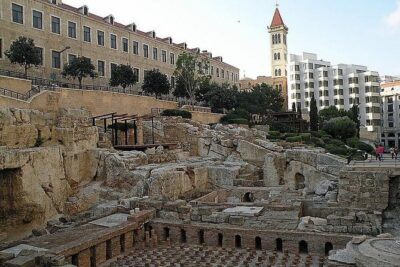
Historical Beirut Tour (AM) Half Day – (4G on Board)
Read our review →
Temple of Eshmun – Mleeta Landmark – Beaufort Castle
Read our review →
Sidon & Tyre Unesco Heritage w/pick-up, guide, entries+lunch
Read our review →
PRIVATE tour to Beirut history museum, Beiteddine & Deir elQamar
Read our review →
Baalbek, Anjar & Wine: A Journey Through Lebanon’s Heritage
Read our review →
Exploring Beirut’s Past: A Private Guided Historical Tour
Read our review →Browse the lists this tour appears in