Review · FULL-DAY
Beirut Full Day Walking Tour
Beirut tells its story in layers. This six-hour walk links Roman ruins, Ottoman planning, religious landmarks, modern architecture, and Civil War scars in one thoughtful route through the city. I especially like the small group of no more than 15 and the way the tour reaches neighborhoods such as Zokak el-Blat and Bachoura, not just the polished center. The included lahmadjun, falafel, coffee, and beer also make the day feel local rather than packaged.
The main thing to consider is the physical demand. You walk for about six hours, and the route includes many stops but no private transport. The political and security situation can also affect access to central areas, so flexibility matters. Still, for a first look at Beirut, this is an unusually useful introduction led by guides such as George, whose humor and frank explanations have earned especially warm praise.
In This Review
- Key points to know before booking
- Why this Beirut walk works so well
- Martyrs’ Square and Beirut’s political center
- Ancient Beirut beside the modern commercial core
- Churches, real estate, and the scars of war
- Antique shops, Bachoura, and the Green Line
- Mohammad al-Amin Mosque and the rebuilt center
- The guide, group size, and pace
- Is $41.03 a fair price?
- Practical details for a smoother day
- Who should book this walking tour?
- Final verdict: book it for context, not just sights
- FAQ
- Where does the Beirut walking tour start?
- What time does the tour begin?
- Where does the tour end?
- How long does the tour last?
- How large is the group?
- Is lunch included?
- Are drinks included?
- Is transportation included?
- Is the tour suitable for someone with gluten intolerance?
- What happens if bad weather cancels the tour?
Key points to know before booking
- Roman ruins beside modern Beirut: See the Roman Baths, archaeological remains, Ottoman buildings, and Zaha Hadid’s Beirut Souks in one compact walk.
- A serious look at the Civil War: The Green Line, Holiday Inn, The Egg, and the Qantari front give the city’s recent past a physical presence.
- Local food is part of the tour: Stop in Zokak el-Blat for lahmadjun from Ishkhanian Bakery, or choose falafel, with coffee and beer included.
- The route crosses several Beiruti identities: Maronite, Greek Orthodox, Muslim, Ottoman, French, and modern commercial influences all appear along the way.
- A guide makes the complicated city easier: Beirut’s irregular street names and changing urban zones are much easier to follow with someone who knows the connections.
- Expect a full walking day: Good fitness is required, and gluten-intolerant diners have no street-food option listed.
Why this Beirut walk works so well
Beirut is not a city that explains itself quickly. A grand mosque may sit beside a damaged church, an ancient bath may share space with a government building, and a modern shopping district may conceal older street lines underneath. The value of this walk is that it connects those pieces instead of treating them as isolated photo stops.
You begin at Martyrs’ Square at 9:30 a.m. and finish back there after roughly six hours. That starting point gives the day a clear shape: you move from the historic center toward the waterfront and western neighborhoods, then loop through older quarters and return toward the square.
I would choose this tour early in a Beirut stay. It gives you a working map of the city, introduces the main political and religious landmarks, and helps you understand why certain areas feel polished, unfinished, restricted, or scarred. The guide’s interpretation is the key benefit. Several comments describe George as funny, direct, reflective, and highly informed about archaeology, politics, and Lebanon’s past.
The tone is not a light sightseeing script. You will hear about assassinations, sectarian divisions, the Civil War, real-estate battles, and the long shadow of postwar reconstruction. That honesty is a strength, but it may feel heavy if you want only cafés and architecture.
More Walking Tours in Beirut:
- PRIVATE Beirut Historical Walking Half Day Tour
★ 5.0 · 27 reviews - Beirut: Private Walking Tour With A Guide (Private tour)
★ 4.9 · 9 reviews
Martyrs’ Square and Beirut’s political center
The first stop is Martyrs’ Square, where you see the statue, the remains of Le Petit Serail, and the former Ciné Opéra area. The stop lasts about 15 minutes and sets up the central question of the whole walk: how can a city carry several eras at once?
From there, the group goes to Samir Kassir Square and its statue. The guide introduces the Civil War and the political assassinations after 2005. This is a short stop, but it adds modern context before you move into the formal heart of downtown.
At Place de l’Étoile, the clock tower known as the Al Abed Clock Tower, the Lebanese Parliament, Ottoman planning, French urban design, and Lebanon’s political system all enter the conversation. You get more than a pretty square here. You get an explanation of how power and city planning shaped the center.
The route then pauses at the Greek Orthodox Cathedral of Saint George. The church visit is brief, about five minutes, so do not expect an extended interior tour. Its value is as part of Beirut’s religious geography, especially when paired later with the Maronite cathedral and Mohammad al-Amin Mosque.
Ancient Beirut beside the modern commercial core
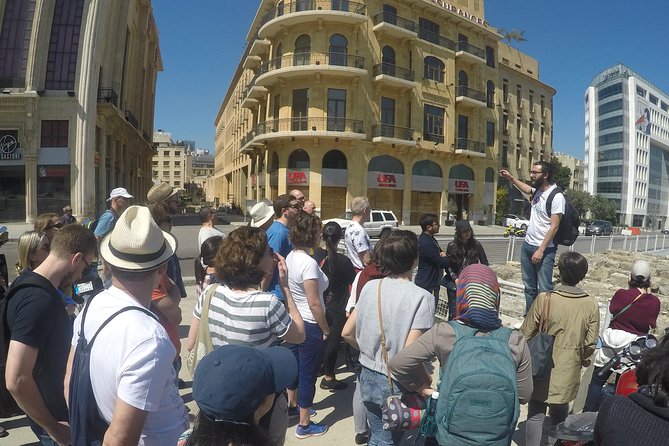
The Garden of Forgiveness Archaeological Area provides a compact look at the city’s buried past. From here, you also see Mohammad al-Amin Mosque and the Maronite Saint George Cathedral. The stop lasts only about five minutes, but the cluster of sacred buildings and archaeological remains makes the location unusually effective.
The Roman Baths receive about ten minutes. Nearby, the guide points out the Grand Serail and an Ottoman military hospital. I like this section because it shows that Beirut’s ancient remains are not separated from daily city life in a neat museum district. They sit among later government, religious, and commercial buildings.
At Beirut Souks, the focus shifts to postwar rebuilding and design. You see the L’Orient building and a structure by Zaha Hadid. This is a useful contrast with the Roman Baths: one stop looks down into the ancient city, while the next asks what modern Beirut wants to become.
The visit to Zaitouna Bay adds the waterfront and the Beirut Yacht Club. It is another short stop, about ten minutes. Do not expect a long harbor excursion. Instead, treat it as a quick change of scene and a chance to see the city’s relationship with the sea.
Churches, real estate, and the scars of war
Saint George’s Maronite Cathedral comes with a discussion of the Saint Georges and SOLIDERE real-estate dispute. This gives the building a role in the city’s modern argument over ownership, reconstruction, and the future of downtown. The walk is strongest when it uses places to explain those tensions rather than simply naming dates.
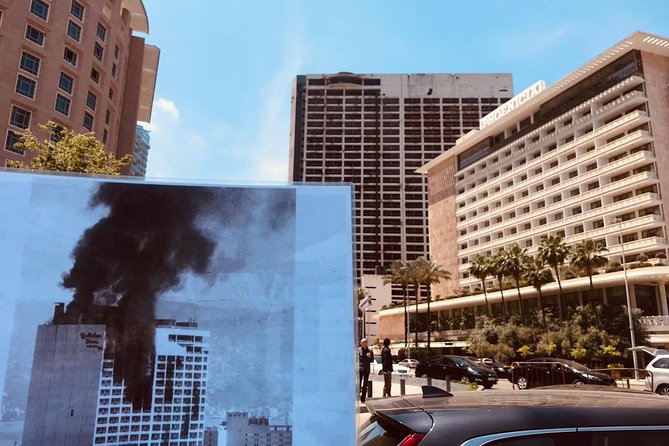
The old Holiday Inn is one of the most memorable stops. The building remains tied to the Qantari front and the Battle of the Hotels, which began in 1975. You spend about 15 minutes here, hearing how a hotel became part of a divided urban battlefield.
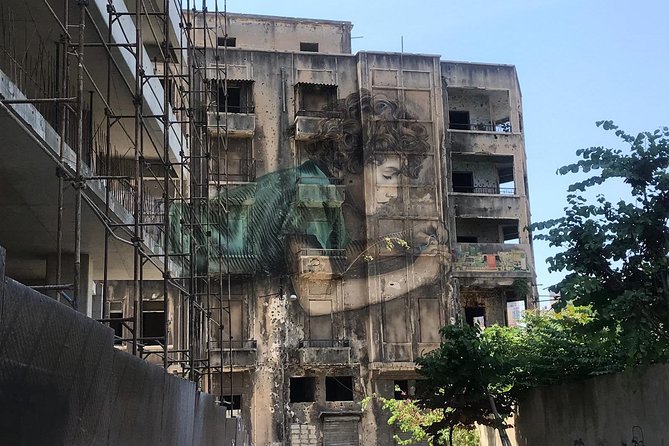
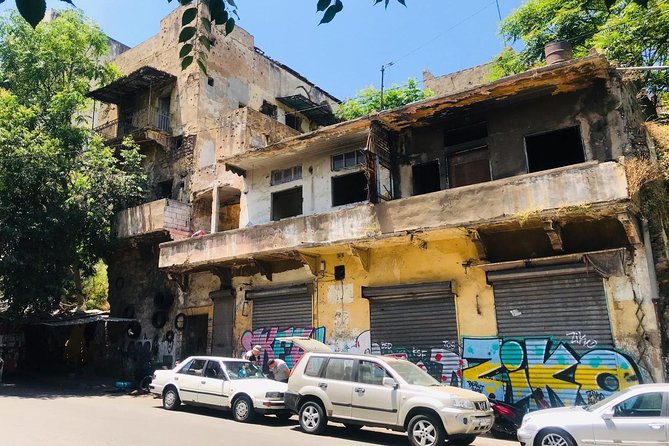
This is not a polished monument. That is precisely why the stop matters. The damaged structure makes the Civil War visible in a way that a timeline or museum label cannot. If you are sensitive to war history, the guide’s approach appears to be reflective rather than sensational, but the subject is still difficult.
The walk continues into Zokak el-Blat, a district connected with nineteenth-century Beirut. At the public school, the guide introduces the neighborhood before stopping for lahmadjun, a flat dough topped with minced meat. The food comes from the well-known Ishkhanian Bakery, with a vegetarian option available. Falafel sandwiches are also offered.
This is the most relaxed meal break of the day. You are not sitting down for a formal restaurant lunch. You are eating simple local food as part of the street walk. Coffee and beer are included as well, which adds a friendly social touch. If you cannot eat gluten, take note: no gluten-free street-food option is provided.
More tours and day trips worth a look
- Jeita Grotto,Harissa&Byblos Full-Day PRIVATE-CAR Trip from Beirut
★ 5.0 · 222 reviews - Guided Private Full Day Tour to Baalbek, Anjar and Chateau Ksara
★ 5.0 · 60 reviews - Jeita Grotto, Byblos and Harissa Full-Day Tour from Beirut
★ 5.0 · 23 reviews - Full-Day Private Tour to Jeita Grotto, Harissa and Byblos
★ 5.0 · 20 reviews
Antique shops, Bachoura, and the Green Line
After Zokak el-Blat, the route passes through Beirut’s antique district. The shops will be closed during the tour, so this is more about the streets and the character of the area than shopping. You continue toward Khadak el-Ghamik Street, spending about 30 minutes around this section.
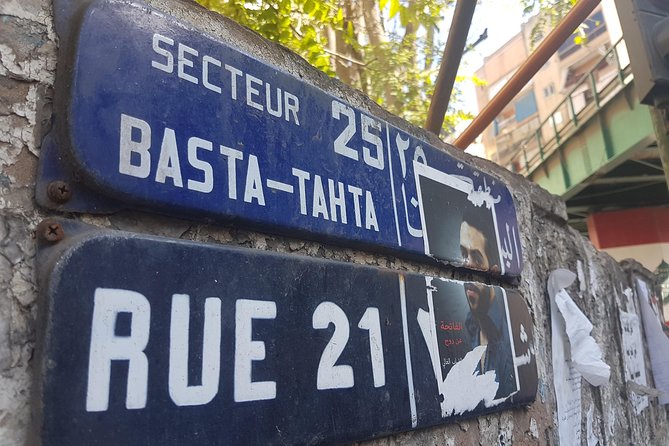
The route also passes by BDD before reaching the Green Line, the former separation line between Christian and Muslim areas during the Civil War. This is one of the tour’s most important ideas: division was not an abstract political matter. It ran through streets, buildings, schools, hotels, and neighborhoods.
Because this is a walking tour, you see how close these places are to one another. The physical distance between districts may be short, yet the social and political distance once became enormous. A guide can explain that contrast while you are standing in the actual urban setting.
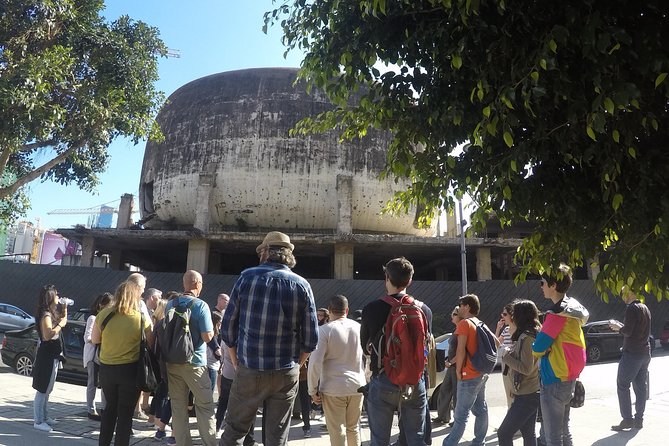
The Egg, or former Metropole Cinema, is another strong stop. During the Civil War, the cinema was transformed into a bunker. You will not go inside, but the group pauses for about 20 minutes while the guide explains different phases of the war.
The Egg is visually striking, but its importance is not just architectural. It shows how ordinary civic spaces can be repurposed during conflict. A cinema designed for entertainment became a defensive structure. That contrast is likely to stay with you after the tour.
Mohammad al-Amin Mosque and the rebuilt center
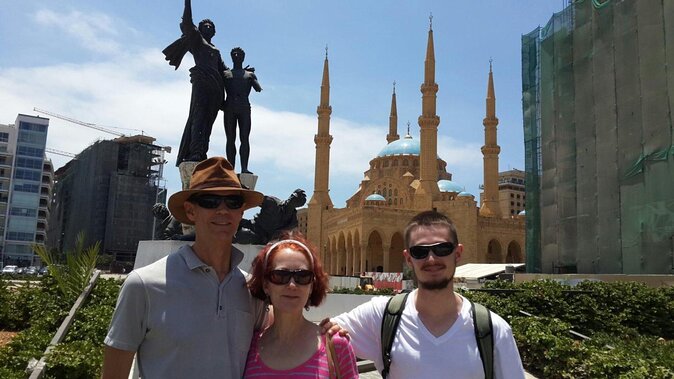
The tour then reaches Mohammad al-Amin Mosque, the largest mosque in Beirut. You visit the mosque and hear about the assassination of former Prime Minister Rafic Hariri. The building’s scale and prominent position make it one of the city’s defining sights, but the political story gives it added weight.
The stop also brings together several threads from earlier in the day: religion, public power, reconstruction, and contested memory. If you want only architectural facts, the discussion may feel more political than expected. If you want help understanding Beirut, that is a benefit.
Saifi Village follows, with a look at the SOLIDERE project and Beirut’s architectural styles. This section helps explain the contrast between restored or newly built areas and the older quarters you have already visited. It also returns the tour to questions about how downtown was rebuilt and for whom.
At the Nicolas Sursock Museum, you do not enter for a museum visit. Instead, the guide talks about the old Martyrs’ statue and the Sursock family. This is a very short stop, about five minutes, so think of it as a historical note along the route, not a full cultural attraction.
Finally, you walk along Gemmayzeh Street and Gouraud Street back to Martyrs’ Square. The last 20 minutes provide a natural return through a district known for its streets and architecture. Ending where you began makes the route easy to understand and convenient for the rest of your day.
The guide, group size, and pace
The maximum group size is 15. That is small enough for questions and personal contact, while still keeping the price down. Some departures may be smaller, and one account describes a solo outing with George after cancellations caused by unrest the previous night.
George receives the strongest praise in the supplied comments. His style is described as friendly, funny, honest, political, and reflective. He has a background in geophysics and archaeology, which helps explain the tour’s unusual mix of science, buildings, excavations, and modern politics.
That personality matters here. Beirut’s past is complicated, and a guide who simply recites facts could make the day exhausting. George’s humor appears to soften the harder material without avoiding it. The comments also describe excellent communication before the tour and a guide who adjusted well to cold rain, protests, and unsettled conditions.
Still, your experience depends on the guide assigned that day. The description names George in several personal accounts, but it does not guarantee that he will lead every departure. The broader promise is guiding by Lebanon By Locals, not a specific guide assignment.
Is $41.03 a fair price?
At $41.03 per person, the tour offers good value if you want a guided introduction rather than a simple downtown stroll. The fee includes guiding, all taxes and fees, and food and drinks: one lahmadjun or falafel sandwiches, coffee, and beer.
You are also paying for the guide’s route planning and interpretation. Beirut can be confusing to navigate independently because street names and urban zones do not always follow a clear system. Six hours of context across Roman, Ottoman, French, postwar, and Civil War sites would be difficult to assemble on your own in one morning.
Private transportation is not included, but that is not a serious weakness for this particular experience. The point is to walk between districts and see the transitions at street level. You should budget separately for personal purchases and other extras.
The main value drops if you dislike long walks, political discussion, or brief exterior visits. Many stops last only five to 15 minutes, and the Egg is viewed from outside. This is a moving city lesson, not a series of long indoor tours.
Practical details for a smoother day
Meet at Martyrs’ Square, listed at VGW4+HV3 in Beirut, at 9:30 a.m. The activity ends at the same meeting point. It is near public transportation, but private transport is not part of the package.
Wear comfortable shoes and prepare for a full day on foot. The operator requires a strong physical fitness level, and the six-hour duration includes repeated walking between stops rather than a vehicle ride.
Bring flexibility. Confirmation is sent within 48 hours of booking, subject to availability. The tour requires good weather, and if poor weather causes cancellation, you are offered another date or a full refund. For any other cancellation or amendment, the payment is non-refundable.
The stated recommendation rate is 93 percent, with a 4.9 rating from 14 reviews. That is a small sample, but the praise is consistent about the guide’s warmth, humor, communication, and ability to explain Beirut’s difficult past.
Who should book this walking tour?
I would recommend it to a first-time visitor who wants Beirut explained through real streets instead of a list of attractions. It suits people who enjoy history, architecture, politics, local food, and candid conversation.
It is also a good fit for solo visitors. A small group provides company, while the guide helps make a complicated city easier to approach. The included food and drinks add a useful break without turning the day into a formal food tour.
I would think twice if you need frequent transport, have limited walking ability, avoid gluten, or want extensive time inside museums and churches. The tour is also not ideal for someone seeking a carefree introduction with no discussion of conflict or political violence.
Final verdict: book it for context, not just sights
Book the Beirut Full Day Walking Tour if you want the city’s contradictions explained: Roman baths beside government buildings, churches near mosques, modern reconstruction beside war-damaged structures, and local food in an older neighborhood.
At $41.03, the small group, six-hour route, guiding, and included lunch make it a solid value. I would book it near the beginning of your stay, wear sturdy shoes, and keep your schedule flexible. If you want Beirut to make more sense by the time you return to Martyrs’ Square, this is a strong choice.
FAQ
Where does the Beirut walking tour start?
The tour starts at Martyrs’ Square in Beirut. The listed location is VGW4+HV3, Beirut, Lebanon.
What time does the tour begin?
The stated start time is 9:30 a.m.
Where does the tour end?
The activity ends back at the meeting point at Martyrs’ Square.
How long does the tour last?
The tour lasts approximately six hours.
How large is the group?
The group has a maximum of 15 participants.
Is lunch included?
Yes. Lunch includes one lahmadjun from Ishkhanian Bakery or falafel sandwiches. A vegetarian option is available.
Are drinks included?
Coffee and beer are included with the food provided during the tour.
Is transportation included?
No. Private transportation is not included. The experience is a walking tour and is near public transportation.
Is the tour suitable for someone with gluten intolerance?
No gluten-free street-food option is provided, so this tour may not suit someone who cannot eat gluten.
What happens if bad weather cancels the tour?
If poor weather causes cancellation, you will be offered a different date or a full refund. The experience is otherwise non-refundable and cannot be changed for other reasons.
Just added around Beirut
- Private Full-Day Tour to Jeita Grotto, Harissa and Saint Charbel from Beirut★ 5.0 · 3 reviews
- Beirut to Jeita Grotto and Byblos: Daily Tours with Lunch★ 5.0 · 3 reviews
- PRIVATE city tour of Old Sidon & Historic Tyre★ 5.0 · 3 reviews
- Journey Through Time: Half-Day Private Tour to Baalbek★ 5.0 · 3 reviews
- Small-Group Tour to Sidon, Tyre and Maghdouche with Lunch and Tickets★ 4.5 · 3 reviews
- Beirut to Sidon, Tyre and Maghdouché: Daily Tours with Lunch★ 5.0 · 3 reviews
- Hike Chouwen★ 5.0 · 3 reviews
- Private Full-Day Tour to Byblos and Tripoli from Beirut★ 5.0 · 3 reviews
Full-Day, compared.
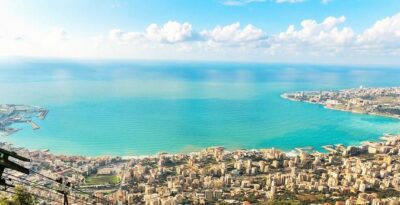
Jeita Grotto,Harissa&Byblos Full-Day PRIVATE-CAR Trip from Beirut
Read our review →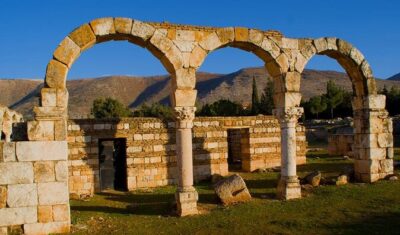
Guided Private Full Day Tour to Baalbek, Anjar and Chateau Ksara
Read our review →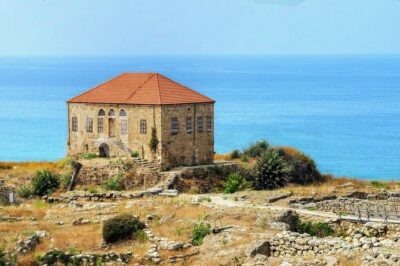
Jeita Grotto, Byblos and Harissa Full-Day Tour from Beirut
Read our review →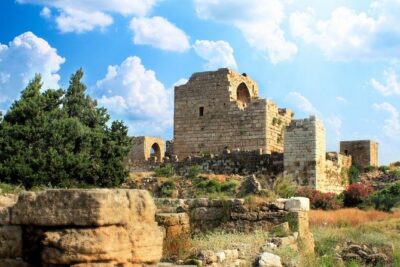
Full-Day Private Tour to Jeita Grotto, Harissa and Byblos
Read our review →
Guided Full-Day Private Trip to Cedars, Baalbek and Chateau Ksara
Read our review →
Full-Day Private Trip to Jeita Grotto, Baalbek and Chateau Ksara
Read our review →
Full-Day Guided Tour of Northern Lebanon with Hotel Pickup
Read our review →