Review · HALF-DAY
Half-Day Private Panoramic Tour of Beirut
Beirut reveals itself quickly. This private half-day tour gives you hotel pickup and drop-off, a driver, and a flexible route through the city’s coast and historic center. I like the freedom to shape the day around your interests, and I like the mix of sea views, war history, religious buildings, and ancient ruins. The main drawback is the brisk pace: with many stops packed into five hours, several visits are short photo and orientation stops rather than long explorations.
The $75 per-person price makes the most sense for a small private party that values convenience. You avoid arranging taxis between scattered sights, and you can ask to adjust the route. If you want a slow museum day or extended time at each landmark, this is not the right format. If you have limited time in Beirut, it is a useful way to get your bearings fast.
In This Review
- Key points to know before booking
- Why this five-hour Beirut tour works well for a first visit
- Pigeon Rocks and the Al Manara Corniche
- Zaitunay Bay and Beirut’s modern waterfront
- The Holiday Inn and Beirut’s wartime memory
- Martyrs’ Square and the center of public memory
- Mohammad Al-Amin Mosque and Al-Omari Mosque
- Saint George Cathedral and Beirut’s early Christian past
- Place de l’Étoile and the four-faced clock
- Beirut Souks and a modern commercial district
- Roman Baths and the oldest layer of the route
- How the private format changes the experience
- Who should book this Beirut city tour?
- Should you book the Half-Day Private Panoramic Tour of Beirut?
- FAQ
- How long does the tour last?
- Is hotel pickup included?
- Is the tour private?
- Can the itinerary be customized?
- What transportation is provided?
- Is lunch included?
- What is the price?
- Are admission tickets included at the listed stops?
- What is the cancellation policy?
Key points to know before booking
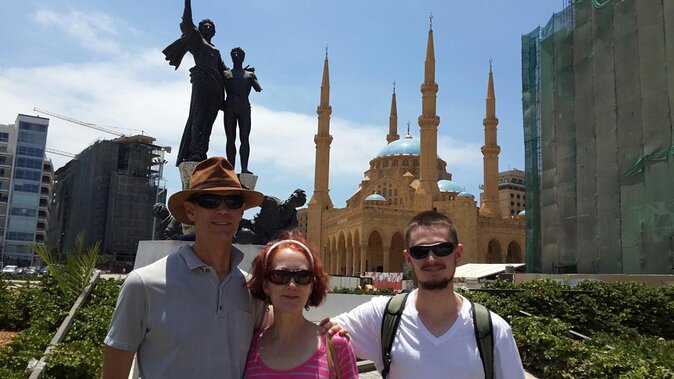
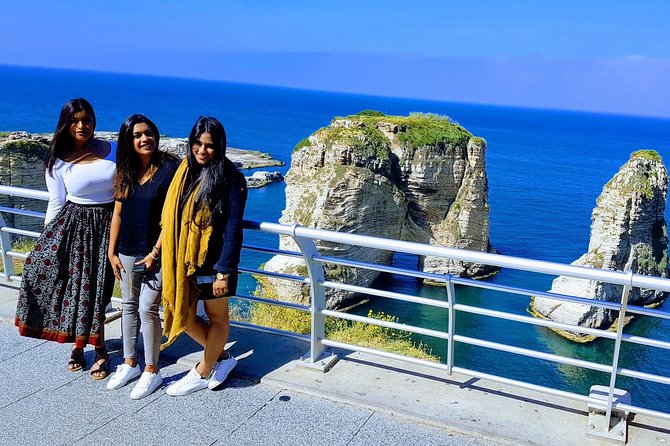
- Pigeon Rocks opens the tour with Beirut’s classic sea view, including the two huge limestone formations at Raouché.
- The route can be tailored to your group, rather than following a rigid sightseeing schedule.
- Downtown Beirut packs in several eras, from the Roman Baths and Al-Omari Mosque to Place de l’Étoile and the modern Beirut Souks.
- The abandoned Holiday Inn adds difficult wartime context, giving the tour more depth than a simple city highlights drive.
- Private transport matters in a five-hour tour, since the sights stretch from the western waterfront to central Beirut.
- Guide flexibility is a real strength, with Albert specifically praised for being professional, engaging, and willing to adjust the day.
Why this five-hour Beirut tour works well for a first visit
Beirut is not a city you understand from one postcard view. Its Mediterranean waterfront, Ottoman and Mamluk religious sites, French-influenced downtown, Roman remains, modern shopping areas, and civil-war scars all sit within a fairly compact urban area. This tour brings those contrasts together without asking you to solve the transport puzzle yourself.
You spend about five hours with a private group, using an air-conditioned vehicle and round-trip hotel transfers. That setup is especially useful if you have only part of a day free. You can see the broad shape of Beirut, then keep the afternoon or evening for a meal, shopping, or your own plans.
I also like the private format because the route is not locked. You can focus more on religious architecture, spend extra attention on wartime landmarks, or ask to prioritize the waterfront and downtown. The supplied schedule lists roughly 10 to 15 minutes at most stops, so you should tell the guide early if one place matters more to you than the others.
The experience costs $75 per person. For one person, that may feel expensive compared with using local taxis or walking around a small section of downtown. For a private party, the price includes transport, hotel transfers, and a guide who handles the timing. Group discounts are offered, which can improve the value when several people share the experience.
More tours and day trips worth a look
- PRIVATE Beirut Historical Walking Half Day Tour
★ 5.0 · 27 reviews - Historical Beirut Tour (AM) Half Day – (4G on Board)
★ 4.0 · 16 reviews - Byblos Half-Day & st.Charbel great guide/all-in+breakfast
★ 5.0 · 15 reviews
Pigeon Rocks and the Al Manara Corniche
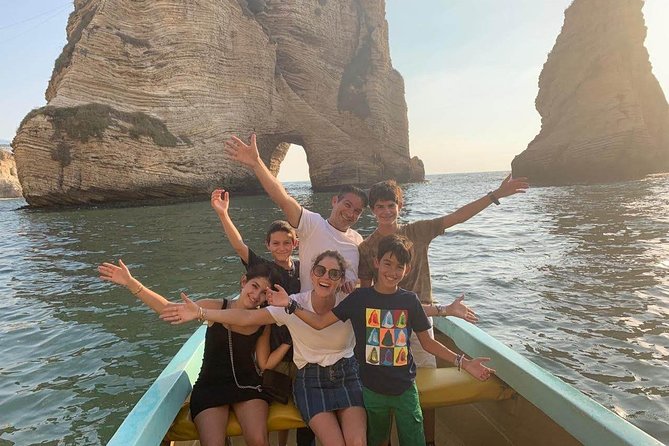
The tour begins at Pigeon Rocks in Raouché, one of Beirut’s best-known coastal views. Two huge rock formations rise from the Mediterranean near the city’s western tip. They look especially striking from the shoreline, where the sea and open horizon give you a quick sense of Beirut’s setting.
You get about 15 minutes here, with no admission charge. That is enough for photographs and a first look, but not for a long waterfront walk. I would treat this as a scenic introduction rather than a full coastal outing.
The nearby Al Manara Corniche stretches from the Ramlet al Bayda area toward the Saint George marina. Palm trees line this well-known seaside promenade, and the route offers views of Pigeon Rock, the Mediterranean, and the summits of Mount Lebanon to the east. The Corniche helps connect the famous rock formation to daily city life, rather than presenting it as an isolated viewpoint.
Because the itinerary moves on quickly, wear comfortable shoes if you hope to walk even a short section. The tour is built around seeing the city from several angles, not lingering beside the water for hours.
Zaitunay Bay and Beirut’s modern waterfront
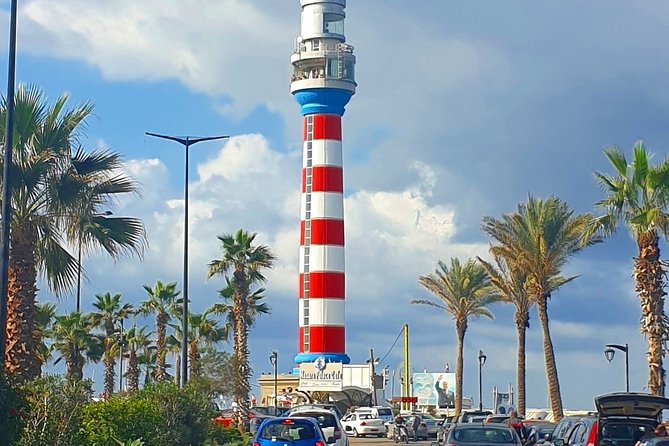
Zaitunay Bay offers a sharp change of mood. This newer waterfront promenade has shops and restaurants and is presented as one of Beirut’s main leisure areas. After the open, natural setting at Raouché, you see a more polished side of the city’s shoreline.
The scheduled stop is about 15 minutes and free to enter. That time lets you look around, take photographs, and understand the setting. It is not enough for a proper meal, so do not count on lunch here unless you arrange a longer stop with your guide.
Lunch is not included in the tour price. That is worth remembering because the five-hour route may cover the middle of the day. You can ask whether the schedule allows a restaurant stop, but the supplied details do not promise one. If you need a meal at a fixed time, mention it before the tour begins.
The Holiday Inn and Beirut’s wartime memory
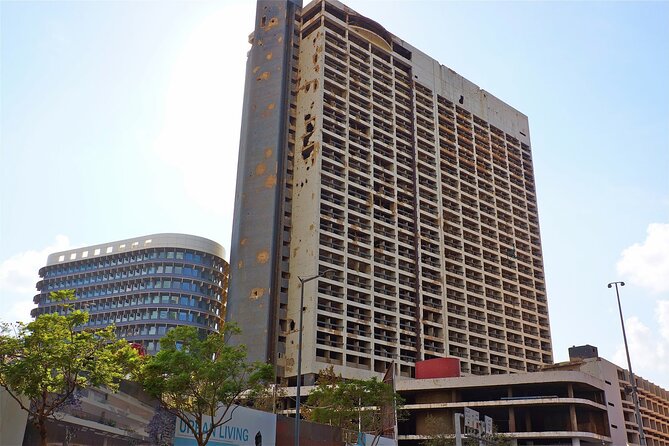
The abandoned Holiday Inn is one of the most sobering stops. Built between 1971 and 1974, when Beirut was enjoying strong economic growth, the hotel was soon caught in the Lebanese Civil War, which began in 1975. It became part of the Battle of the Hotels, a long fight over major buildings in the city.
The shell remains abandoned and empty decades later. Its damaged form is not a polished monument, and that is precisely why it carries weight. You see a physical reminder of how quickly a successful hotel district became a war zone.
The schedule does not give this stop a numbered duration, so the amount of time may depend on the guide and the wider traffic plan. Ask your guide for context rather than treating it as a quick photograph from the vehicle. This is one of the places where a flexible private tour has an advantage. A good guide can explain the site without turning the visit into a rushed list of dates.
At the same time, you should be prepared for a difficult subject. This is not a light sightseeing stop, and the building’s condition may be affecting. Its value comes from helping you see Beirut as a living city shaped by conflict, not only as a collection of attractive buildings.
A different idea for your next day out:
- Guided Small-Group Tour to Baalbek, Anjar and Ksara with Lunch
★ 5.0 · 511 reviews - Guided Small-Group Tour to Jeita, Harissa, Byblos with Lunch
★ 5.0 · 361 reviews - Paragliding Trip Over Lebanon – Jounieh Bay
★ 5.0 · 257 reviews - Jeita Grotto,Harissa&Byblos Full-Day PRIVATE-CAR Trip from Beirut
★ 5.0 · 222 reviews
Martyrs’ Square and the center of public memory
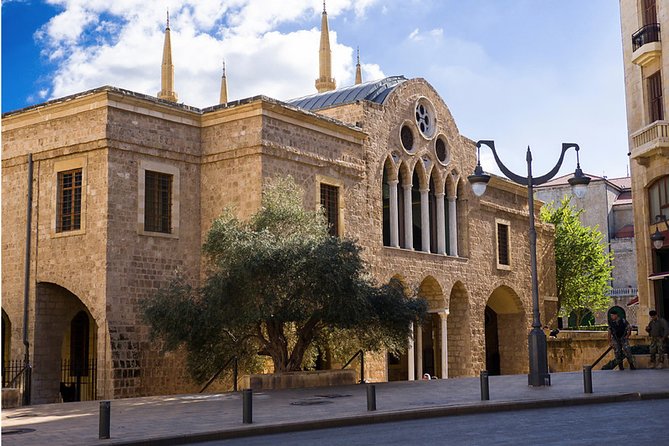
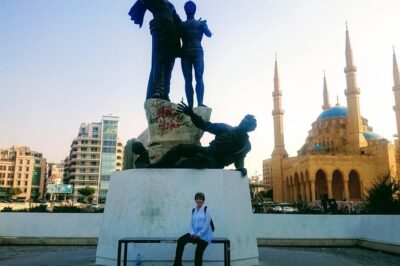
Martyrs’ Square sits in the heart of downtown Beirut. It was once known as Al Burj or Place des Cannons and takes its current name from the Lebanese nationalists executed by the Ottomans on May 6, 1916, during World War I.
The stop lasts about 10 minutes and has no admission charge. That is enough to identify the square and hear its basic story, though you should not expect a long historical lecture or extended time to study every feature.
This is a useful point in the tour because it links Beirut’s Ottoman past with its modern political identity. The square has also been affected by war and reconstruction, so its meaning is not limited to one date. I would use your time here to ask the guide how the square fits into the city’s wider story.
Mohammad Al-Amin Mosque and Al-Omari Mosque
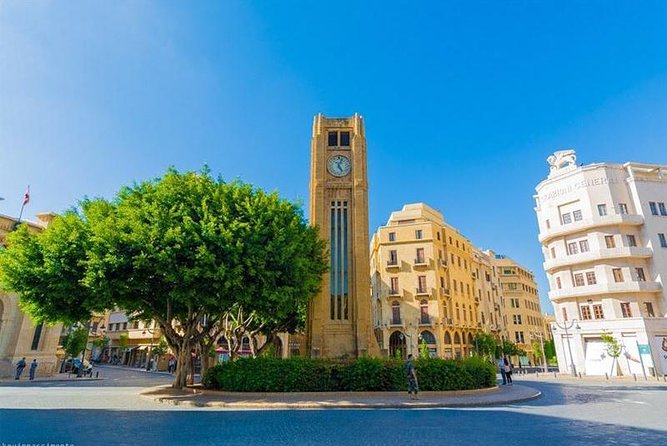
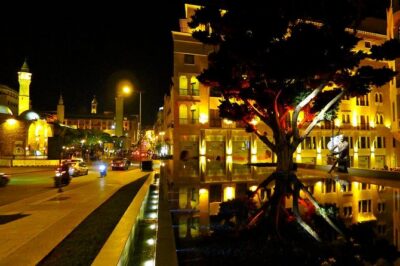
The Mohammad Al-Amin Mosque, also called the Blue Mosque, is the largest mosque in Lebanon. Its amber-colored exterior, four 65-meter minarets, light blue tiled domes, and tall arches make it one of downtown Beirut’s most recognizable buildings.
You have about 15 minutes here. That should give you time to appreciate the exterior and hear about the mosque, which opened in 2008. The schedule does not promise interior access, so do not assume you will be able to enter. Dress and behave respectfully around any religious site, and follow your guide’s instructions.
The nearby Al-Omari Mosque brings a much older layer to the route. Its origins are linked to the age of Omar Bin El Khattab in 635 AD. Crusaders converted it into the Church of Saint John in the 12th century, and the Mamluks returned it to use as Beirut’s Grand Mosque in 1291.
The building was damaged during the Civil War and restored in 2004. That sequence, mosque to church to mosque, makes it one of the most interesting stops for anyone curious about Beirut’s changing rulers and faith communities. Again, the planned 15 minutes is short, so ask for the key details and take a moment to compare the older mosque with the much larger Mohammad Al-Amin Mosque.
Saint George Cathedral and Beirut’s early Christian past
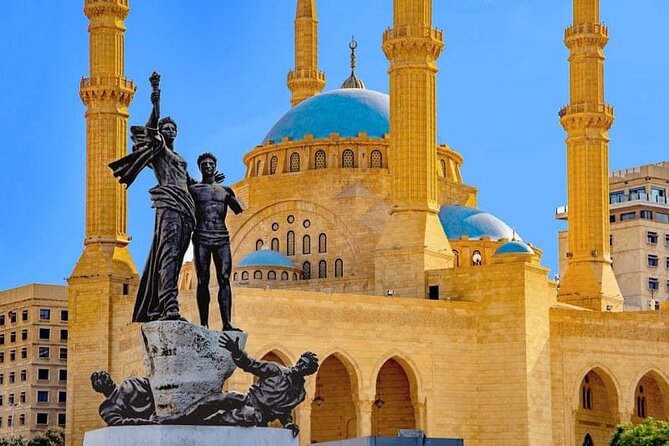
The Greek Orthodox Cathedral of Saint George is the seat of the Greek Orthodox Metropolitan bishop of Beirut and its dependencies. It is also described as the oldest church in Beirut and one of the oldest in the region.
The current cathedral is tied to a much longer religious story. A Christian temple occupied this location as early as the mid-sixth century, and the site is associated with Beirut’s famous Law School. That connection gives the stop more substance than architecture alone.
You get about 15 minutes, free of charge. The visit may appeal most to you if you enjoy religious buildings and the way sacred sites change over time. If your main interest is shopping or coastal scenery, this is one of the stops you might shorten in favor of something else. The private format lets you make that choice.
Place de l’Étoile and the four-faced clock
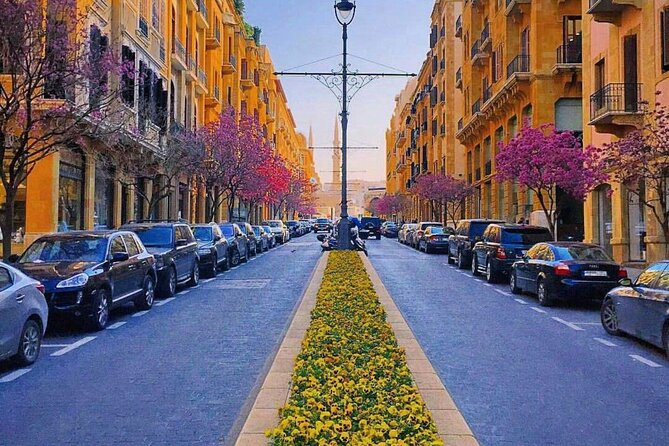
Place de l’Étoile, also called Nejme Square, is the central square of downtown. It includes the Lebanese Parliament and related buildings, two cathedrals, a museum, cafes, and restaurants.
Its most recognizable feature is the four-faced Rolex clock from 1930. The square’s architecture makes it a useful place to pause and take in the layout of central Beirut. With about 10 minutes scheduled, you will mainly orient yourself, photograph the clock, and hear how the square fits into the city center.
This is also a good point to ask the guide about nearby places you may want to return to later. Since the tour ends with more downtown sights, you can note restaurants, shops, or streets that deserve a longer visit when you are on foot.
Beirut Souks and a modern commercial district
Beirut Souks is a large shopping and leisure area in the city center. It includes more than 200 shops, 25 restaurants and cafes, an entertainment center, and a cinema complex.
The planned stop is about 10 minutes, so it is best viewed as a quick introduction. You can see the scale of the district and decide if you want to return independently. It is not enough time for serious shopping, browsing every store, or sitting down for a relaxed meal.
I like having this modern stop in the route because it prevents the tour from presenting Beirut as only an ancient or war-scarred city. The souks show the city’s commercial side and give you a practical option for later in your stay.
Roman Baths and the oldest layer of the route
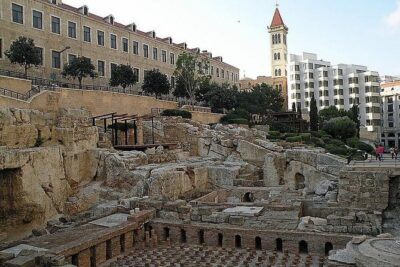
The Roman Berytus Baths are the largest outdoor ancient site in downtown Beirut. Archaeologists discovered them in 1968 and 1969, and the remains underwent major renovation in the mid-1990s.
Roman Berytus had four major bath complexes. The first was created in the early first century under Augustus, while a major earthquake in 551 AD destroyed all the baths. Today, the site reflects the traditions of the ancient complex, and one of the bath areas is used for artistic performances and concerts.
The tour allows about 15 minutes here. That is enough to see the open-air remains and understand the basic layout, but it is a short visit for anyone who enjoys archaeology. You may want to ask the guide to point out the most important surviving features rather than trying to inspect the site on your own.
Ending with the Roman Baths works well. After the sea, modern waterfront, civil-war remains, religious buildings, and commercial district, you finish with Beirut’s ancient foundation. The city can feel like several places at once, and this final stop makes that clear.
How the private format changes the experience
Your group is the only group on the activity. That gives you more control than a large coach tour, especially in a city where traffic and personal interests can affect the pace.
The driver handles the route while the guide explains the sights. Hotel pickup and drop-off remove the need to arrange separate rides at the beginning and end. The air-conditioned vehicle is also practical during a five-hour city tour, when moving between far-flung stops could otherwise take time and energy.
The strongest praise connected with this experience centers on Albert, who is described as professional, engaging, and flexible. He made sure the main Beirut sights were covered while adjusting the route for additional personal interests. You may not be assigned Albert, so treat his approach as a useful sign of what to request: a guide who listens, explains, and helps you choose when time is tight.
Most people can participate, and confirmation is received when you book. Free cancellation is available if you cancel at least 24 hours before the local start time. Changes or cancellations inside that window are not accepted for a refund.
Who should book this Beirut city tour?
I would choose this tour if you have one free morning or afternoon and want a broad introduction to Beirut. It suits first-time visitors, private groups, couples, families, and anyone who prefers a guide and vehicle rather than coordinating taxis.
It is also a good fit if your interests do not fit a standard city route. You can ask for more time around religious landmarks, the waterfront, or war-related sites. The key is to discuss priorities at the start, since the default schedule moves quickly.
I would choose something else if you want long visits, detailed archaeological study, or an unhurried meal. The tour covers many locations, but most stops last only 10 to 15 minutes. Think of it as a guided city overview with selected short visits, not a series of full museum tours.
Should you book the Half-Day Private Panoramic Tour of Beirut?
Book it if you want to see Beirut’s main coastal, historic, religious, commercial, and ancient sights in about five hours, with hotel transfers and a route you can adjust. At $75 per person, the value improves for a private group, especially when you factor in the vehicle and the time saved arranging transport.
Before you go, identify the two or three places that matter most to you. Tell the guide at the beginning, ask for context at the Holiday Inn and Roman Baths, and do not expect lunch to be included. For a short stay, this is a practical first look at Beirut that leaves the rest of your day open.
FAQ
How long does the tour last?
The tour lasts approximately five hours.
Is hotel pickup included?
Yes. Round-trip pickup and drop-off from your Beirut hotel are included.
Is the tour private?
Yes. Only your group participates in the private activity.
Can the itinerary be customized?
Yes. The route can be tailored to suit your group’s interests instead of following only a fixed itinerary.
What transportation is provided?
A comfortable, air-conditioned private vehicle is provided, along with a driver.
Is lunch included?
No. Lunch is not included in the tour price.
What is the price?
The listed price is $75 per person. Group discounts are offered.
Are admission tickets included at the listed stops?
The supplied details show no admission charge for the listed stops.
What is the cancellation policy?
You can cancel at least 24 hours before the local start time for a full refund. Cancellations or changes made less than 24 hours before the start time are not accepted for a refund.
Just added around Beirut
- Private Full-Day Tour to Jeita Grotto, Harissa and Saint Charbel from Beirut★ 5.0 · 3 reviews
- Beirut to Jeita Grotto and Byblos: Daily Tours with Lunch★ 5.0 · 3 reviews
- PRIVATE city tour of Old Sidon & Historic Tyre★ 5.0 · 3 reviews
- Journey Through Time: Half-Day Private Tour to Baalbek★ 5.0 · 3 reviews
- Small-Group Tour to Sidon, Tyre and Maghdouche with Lunch and Tickets★ 4.5 · 3 reviews
- Beirut to Sidon, Tyre and Maghdouché: Daily Tours with Lunch★ 5.0 · 3 reviews
- Hike Chouwen★ 5.0 · 3 reviews
- Private Full-Day Tour to Byblos and Tripoli from Beirut★ 5.0 · 3 reviews
Half-Day, compared.
Historical Beirut Tour (AM) Half Day – (4G on Board)
Read our review →
Byblos Half-Day & st.Charbel great guide/all-in+breakfast
Read our review →
Half-Day Private Trip to Jeita Grotto and Harissa
Read our review →
All-in Half-Day Jounieh Teleferique JeitaGrotto guide + breakfast
Read our review →