
Review · CITY TOURS
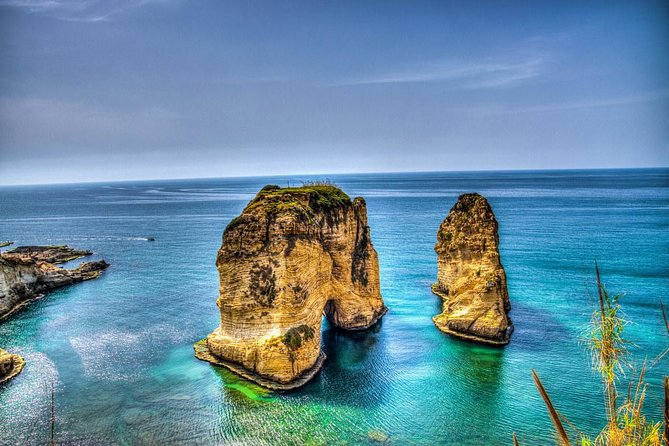
Private Beirut City Tour with Boat Ride at Raouche Rock
Beirut rewards a closer look. This private, seven-hour tour gives you a practical way to see the city without wrestling with its difficult traffic, while adding two experiences that are hard to combine on your own: the National Museum of Beirut and a boat ride through the Pigeon Rocks. I especially like the door-to-door transport and the chance to see Beirut with a local guide who can connect its ancient sites with its modern streets. The Raouche boat ride is another strong point, taking you under and between the giant sea rocks rather than leaving you with only a waterfront photograph.
The main caution is language and timing. The tour is offered in English, but the guide’s English may be limited, with Arabic or French reportedly easier for him. One booking also caused confusion, and one guest felt the day did not really last seven hours, so I would confirm the schedule and language before paying, especially because the booking is non-refundable.
In This Review
- Key points to know before you book
- Why private transport is useful in Beirut
- The National Museum makes the best opening stop
- Raouche puts you on the water
- Martyrs’ Square links Beirut’s past and present
- The Mohammad Al-Amin Mosque creates a striking downtown view
- Downtown combines Roman ruins, churches, and modern shopping
- The guide can make or break the day
- Is $108.35 per person fair value?
- Timing, language, and other practical points
- Who will enjoy this Beirut day tour?
- Should you book it?
- FAQ
- How long does the Beirut city tour last?
- Is hotel pickup included?
- Is the National Museum admission included?
- Does the tour include a boat ride?
- Is this a private tour?
- Can I cancel or change the booking?
Key points to know before you book
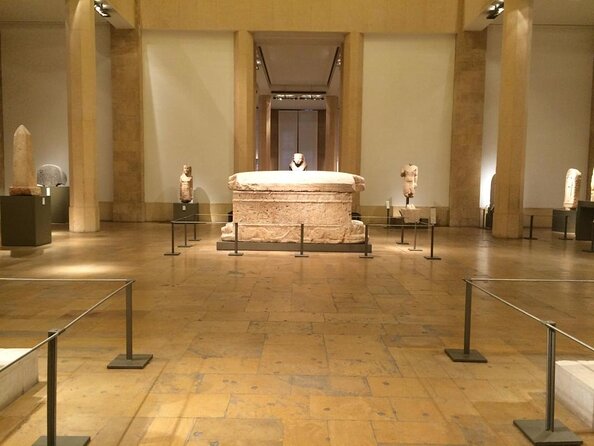
- The National Museum takes about two hours: This is the most substantial stop, with Phoenician, Roman, and other archaeological pieces from Lebanon.
- The Pigeon Rocks boat ride is the tour’s most unusual moment: You go under and between the huge sea rocks at Raouche, weather and sea conditions permitting.
- Private transport matters in Beirut: Hotel and vacation-rental pickup removes the pressure of driving through the city yourself.
- Downtown combines very different sights: Martyrs’ Square, the Mohammad Al-Amin Mosque, old churches, Roman Baths, and Beirut Souks are covered in one walking section.
- The tour is priced at $108.35 per person: That makes the most sense for people who value private transport, a guide, and a full day of sightseeing.
- The schedule may feel shorter than advertised: Sunday traffic can be light, and the actual pace depends on the guide and how much time you spend at each stop.
Why private transport is useful in Beirut
Beirut is not a city I would choose for a relaxed first-day self-drive. The tour description is frank about the traffic, and that is one of its strongest practical selling points. You are picked up at your hotel or vacation rental and returned to the same meeting point, so you can focus on the city rather than lane changes, directions, and parking.
A private tour also gives your group a more personal day. Only your party participates, which means you are not tied to the pace of a large bus group. If your group wants more time at the museum and less time in the shopping area, that arrangement should make the day easier to manage, although the exact flexibility is not spelled out.
The advertised start time is 9:45 a.m. The full experience is listed at about seven hours, but I would treat that as an approximate target rather than a guarantee. One account described the tour as shorter than seven hours, while another Sunday outing moved around Beirut efficiently. A clear start-time check is wise.
More tours and day trips worth a look
- Pigeon Rocks Boat Ride Beirut (Raouche Rocks)
★ 5.0 · 10 reviews
The National Museum makes the best opening stop
The National Museum of Beirut is the intellectual center of this outing. You receive about two hours here, and admission is included, giving the day a solid start instead of beginning with a quick photo stop.
The museum presents Lebanon as a meeting point for several civilizations. Its collection includes archaeological objects from the Phoenician, Roman, and other periods that shaped the country. You are not simply looking at isolated artifacts. The display helps explain why Lebanon has such a layered past, with coastal cities and inland communities repeatedly linked to larger Mediterranean cultures.
Several pieces deserve special attention. The Phoenician gilded bronze figurines were found buried near the Obelisk Temple at Byblos. Their small size makes them easy to overlook, but their craftsmanship and burial context give them real appeal. The human-faced Phoenician sarcophagi are another highlight, especially if you enjoy seeing how ancient societies represented the dead.
The basement adds a particularly memorable stop. It includes a frescoed Roman tomb and was reopened in 2016. That lower level gives the museum a stronger sense of place because you are seeing funerary art in a setting connected to burial customs, not only objects in glass cases.
I like the two-hour allocation here. A museum with this range needs more than a rushed half hour, and this is where the tour offers its strongest historical value. The possible weakness is guide language. If your English-speaking guide cannot explain the objects clearly, you may get less from the collection than you would with a guide comfortable in your language. Ask in advance whether the tour will be conducted in English, Arabic, or French.
Raouche puts you on the water
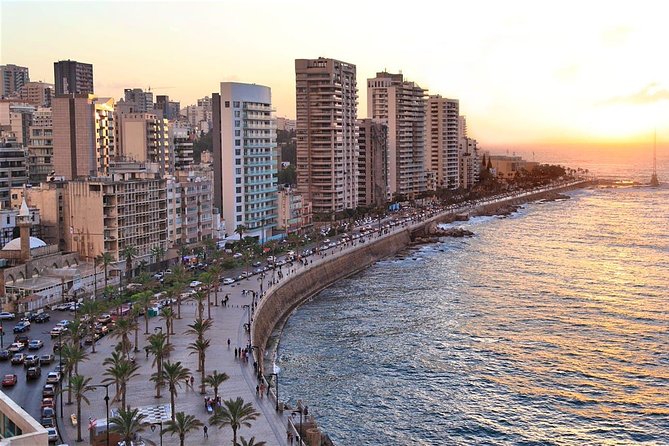
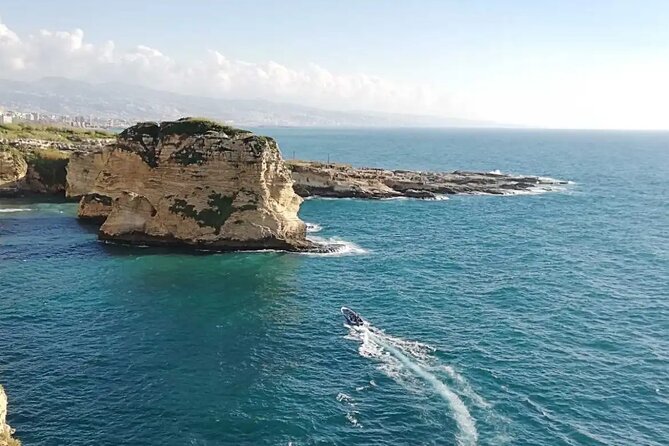
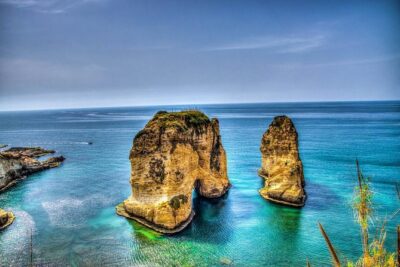
After the museum, the tour heads to Raouche, on Beirut’s coast, for the Pigeon Rocks. The visit lasts about 30 minutes, so this is a compact stop, but it adds movement and fresh air to a day otherwise built around museums, streets, and monuments.
The key feature is the boat ride. You go under and between the enormous sea rocks, seeing the formations from water level rather than from the promenade alone. That change in viewpoint is the reason to choose this tour over a standard city sightseeing route.
The ride is included as part of the experience, with no separate admission charge listed. Still, the short time allocation means you should not expect a long cruise. This is a focused boat outing around the rocks, not a half-day harbor trip.
Raouche is also a useful visual break. After two hours indoors at the National Museum, the open water and dramatic rock formations change the rhythm of the day. I would keep your expectations practical: the attraction is the close view of the Pigeon Rocks and the ride through them, not a broad coastal tour of Beirut.
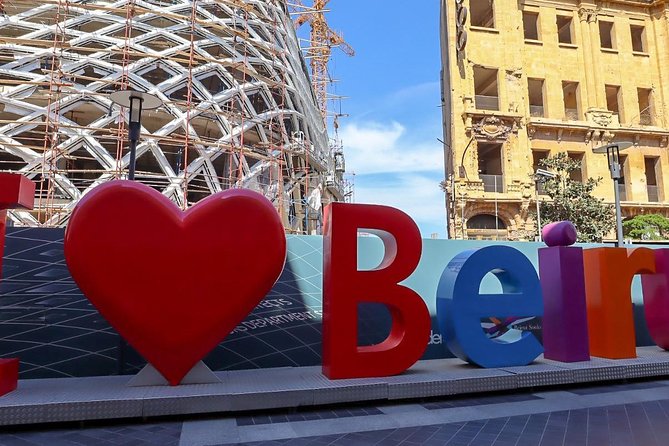
Martyrs’ Square links Beirut’s past and present
Martyrs’ Square is given about 20 minutes. That is enough for an introduction and photographs, but not a long historical discussion unless the guide uses the time efficiently.
The square was named in 1931 as a tribute to people executed under Ottoman rule. That background gives the stop more weight than its brief duration suggests. It also places you in one of Beirut’s key civic spaces, where political memory and the modern downtown meet.
I would use this stop to listen carefully to the guide’s explanation and look at the surrounding urban setting. The square is not presented as a long independent attraction. It works better as a bridge between the waterfront portion of the day and the architectural sights that follow.
A different idea for your next day out:
- Guided Small-Group Tour to Baalbek, Anjar and Ksara with Lunch
★ 5.0 · 511 reviews - Guided Small-Group Tour to Jeita, Harissa, Byblos with Lunch
★ 5.0 · 361 reviews - Paragliding Trip Over Lebanon – Jounieh Bay
★ 5.0 · 257 reviews - Jeita Grotto,Harissa&Byblos Full-Day PRIVATE-CAR Trip from Beirut
★ 5.0 · 222 reviews
The Mohammad Al-Amin Mosque creates a striking downtown view
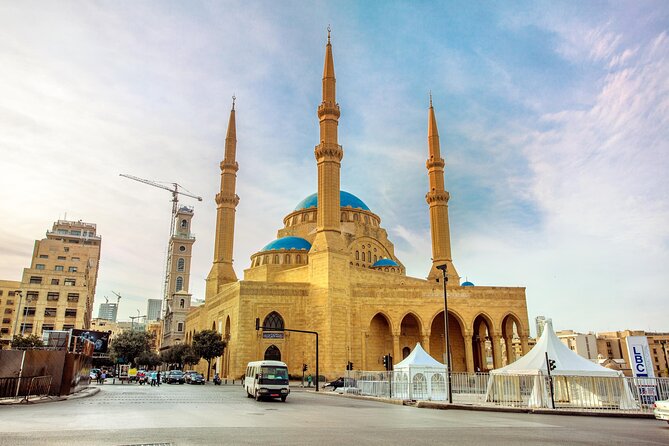
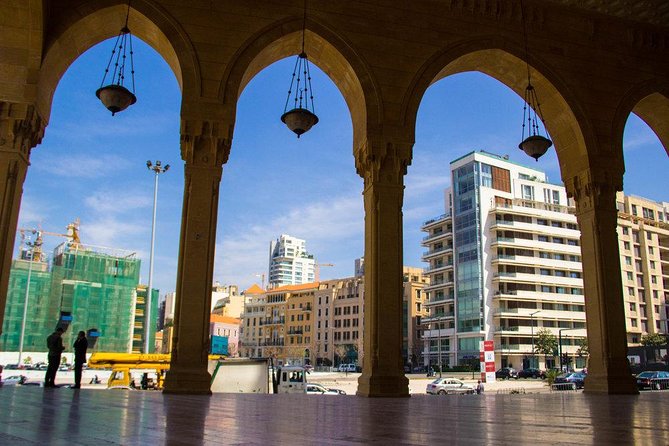
The tour then visits the Mohammad Al-Amin Mosque, built next to a church. From Martyrs’ Square, you can see a cross and a crescent together, a detail that captures Beirut’s mixed religious character in one glance.
The mosque visit is listed at about 30 minutes. That gives you time to appreciate the building and its position beside the church, though the supplied details do not specify whether the interior is entered or viewed from outside. I would ask the guide about that on the day and follow any rules for visiting a religious site.
This is one of the tour’s most visually direct moments. Instead of discussing Lebanon’s different communities only in abstract terms, you see two major religious buildings side by side. The stop is brief, but its meaning is easy to grasp.
Downtown combines Roman ruins, churches, and modern shopping
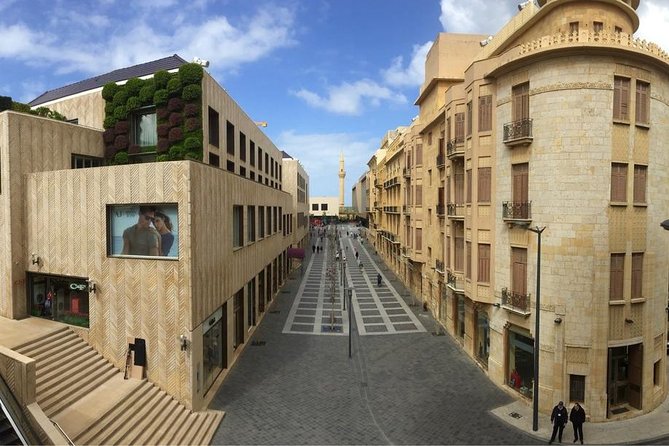
The longest walking portion comes in downtown Beirut, with about two hours assigned to the area. The route includes old churches, the Roman Baths, and Beirut Souks, so this is not just a shopping stop.
The Roman Baths offer a reminder that Beirut’s center has ancient foundations beneath its newer streets. You may find the ruins more rewarding after the National Museum because you will already have some context for Roman life in Lebanon. The tour does not provide detailed information about the baths, so your enjoyment will depend heavily on the guide’s explanation.
The old churches add another layer to the downtown visit. Their presence, combined with the Mohammad Al-Amin Mosque and the view of cross and crescent, gives the walking section a clear theme: Beirut’s religious and architectural contrasts are often found within a short distance of one another.
Beirut Souks bring the route into a more modern setting. I would not assume this means a long shopping session. The information simply places the souks within the downtown exploration, and one account specifically felt this part was not fully delivered. If the souks are important to you, ask exactly where you will go and how much time is planned there.
The two-hour downtown block is generous compared with the 20-minute Martyrs’ Square stop and the half-hour mosque visit. That makes sense because this section contains several sights. It can also feel less organized if the guide moves quickly between locations or if the language barrier limits the explanations.
The guide can make or break the day
A private tour promises personal attention, but the guide remains the key variable. One account described the guide as hospitable and well informed, while another said his English was not strong and that he could conduct the tour better in Arabic or French.
That difference matters most at the National Museum and Roman Baths. These places reward context. If you understand why the Phoenician figurines were buried near Byblos, what the sarcophagi represent, and how the Roman tomb fits into Lebanon’s past, the day becomes far more meaningful. If the commentary is thin, the tour becomes mainly transportation and sightseeing.
You should confirm your preferred language before booking. English is offered, but the supplied information does not identify the guide by name or guarantee a particular level of fluency. If someone in your group speaks Arabic or French, that may improve the experience based on the guide’s reported strengths.
The private format is still a benefit. You can ask questions, request clarification, and keep the day within your own group. A private tour does not automatically mean a perfect tour, but it gives you more room to manage a language or pacing problem than a large group excursion would.
Is $108.35 per person fair value?
At $108.35 per person, this is not the cheapest way to see Beirut. The value depends on what you would otherwise need to arrange: transport through the city, museum admission, the Raouche boat ride, and a full day of guiding.
The price looks more reasonable for a small group that wants convenience. Private pickup and return from hotels or vacation rentals across Beirut remove the cost and stress of arranging several separate rides. The National Museum admission is included, and the boat outing is part of the package rather than an extra charge.
For one person or a couple, the cost may feel high if you are comfortable organizing taxis and visiting the sights independently. For a group, the private format and group discounts may improve the calculation. The supplied information confirms that group discounts are available, but it does not state the discount amount, so ask for the final total before booking.
I would judge the price by the quality of the guiding as much as by the number of stops. If your guide gives clear explanations and the schedule really uses close to seven hours, the combination of museum, boat ride, and downtown sightseeing offers a useful full-day introduction. If the day ends early and the English commentary is weak, the value drops.
Timing, language, and other practical points
The tour begins at 9:45 a.m. and ends back at the meeting point. Pickup is offered from hotels and vacation rentals across the city, but the published details do not list individual pickup windows or a precise return time.
The duration is approximately seven hours. Sunday traffic may be lighter, allowing the vehicle to move efficiently, but that can also make the day feel shorter if the guide does not fill the available time with more explanation or exploration. If you want a full seven-hour outing, confirm how long each stop will last.
The experience is private, and only your group participates. Mobile tickets are available, and booking confirmation is sent at the time of purchase. Most people can participate according to the supplied information, although no detailed accessibility information is provided.
The cancellation rule is strict. This experience is non-refundable and cannot be changed for any reason. I would not book until your date, pickup location, group size, and preferred guide language are settled.
Who will enjoy this Beirut day tour?
I would recommend it most strongly to first-time visitors who want Beirut’s main sights arranged in a single day. It suits you if driving in unfamiliar city traffic sounds stressful, if you want private pickup, or if you have only a short stay and need to cover several districts efficiently.
It also works well for a group that values a flexible private vehicle more than the lowest possible price. The mix is appealing: archaeology at the National Museum, a boat ride at Raouche, religious architecture downtown, Roman remains, and the souks.
I would be more cautious if your top priority is a long boat cruise, extensive shopping, or detailed museum interpretation in fluent English. The Raouche ride lasts only about 30 minutes, the souks are part of a wider two-hour downtown visit, and guide language should be confirmed carefully.
The tour’s rating is 4.7 from 10 ratings, with 90 percent recommending it. That is encouraging, but the small number of ratings means I would still pay attention to the practical warnings about language, booking confusion, and the possibility of a shorter day.
Should you book it?
Book this tour if you want a private, ready-made introduction to Beirut and value transport more than absolute flexibility. The National Museum and Pigeon Rocks give the day two clear highlights, while the mosque, square, Roman Baths, churches, and souks fill in the city’s story.
Before committing, confirm the guide’s English level, the planned stop lengths, the exact pickup details, and whether the downtown portion includes the souks in the way you expect. If those answers suit you, $108.35 can be fair for a private full-day outing. If you prefer to set your own pace and can manage Beirut transport independently, visiting the sights on your own may offer better value.
FAQ
How long does the Beirut city tour last?
The tour lasts approximately seven hours. It begins at 9:45 a.m. and ends back at the meeting point.
Is hotel pickup included?
Yes. Private two-way transfers are offered from hotels and vacation rentals across Beirut.
Is the National Museum admission included?
Yes. Admission to the National Museum of Beirut is included, and the visit is scheduled for about two hours.
Does the tour include a boat ride?
Yes. At Raouche, you take a boat ride under and between the Pigeon Rocks. The stop is scheduled for about 30 minutes, and no separate admission charge is listed.
Is this a private tour?
Yes. Only your group participates in the activity.
Can I cancel or change the booking?
No. The experience is non-refundable and cannot be changed for any reason.
More City Tours in Beirut
- City Sightseeing Beirut Hop-On Hop-Off Bus Tour
★ 4.5 · 87 reviews - PRIVATE city Tour of authentic Tripoli and vibrant Batroun
★ 5.0 · 51 reviews - Private Baalbek City Tour
★ 5.0 · 14 reviews - PRIVATE tour to Jeita Grottos, Harissa Shrine & Byblos City
★ 5.0 · 12 reviews
Just added around Beirut
- Private Full-Day Tour to Jeita Grotto, Harissa and Saint Charbel from Beirut★ 5.0 · 3 reviews
- Beirut to Jeita Grotto and Byblos: Daily Tours with Lunch★ 5.0 · 3 reviews
- PRIVATE city tour of Old Sidon & Historic Tyre★ 5.0 · 3 reviews
- Journey Through Time: Half-Day Private Tour to Baalbek★ 5.0 · 3 reviews
- Small-Group Tour to Sidon, Tyre and Maghdouche with Lunch and Tickets★ 4.5 · 3 reviews
- Beirut to Sidon, Tyre and Maghdouché: Daily Tours with Lunch★ 5.0 · 3 reviews
- Hike Chouwen★ 5.0 · 3 reviews
- Private Full-Day Tour to Byblos and Tripoli from Beirut★ 5.0 · 3 reviews
City Tours, compared.
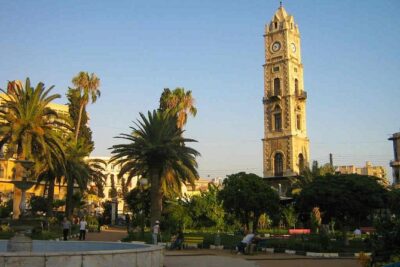
PRIVATE city Tour of authentic Tripoli and vibrant Batroun
Read our review →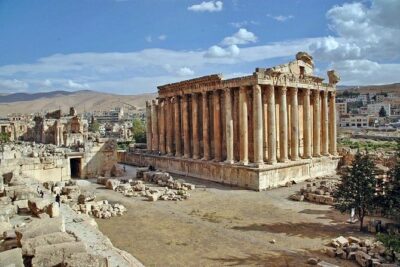
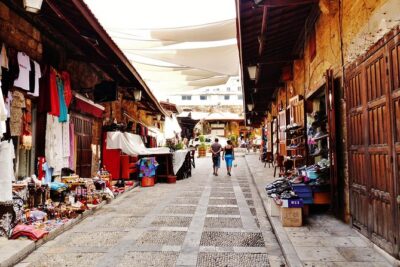
PRIVATE tour to Jeita Grottos, Harissa Shrine & Byblos City
Read our review →
Browse the lists this tour appears in