
Review · BEITEDDINE & DEIR EL QAMAR TOURS
Small Group Tours to Beirut, Beiteddine & Deir el Qamar with lunch and all fees
Beirut in one full day gives you sea views, war history, grand religious buildings, mountain scenery, and two of Lebanon’s most important historic towns. This 8-hour small-group tour combines Beirut’s main sights with Beiteddine Palace and Deir el Qamar, making it a practical choice if your time in Lebanon is limited.
I especially like the small maximum of 15 people, which should make the day easier to manage than a large coach outing. I also like that lunch, transport, entrance fees, and hotel pickup and drop-off are included. The main drawback is the busy schedule: many Beirut stops receive only 10 minutes, so you get an overview rather than long visits at each site.
The day begins at 8:00 am and costs $99 per person. That is a fair package price when you count the air-conditioned minivan, palace admission, lunch, guide, and hotel transfers. The tour has a 4.9 rating from eight reviews, with particular praise for guide Natasha’s detailed and professional explanations.
In This Review
- Key points to know before booking
- Why this day works well for a first look at Lebanon
- Pigeon Rocks and the Al Manara Corniche
- Zaitunay Bay and Beirut’s polished waterfront
- The Holiday Inn and Beirut’s visible war memory
- Downtown Beirut’s mosques, churches, and public squares
- Roman Baths and the remains of ancient Berytus
- Beiteddine Palace: the day’s main historic visit
- Deir el Qamar and its layered religious past
- Lunch, transport, and the real value of $99
- Who should book this Beirut day tour?
- Should you book it?
- FAQ
- How long does the tour last?
- What is the maximum group size?
- Is hotel pickup and drop-off included?
- Is lunch included?
- Are entrance fees included?
- Which places are visited in Beirut?
- Can I cancel for a full refund?
Key points to know before booking
- Pigeon Rocks in the morning: The famous Raouché rock formations make an attractive first stop, and the soft morning light can be especially good for photographs.
- Beirut’s history in compact form: The route links Roman ruins, Ottoman-era memory, religious landmarks, modern shopping, and the scarred Holiday Inn.
- Beiteddine Palace is the day’s major interior visit: You get about 90 minutes at the palace, with admission included.
- Deir el Qamar adds a traditional mountain-town setting: The visit includes the old mosque, Our Lady of the Hill Church, and the municipal area.
- A practical $99 package: Lunch, admission fees, hotel transfers, a tour leader, and minivan transport are all covered.
- A fast pace in Beirut: Ten-minute stops are enough for photographs and a short explanation, but not for detailed museum-style visits.
Why this day works well for a first look at Lebanon
Beirut and the Chouf region feel quite different, and this tour puts both into one day. You begin beside the Mediterranean, move through the city center, then head into the mountains for palace rooms, village streets, and religious sites.
I like this arrangement because you are not spending the entire day on one narrow theme. The Beirut portion gives you a quick sense of the capital’s geography and complicated past. The afternoon brings a slower historical mood at Beiteddine and Deir el Qamar.
The small-group format matters here. With a maximum of 15 people, getting in and out of the minivan should be simpler, and it should be easier to hear the guide during short walking stops. Natasha received specific praise for being informative and professional, explaining the sights in detail and covering the major attractions.
Still, keep your expectations in check. This is a survey tour, not a leisurely architectural walk. You will see many places, but most city-center stops last only 10 minutes.
More Beiteddine and Deir el Qamar tours:
- Guided small group to Cedars Reserve & Beiteddine w/lunch+entries
★ 5.0 · 12 reviews - Beirut, Beiteddine & DeirElQamar Day Trip-With Lunch(4G on Board)
★ 4.5 · 12 reviews - Cedars Shouf & Beiteddine w/pick-up, guide, entries+lunch
★ 4.7 · 12 reviews
Pigeon Rocks and the Al Manara Corniche
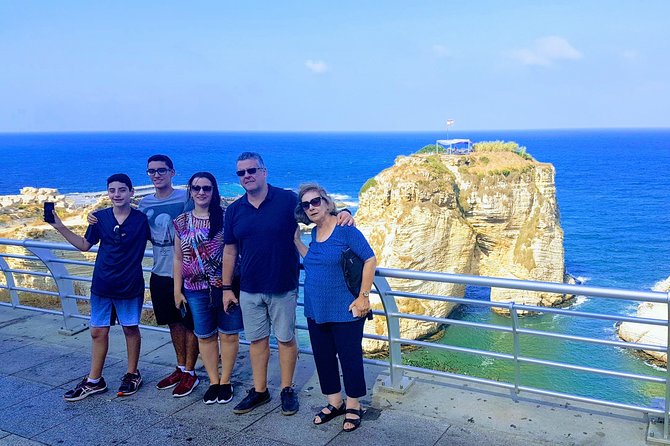
The day opens at Pigeon Rocks in Raouché, Beirut’s western tip. Two huge rock formations rise from the sea like natural gateposts, and they are among the city’s most recognizable sights.
The listed stop lasts 10 minutes and has no admission charge. That is enough to look out over the rocks, take pictures, and hear a short introduction to the area. One useful timing detail comes from the experience itself: the morning visit can bring soft light for photographs.
The nearby Al Manara Corniche stretches from Ramlet al Bayda toward the Saint George marina. Palm trees line the promenade, with views across the Mediterranean and toward Mount Lebanon. You may not have an extended walk along the Corniche, so think of this part as a quick orientation to Beirut’s waterfront rather than a full seaside outing.
Zaitunay Bay and Beirut’s polished waterfront
Zaitunay Bay presents a newer side of the capital. Its waterfront promenade includes shops and restaurants and is promoted as one of Beirut’s main leisure areas.
The stop lasts about 10 minutes and is free. You will have time to take in the marina setting and see how the city has developed its waterfront for dining and leisure. I find this useful because the tour does not present Beirut only as an ancient or war-scarred city. You also see its modern commercial face.
The limitation is simple: you will not have time for a meal, shopping, or a long coffee break here. Lunch comes later as part of the tour.
The Holiday Inn and Beirut’s visible war memory
The abandoned Holiday Inn is one of the most striking stops because it is not polished, restored, or packaged as a traditional attraction. Built between 1971 and 1974 during Beirut’s economic boom, the hotel became part of the Battle of the Hotels after the Lebanese Civil War began in 1975.
The fighting involved control of several luxury hotels, including the Holiday Inn and the Phoenicia. The building has remained empty and visibly damaged for decades. Its shell gives you a direct reminder that Beirut’s recent past is not confined to a museum display.
This stop is important, but the supplied schedule does not give a separate duration. Your view may be from the vehicle or during a brief pause, depending on the day’s traffic and route. Do not expect to enter the building. Its value lies in seeing an untouched war landmark within an otherwise modern city.
More Tours with Lunch in Beirut:
- Guided Small-Group Tour to Baalbek, Anjar and Ksara with Lunch
★ 5.0 · 511 reviews - Guided Small-Group Tour to Jeita, Harissa, Byblos with Lunch
★ 5.0 · 361 reviews - Anjar, Baalbek & Ksara Day Trip – With Lunch (4G on Board)
★ 4.5 · 181 reviews - Byblos, Jeita Grotto & Harissa Day Trip -With Lunch (4G on Board)
★ 4.5 · 145 reviews
Downtown Beirut’s mosques, churches, and public squares
The city-center section links several sights within a compact area. Each stop is short, but together they show the religious and civic character of central Beirut.
The Mohammad Al-Amin Mosque, also called the Blue Mosque, is Lebanon’s largest mosque. Opened in 2008, it has four minarets reaching 65 meters and several pale blue tiled domes. Its large arches and amber-colored exterior make it easy to recognize near Martyrs’ Square.
You get about 10 minutes here, with no admission fee listed. That should allow time to admire the outside and listen to the guide. The schedule does not promise an interior visit, so dress and behave respectfully around this active religious site.
The Greek Orthodox Cathedral of Saint George is also scheduled for 10 minutes. The church occupies a site associated with a Christian temple dating to the sixth century, and the location is linked with Beirut’s famous ancient Law School. It is described as the oldest church in Beirut and one of the oldest in the region.
Martyrs’ Square adds political and national memory. Its name recalls the executions of Lebanese nationalists by the Ottomans on May 6, 1916, during World War I. The square has changed greatly over time, but its name continues to point to a painful chapter in Lebanon’s past.
At Place de l’Étoile, also called Nejme Square, you see the Lebanese Parliament area, two cathedrals, a museum, cafes, and the well-known four-faced Rolex clock from 1930. The architecture and clock make it one of the most recognizable corners of central Beirut.
Beirut Souks then shifts the mood again. This commercial district includes more than 200 shops, 25 restaurants and cafes, an entertainment center, and a cinema complex. Ten minutes gives you only a glimpse, but it helps you understand the scale of the rebuilt city center.
Roman Baths and the remains of ancient Berytus
The Roman Baths are another short downtown stop, with about 10 minutes to view the site. The baths were found in 1968 and 1969 and later underwent major restoration.
Ancient Berytus had four major bath complexes. The first was created in the early first century under Augustus, while an earthquake in 551 destroyed the baths. Today, one of the bath areas is also used for artistic performances and concerts.
This is a good example of how Beirut layers different periods in a small space. Modern streets, religious buildings, commercial districts, war ruins, and Roman remains all sit within the same city visit.
The drawback is the same as elsewhere in downtown Beirut. Ten minutes is enough for an introduction, but not for a slow archaeological study. If Roman history is your main interest, you may want additional time in Beirut beyond this tour.
Beiteddine Palace: the day’s main historic visit
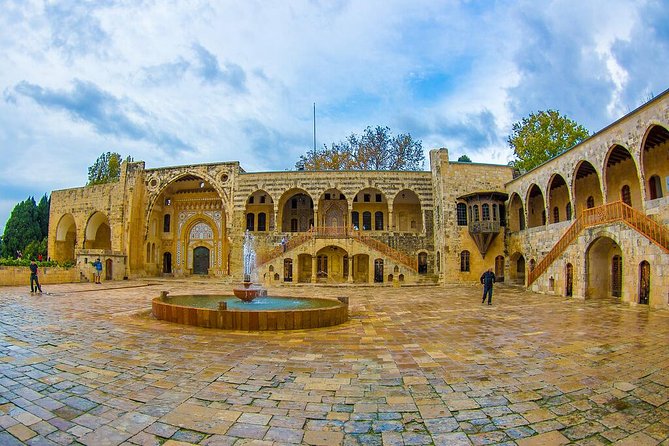
After the city stops, the tour heads toward the Chouf region and Beiteddine Palace. This is the longest scheduled visit, at about 1 hour and 30 minutes, and admission is included.
Emir Bashir Chehab II built the palace between 1788 and 1818. The name Beiteddine means House of Faith. The complex later served the Ottomans as a government building and became a local administrative office during the French Mandate.
In 1943, it was named the official summer residence of the Lebanese president. The Lebanese Civil War caused serious damage, but parts of the palace are now open to the public while the rest remains connected with the president’s summer residence.
You should plan to spend most of your serious sightseeing time here. The longer visit lets you look more carefully at the palace grounds and interiors instead of rushing through in a few minutes. The palace also hosts the annual Beiteddine Festival, adding a living cultural role to its historical one.
The palace was singled out for its beauty and photographic appeal in the supplied feedback. If you enjoy architecture and pictures, this is likely to be the tour’s highlight. Your guide can also help explain how the building changed from an emir’s residence to an Ottoman and French administrative site, then to a presidential summer residence.
Deir el Qamar and its layered religious past
Only about five kilometers from Beiteddine Palace, Deir el Qamar means Monastery of the Moon. The town is in the Chouf District and was Lebanon’s first village to have a municipality, established in 1864.
The town is associated with artists, writers, and politicians, and its history includes people from different religious communities. At different points, Deir el Qamar had a mosque, a synagogue, and Christian churches. That mix gives the town unusual importance in a country shaped by many religious traditions.
The municipality stop lasts about 30 minutes. This is your chance to get a feel for the old town rather than simply photograph one monument. The town was destroyed by fire during the 1860 conflict between Druze and Christians, and a French contingent sent by Napoleon III helped rebuild it.
The visit to Fakhreddine’s Mosque lasts 15 minutes. Built in 1493 and restored in the sixteenth century by Fakhreddine I, it is identified as the oldest mosque in Mount Lebanon. Its octagonal minaret makes it especially easy to recognize.
The final listed stop is Saydet el Talle Church, also called Our Lady of the Hill. The church dates to the fifteenth century and was built over the remains of an older Phoenician temple connected with the goddess Astarte. An earthquake destroyed an earlier church on the site in 859.
The church also carries a local religious legend involving a light seen on the hill and the discovery of a sacred symbol. The account connects the site with both Muslim and Christian traditions, which makes it more than a stop for architecture alone.
Each Deir el Qamar visit is short, but the sequence works well. You see a municipal center, a historic mosque, and an important church in the same town. I would pay close attention to the guide here, since the context is what turns a quick walk into a meaningful visit.
Lunch, transport, and the real value of $99
At $99 per person, the price is easier to judge when you add up what is included. You receive lunch, a tour leader, hotel pickup and drop-off, transport in an air-conditioned minivan, and admission fees for the paid sites.
The palace is the main listed admission stop, and having that fee included keeps the day simple. You do not need to arrange separate transport into the mountains or work out how to connect Beirut, Beiteddine, and Deir el Qamar on your own.
Hotel pickup and drop-off are also valuable in a full-day outing. The official start time is 8:00 am, so confirm the pickup details when booking. The tour lasts approximately eight hours, although traffic can affect any Beirut day.
Lunch is included, but the supplied details do not specify the restaurant, menu, or dietary arrangements. If you have a food restriction, ask the provider before booking rather than assuming the included meal can be adapted.
Who should book this Beirut day tour?
I would recommend this tour to you if you want one organized day covering both Beirut and the Chouf region. It suits first-time visitors, people with limited time, and anyone who prefers having transport, a guide, lunch, and admission handled together.
It is also a good match if you enjoy seeing contrasts: coast and mountain, modern marina and Roman ruins, restored religious buildings and war-damaged hotels, palace rooms and village streets.
You may prefer a slower private tour if you want long visits inside churches, detailed archaeology, extended shopping time, or a relaxed meal. The schedule is full, and the many 10-minute stops require you to keep moving.
Most people can participate, according to the tour information, and the group is capped at 15. Free cancellation is available if you cancel at least 24 hours before the 8:00 am start time. Changes or cancellations made within 24 hours are not accepted for a refund.
Should you book it?
Book this tour if you want strong coverage in one day. The best parts are the small group, the included palace entry, the mountain excursion, and the mix of Beirut sights. Natasha’s praised guiding style is another encouraging sign if she is assigned to your departure.
Skip it if your ideal day means lingering at every stop. Beirut’s schedule is brisk, but the tour gives you a useful first map of the city and a rewarding trip beyond it. For $99, the included transport, lunch, guide, and fees make this a sensible choice for a broad introduction to Lebanon.
FAQ
How long does the tour last?
The experience lasts approximately eight hours and begins at 8:00 am.
What is the maximum group size?
The tour has a maximum of 15 participants.
Is hotel pickup and drop-off included?
Yes. Hotel pickup and drop-off are included in the tour.
Is lunch included?
Yes. Lunch is included, although the available information does not specify the restaurant or menu.
Are entrance fees included?
Yes. Admission and tickets to the sites are included. Beiteddine Palace specifically lists admission as included.
Which places are visited in Beirut?
The Beirut portion includes Pigeon Rocks, the Al Manara Corniche, Zaitunay Bay, the abandoned Holiday Inn, Mohammad Al-Amin Mosque, the Greek Orthodox Cathedral of Saint George, Martyrs’ Square, Place de l’Étoile, Beirut Souks, and the Roman Baths.
Can I cancel for a full refund?
Yes, if you cancel at least 24 hours before the experience start time. Cancellations or changes made less than 24 hours in advance are not accepted for a refund.
Just added around Beirut
- Private Full-Day Tour to Jeita Grotto, Harissa and Saint Charbel from Beirut★ 5.0 · 3 reviews
- Beirut to Jeita Grotto and Byblos: Daily Tours with Lunch★ 5.0 · 3 reviews
- PRIVATE city tour of Old Sidon & Historic Tyre★ 5.0 · 3 reviews
- Journey Through Time: Half-Day Private Tour to Baalbek★ 5.0 · 3 reviews
- Small-Group Tour to Sidon, Tyre and Maghdouche with Lunch and Tickets★ 4.5 · 3 reviews
- Beirut to Sidon, Tyre and Maghdouché: Daily Tours with Lunch★ 5.0 · 3 reviews
- Hike Chouwen★ 5.0 · 3 reviews
- Private Full-Day Tour to Byblos and Tripoli from Beirut★ 5.0 · 3 reviews
Beiteddine & Deir el Qamar Tours, compared.
Cedars Shouf & Beiteddine w/pick-up, guide, entries+lunch
Read our review →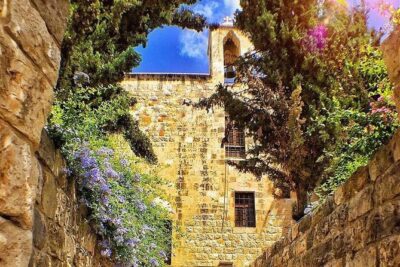
Beirut, Beiteddine & DeirElQamar Day Trip-With Lunch(4G on Board)
Read our review →
Guided small group to Cedars Reserve & Beiteddine w/lunch+entries
Read our review →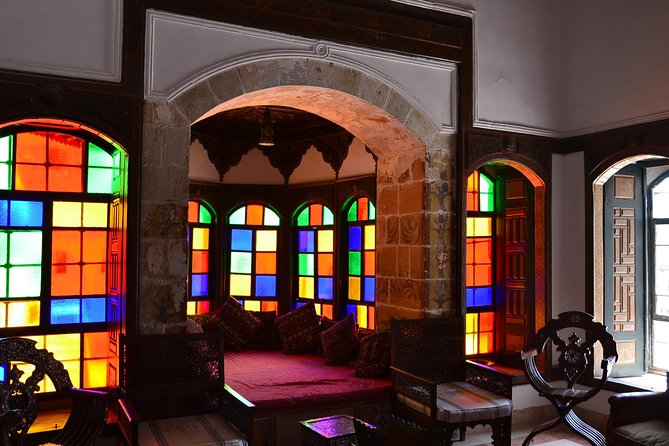
Deir el Qamar – Beiteddine Palace – Chouf Cedars From Beirut
Read our review →
Guided Small-Group Tour to Beirut, Beiteddin & Deir elQamar
Read our review →
Deir Al-Qamar, Beiteddine Palace and Barouk Cedars Tour
Read our review →
PRIVATE Hiking Day Trip in the Shouf Fabulous Cedars Forest
Read our review →
DeirElkamar, Beitdeen, Moussa Palace, EinwZien Grotto,Full-Day Trip PRIVATE-CAR
Read our review →Browse the lists this tour appears in