
Review · WINE TOURS
Wine Tasting and Culture
Ancient stone and local wine make a fine pairing. This full-day private tour links Baalbek’s enormous Roman temples with two wineries in the fertile Bekaa Valley, giving you both a major cultural sight and a taste of modern Lebanon. Hotel pickup and drop-off, a private air-conditioned vehicle, a tour leader, and a professional guide are included.
I like the private format, since your group can follow its own pace rather than wait for a large coach. I also like the mix of Baalbek and wine, especially the chance to visit Château Ksara, founded by Jesuit priests in 1857, and Château St Thomas, established in 1990. The main consideration is the long day: lunch and some admission costs are not included, and the drive between Beirut, Baalbek, and the wineries makes this a busy schedule.
In This Review
- Key points to know before booking
- Why this Beirut day trip works
- Entering Baalbek’s Roman sanctuary
- The Temple of Bacchus and Temple of Jupiter
- The Stone of the Pregnant Woman in 15 minutes
- Château Ksara and Lebanon’s wine story
- Château St Thomas above the Bekaa Valley
- The private vehicle and guide service
- What the $100 price really includes
- Who should book this experience
- Should you book the Baalbek and wine tour?
- FAQ
- Where does the tour begin?
- Is hotel pickup included?
- How long does the experience last?
- Is this a private tour?
- Is transportation included?
- Is lunch included?
- Are admission tickets included?
- Which ancient site does the tour visit?
- Which wineries are included?
- Can I cancel for a full refund?
Key points to know before booking
- Baalbek’s Temple of Bacchus and Temple of Jupiter provide the tour’s major cultural experience.
- The Stone of the Pregnant Woman offers a quick look at the massive blocks used for the Roman sanctuary.
- Château Ksara connects Lebanese wine with a winery founded in 1857 by Jesuit priests.
- Château St Thomas gives you a second winery visit and a different view of Bekaa Valley wine.
- Private transport and hotel pickup make an eight-hour day easier from Beirut.
- Hassan is praised for his helpful service, while a guide at Kefraya is credited with explaining wine production and tasting in clear, practical terms.
Why this Beirut day trip works
You get two very different sides of Lebanon in one outing. Baalbek is about scale, religion, engineering, and imperial power. The wineries are about soil, farming, production, and the way Lebanon presents its wine today.
That contrast gives the day a good rhythm. After walking among huge Roman columns and carved stone, you move into the Bekaa Valley for wine tasting. The subject changes, but the setting remains tied to agriculture and local traditions.
The tour begins at 8:30 a.m. and lasts about eight hours. That timing matters. Baalbek is not a quick side trip from Beirut, so an organized private vehicle saves you from arranging separate transport and working out the route yourself.
The air-conditioned vehicle is another practical advantage. You will spend a good part of the day on the road, and having private transportation means you can keep your group together from hotel pickup through the return journey.
The $100 price per person is reasonable if you value convenience and a private day. You are paying for transportation, a tour leader, a professional guide, pickup, drop-off, and visits to two wineries. It is less attractive if you prefer to travel independently or only want a short winery tasting.
Remember to budget separately for lunch. Admission is also not fully covered, since the listed inclusions exclude admission tickets and the Baalbek information identifies an admission charge at one part of the complex. Ask for the exact entrance costs before departure so the final price does not surprise you.
More Wine Tours in Beirut:
- Guided Small-Group Tour to Baalbek, Anjar and Ksara with Lunch
★ 5.0 · 511 reviews - Anjar, Baalbek & Ksara Day Trip – With Lunch (4G on Board)
★ 4.5 · 181 reviews - Baalbek – Anjar – Ksara Trip From Beirut
★ 4.5 · 80 reviews
Entering Baalbek’s Roman sanctuary
Baalbek is the heart of the tour. The ancient city was known as Heliopolis during the Hellenistic period, and the sanctuary continued to draw pilgrims under Roman rule. Its major religious figures were Jupiter, Venus, and Bacchus, a Romanized version of an older Phoenician religious tradition.
The site sits at about 1,150 meters at the foot of the Anti-Lebanon range, beside the Bekaa plain. That setting helps explain why the sanctuary became such an important place. It was connected to a productive region and occupied a prominent position between mountain slopes and open farmland.
Plan on roughly 90 minutes at Baalbek. That is enough time to see the central monuments and absorb the basic story, but it is not a leisurely archaeological study. If you enjoy ancient architecture, you may wish the visit were longer.
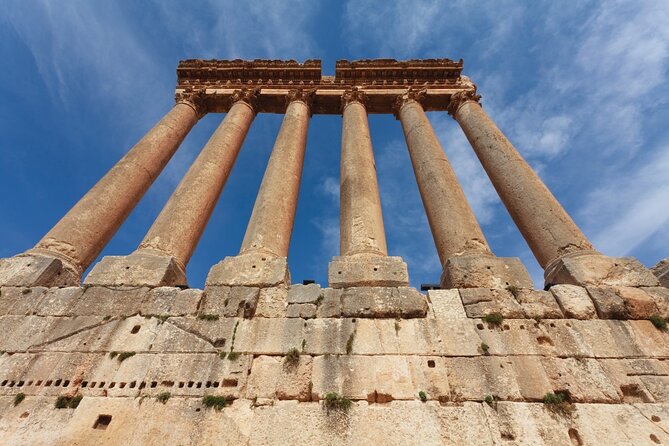
The complex was built over more than two centuries. Its huge proportions are the main surprise. Even before you study individual carvings, the size of the stones and the height of the remaining columns make clear that this was not an ordinary provincial temple.
A professional guide adds real value here. The stones are impressive on their own, but the religious roles of Jupiter, Venus, and Bacchus can blur together without explanation. A good guide helps you understand how the Phoenician roots of the sanctuary continued inside a Roman setting.
The Temple of Bacchus and Temple of Jupiter
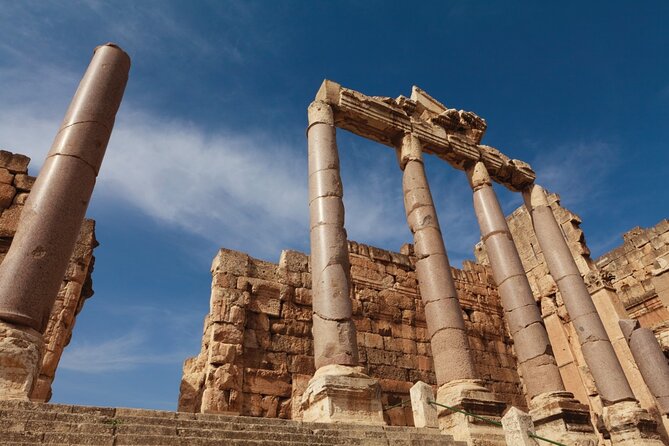
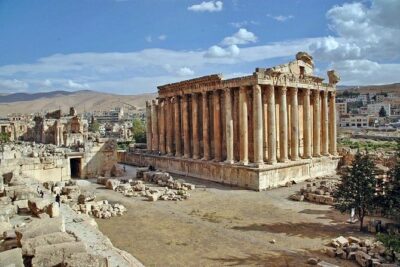
The Temple of Bacchus is one of the best-preserved and most striking buildings in the complex. Its scale can feel almost out of proportion to the surrounding ruins. The name links it with the Roman god of wine, which makes this particular temple a fitting first act before the winery visits later in the day.
The Temple of Jupiter was even more monumental. The sanctuary’s colossal construction shows the ambition of Imperial Roman architecture at its peak. You can look closely at the surviving stonework, but the real lesson is how much labor, planning, and political power went into creating a place designed to attract pilgrims from far beyond the local area.
The tour description gives two 90-minute periods connected with Baalbek and its temples. In practice, you should treat the whole archaeological portion as a substantial visit, while allowing for the exact order of stops to depend on the guide and site arrangements.
Admission details deserve attention. One Baalbek stop lists admission as free, while the temple complex itself lists admission as not included. That difference may reflect separate areas or ticket arrangements. Ask your operator what is covered before you arrive.
Comfortable shoes are sensible, even though the walking details are not specified. The site is extensive and built around large ancient structures, so you should expect to spend much of your time outside and on your feet.
The Stone of the Pregnant Woman in 15 minutes
The Stone of the Pregnant Woman is a short stop, but it gives you a clear sense of Roman construction methods. It is a worked monolith, and together with another nearby block, it ranks among the largest stones ever quarried.
The blocks were probably intended for the nearby temple complex. Their size is difficult to grasp from a photograph, so the stop works best as a quick visual lesson. You are not simply looking at an old stone. You are seeing evidence of the extreme scale planned for Baalbek.
You get about 15 minutes here. That is enough for a look and some photos, but not enough for a long explanation or extended exploration. Think of it as a compact addition to the main Baalbek visit rather than a separate major attraction.
More Food Experiences in Beirut:
- Lebanon Wine Tasting Tour From Beirut
★ 4.5 · 25 reviews - PRIVATE Wine Tasting Tour to the Bekaa Valey Fabulous Wineries
★ 5.0 · 7 reviews - Full-Day Private Wine Tasting Tour
★ 5.0 · 6 reviews - Beirut Street Food Tour, Lebanon
★ 5.0 · 3 reviews
Château Ksara and Lebanon’s wine story
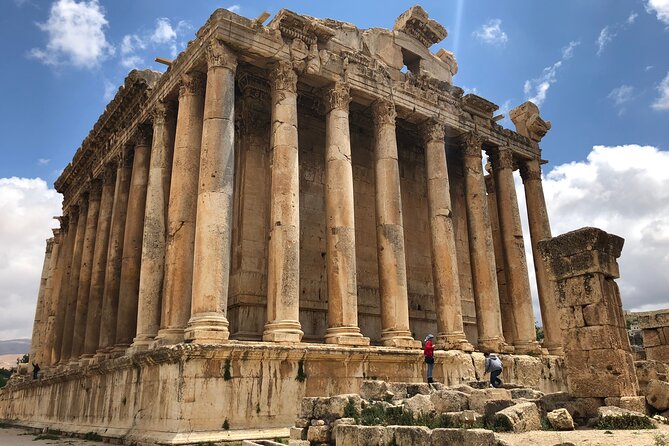
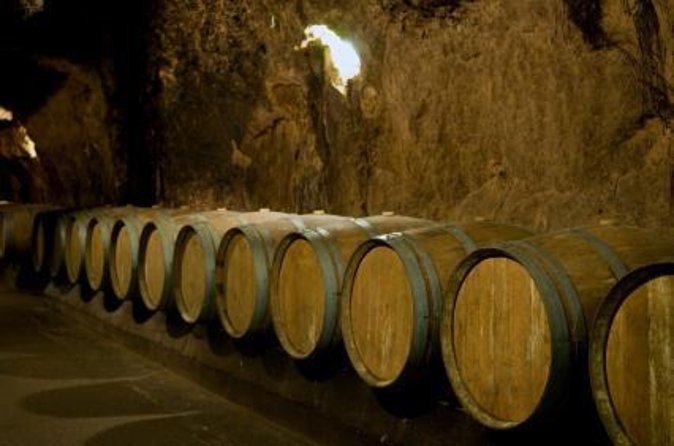
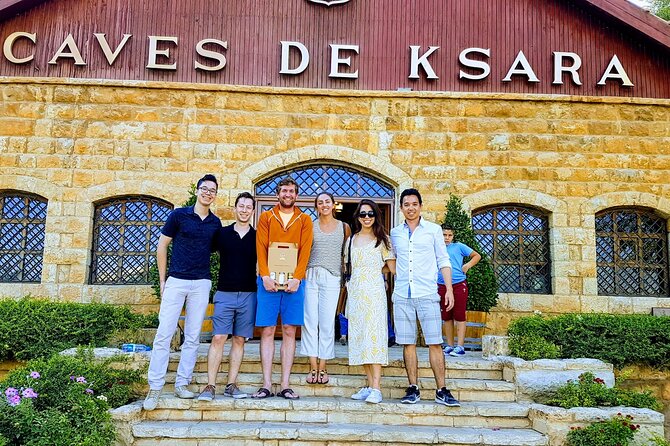
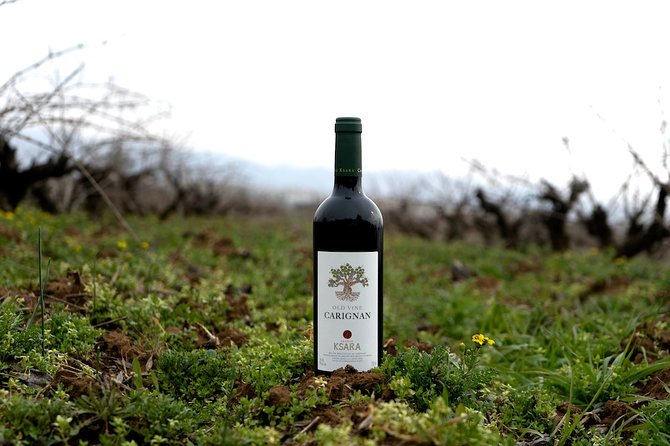
Château Ksara is the older and larger wine stop on the schedule. Jesuit priests founded it in 1857, and the winery developed Lebanon’s first dry wine. It now produces about three million bottles each year and exports to more than 40 countries.
Those figures give the tasting useful context. Château Ksara is not only a small local producer serving visitors at the cellar door. It is one of Lebanon’s established wine companies, with a production history that reaches back to the nineteenth century.
The stop is listed without a precise duration, so the actual visit may depend on the day’s arrangements. You should expect wine tasting and an introduction to the winery, but the provided details do not specify the number of wines, cellar access, or tasting format.
That uncertainty is worth keeping in mind if wine is your main reason for booking. The tour promises visits to two wineries and the chance to taste different kinds of Lebanese wine, but it does not promise a particular label, number of pours, or length of tasting at Château Ksara.
Still, the stop adds an important local connection. Bacchus was worshipped at Baalbek, and later in the day you are tasting wine made in the same broad region. The tour does not present these as unrelated attractions. It creates a simple thread between ancient religious culture and present-day wine production.
Château St Thomas above the Bekaa Valley
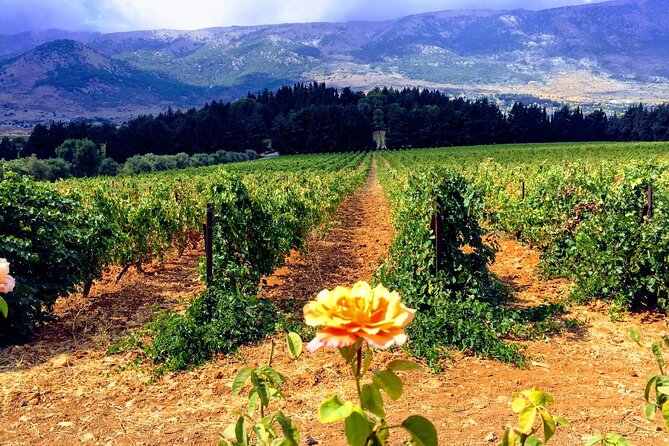
Château St Thomas was established in 1990 on a hill overlooking the Bekaa Valley. Its vineyards benefit from the fertility of the Bekaa soil, and the winery focuses on producing high-quality wine.
The visit lasts about one hour, making it the most clearly defined winery stop. That gives you time for a proper introduction rather than a rushed tasting between photo stops. A one-hour visit can also help balance the large archaeological section, which is more about walking and monuments than conversation.
One particularly useful wine explanation is credited to a guide at Kefraya, who described the scientific process of making and tasting wine. The tour information names Château Ksara and Château St Thomas as the two winery stops, so you should confirm whether Kefraya is part of your exact departure or whether that comment refers to a related wine visit.
That point is important because winery schedules can vary. If you want technical explanations about fermentation, tasting structure, or production, ask in advance which winery staff will lead the tasting.
You will also want to ask whether food is available at the winery. Lunch is not included in the tour price, and the schedule does not specify a restaurant or meal stop. One account praised the lunch location, but that does not guarantee the same arrangement on every departure.
The private vehicle and guide service
The private setup is one of the strongest reasons to choose this experience. Only your group participates, and transportation is provided in an air-conditioned vehicle. You do not need to organize a separate Beirut to Bekaa route or coordinate a return from Baalbek.
Hotel pickup and drop-off make the day especially practical for people staying in Beirut. The start time is 8:30 a.m., so be ready before then and confirm the exact pickup point when booking.
The human side of the tour also receives strong praise. Hassan is described as courteous, helpful, and generous with information. That matters on a day with several moving parts, since a good tour leader can keep the schedule clear and help with practical questions.
The Baalbek guide is also praised for explaining the site well. That is a major benefit because the ruins reward context. Without a guide, you can admire the columns and stones, but you may miss how the sanctuary developed from Phoenician worship into a Roman religious center.
The vehicle was also described as comfortable. You should not treat that as a luxury promise, since the specific vehicle is not identified, but the inclusion of private, air-conditioned transportation is a solid practical feature for an eight-hour excursion.
What the $100 price really includes
At $100 per person, the tour offers good value for a private cultural day with transport from Beirut. The price covers:
- Air-conditioned vehicle
- Private transportation
- Hotel pickup and drop-off
- Tour leader
- Professional guide
It does not cover lunch. Admission tickets are also not included in the stated inclusions, so you should carry extra money for entry fees and any food or drinks.
Group discounts may improve the price for larger parties. Since this is a private activity, the per-person cost may feel more reasonable when divided among several people.
I would choose this tour if you want to see Baalbek without handling the transport yourself and you also care about Lebanese wine. I would hesitate if you want a slow archaeological visit, a long restaurant lunch, or a highly detailed wine course. The day has a lot to cover.
The $100 price also buys simplicity. You can be collected at your hotel, visit one of Lebanon’s major ancient sites, stop at the Stone of the Pregnant Woman, visit two wineries, and return to Beirut without piecing together taxis or separate bookings.
Who should book this experience
This tour suits first-time visitors who want a strong introduction to both ancient Lebanon and its wine culture. It also works well for couples, families with an interest in history, and small groups that want a private vehicle.
Wine enthusiasts should book only after confirming the tasting details. The tour promises different kinds of Lebanese wine, but it does not list specific bottles or tasting quantities.
History fans will likely find Baalbek the main reward. The two temples, the Phoenician connection, the Roman period, and the huge construction blocks make this one of the day’s most important cultural experiences.
You should be comfortable with a full day of sightseeing and road travel. The schedule begins in the morning and combines several stops, so it is not designed for a lazy day with long breaks.
Free cancellation is available if you cancel at least 24 hours before the start time. Cancellations within 24 hours are not refunded, and changes within that period are not accepted.
Should you book the Baalbek and wine tour?
Book it if you want Baalbek plus Lebanese wine in one private day, with transportation and guides arranged for you. The combination is smart, and the strongest points are the monumental Roman sanctuary, the two winery visits, the comfortable vehicle, and the helpful service associated with Hassan.
Before paying, confirm three details: the exact Baalbek admission cost, the lunch plan, and which winery staff will lead each tasting. If those details suit you, the $100 price is a fair way to cover a lot of ground from Beirut without managing the logistics yourself.
FAQ
Where does the tour begin?
The tour begins in Beirut at 8:30 a.m.
Is hotel pickup included?
Yes. Hotel pickup and drop-off are included.
How long does the experience last?
The tour lasts approximately eight hours.
Is this a private tour?
Yes. Only your group participates in the activity.
Is transportation included?
Yes. The tour includes private transportation in an air-conditioned vehicle.
Is lunch included?
No. Lunch is not included in the price.
Are admission tickets included?
Admission tickets are not included in the stated inclusions. The Baalbek information also gives different admission details for separate parts of the site, so confirm the exact cost before the tour.
Which ancient site does the tour visit?
The tour visits the Baalbek temple complex, including the Temple of Bacchus and the Temple of Jupiter, and also stops at the Stone of the Pregnant Woman.
Which wineries are included?
The scheduled wineries are Château Ksara and Château St Thomas.
Can I cancel for a full refund?
Yes, if you cancel at least 24 hours before the experience start time. Cancellations made less than 24 hours before the start time are not refunded.
Just added around Beirut
- Private Full-Day Tour to Jeita Grotto, Harissa and Saint Charbel from Beirut★ 5.0 · 3 reviews
- Beirut to Jeita Grotto and Byblos: Daily Tours with Lunch★ 5.0 · 3 reviews
- PRIVATE city tour of Old Sidon & Historic Tyre★ 5.0 · 3 reviews
- Journey Through Time: Half-Day Private Tour to Baalbek★ 5.0 · 3 reviews
- Small-Group Tour to Sidon, Tyre and Maghdouche with Lunch and Tickets★ 4.5 · 3 reviews
- Beirut to Sidon, Tyre and Maghdouché: Daily Tours with Lunch★ 5.0 · 3 reviews
- Hike Chouwen★ 5.0 · 3 reviews
- Private Full-Day Tour to Byblos and Tripoli from Beirut★ 5.0 · 3 reviews
Wine Tours, compared.
Guided Small-Group Tour to Baalbek, Anjar and Ksara with Lunch
Read our review →
Anjar, Baalbek & Ksara Day Trip – With Lunch (4G on Board)
Read our review →
Guided Private Full Day Tour to Baalbek, Anjar and Chateau Ksara
Read our review →
Lebanon tour Baalbek ruins & Ksara w/pick-up, lunch,guide+entries
Read our review →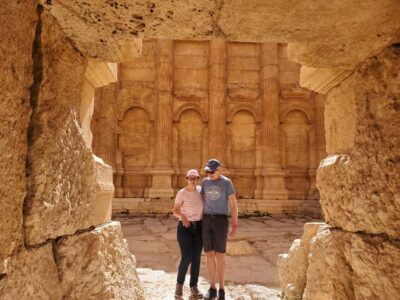
Baalbek Temples & Ksara Caves w/pick-up,guide, entries+lunch
Read our review →
Small Group Tours to Baalbek, Anjar & Chateau Ksara with lunch and Tickets
Read our review →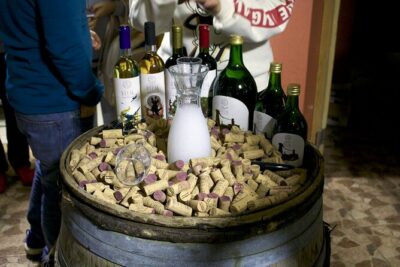
Browse the lists this tour appears in