
Review · SIDON & TYRE DAY TRIPS
Lebanon Unveiled: Exclusive Private Tours to Sidon & Tyre
Ancient ports, castles, and soap in one day. This private outing is a smart way to reach Sidon and Tyre without handling Lebanese traffic yourself, while still leaving room to explore on your own. I especially like the door-to-door pickup and the mix of major ruins with everyday places such as Sidon’s souks. I also like that the day includes Maghdoucheh, a Christian pilgrimage site that gives the route a different mood.
The main consideration is the pace. Nine hours covers a lot of ground, and several stops last only 15 or 30 minutes. You will also pay separately for lunch and some admission tickets, including the Sea Castle, Soap Museum, and Al-Bass Archaeological Site.
In This Review
- Key points to know before booking
- Why this route works from Beirut
- Sidon begins with a Phoenician port and a Crusader fortress
- Sidon Sea Castle puts history at the water’s edge
- Khan al-Franj shows Sidon as a place of trade
- The Soap Museum connects craft, archaeology, and the hammam
- Sidon’s souks bring the city back to street level
- Maghdoucheh adds a quiet pilgrimage stop
- Tyre reveals the scale of a Phoenician power
- Al-Bass contains Tyre’s most impressive Roman remains
- Tyre’s Old Souk ends the route with food and commerce
- The guides can shape the quality of the day
- Is $75 a fair price?
- Who should book this private day?
- Should you book the Sidon and Tyre tour?
- FAQ
- Where does the tour start?
- Is hotel pickup included?
- How long does the tour last?
- Is this a private tour?
- What transportation is provided?
- Are entrance fees included?
- Is lunch included?
- Which places does the tour visit?
- Can I cancel for a full refund?
Key points to know before booking
- See three historic Lebanese cities in one day: The route links Sidon, Maghdoucheh, and Tyre from a Beirut pickup.
- Private transport keeps the day simple: Your group has an air-conditioned vehicle, driver, hotel pickup, and hotel drop-off.
- Sidon mixes monuments with daily life: You get the Sea Castle, Khan al-Franj, the Soap Museum, and the narrow souks.
- Tyre delivers the grandest ruins: Al-Bass includes a Roman hippodrome, triumphal arch, aqueduct, necropolis, and ancient road.
- Guiding quality can make the difference: Hassan is described as an archaeologist with great enthusiasm, while Georgette is praised for clear and engaging explanations.
- The $75 price favors convenience: It is a strong value for private transport and a full southern Lebanon route, but admissions and lunch are extra.
Why this route works from Beirut
This is not a slow, one-city walking tour. It is a full-day southern Lebanon circuit built around private transport. Starting at about 9 a.m., you travel from Beirut to Sidon, continue south to Tyre, and stop at Maghdoucheh along the way.
I like this format for anyone who wants to see more than Beirut but does not want to rent a car or negotiate Lebanese roads. The vehicle is air-conditioned, pickup and drop-off are included, and only your group takes part. That last point matters if you want to pause for photographs, browse a shop, or simply avoid being tied to a large group.
The tradeoff is that this is a broad introduction rather than a slow archaeological study. The timetable gives one hour for Sidon, 30 minutes at the Sea Castle, 15 minutes at Khan al-Franj, 30 minutes at the Soap Museum, and 30 minutes in the Sidon souks. Tyre receives one hour in the city and one hour at Al-Bass, with a brief stop in the Old Souk.
More Sidon and Tyre day trips:
- Small-Group Adventure Tour to Sidon Tyre & Maghdouche-Day Trip
★ 5.0 · 45 reviews - Sidon, Tyre & Maghdouche Day Trip – With Lunch (4G on Board)
★ 4.5 · 44 reviews - Guided Small-Group Tour to Sidon, Tyre & Maghdouche with Lunch
★ 5.0 · 41 reviews
Sidon begins with a Phoenician port and a Crusader fortress
Sidon, also called Saida, is one of the oldest Phoenician cities. Its roots reach back to the third millennium BC, and it became prosperous through trade, purple dye, and glassware. The city also appears in the New Testament, since Jesus visited the area.
That long past is not presented only through grand ruins. Sidon’s appeal comes from the way old commercial streets, religious sites, and waterfront defenses sit close together. You get a quick introduction to the city before moving to the Sea Castle, so use the first hour to get your bearings and notice how much of Sidon still functions as a living port city.
The short city stop means you should not expect an exhaustive walk through every quarter. It is best viewed as an opening chapter that prepares you for the more focused visits that follow.
Sidon Sea Castle puts history at the water’s edge
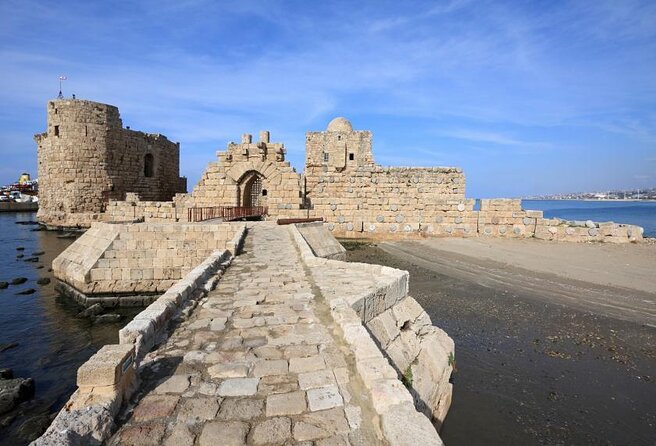
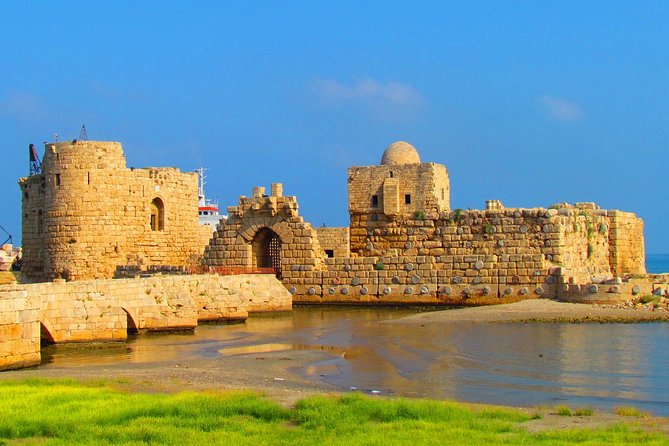
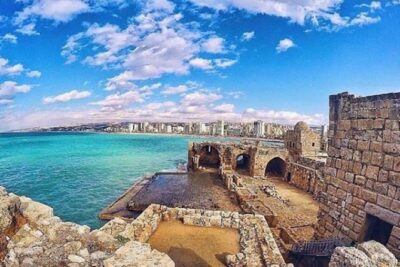
The Crusaders built Sidon’s Sea Castle in the 13th century on a small island linked to shore by a causeway. It served as a fortress connected with the Crusader presence in the Holy Land, and its position gives you a clear sense of why the site mattered. The castle guarded the harbor and gave defenders a strong position over the water.
The structure was badly damaged by the Mamluks in 1291 and later restored by Fakhr el-Dine Maan II in the early 17th century. What you see today is only part of the former fortress. Old images show a more finished and decorative complex, while the surviving stonework is more rugged.
You have about 30 minutes here, which is enough for a close look and photographs but not a long exploration. Admission is not included, so keep some budget aside. I would wear sturdy shoes and take care near uneven stone surfaces, though the provided information does not specify detailed access conditions.
Khan al-Franj shows Sidon as a place of trade
Khan al-Franj offers a useful change of scale. Instead of a fortress, you enter a traditional khan, a commercial and lodging complex organized around a large rectangular courtyard with a central fountain and covered galleries.
Emir Fakhreddine II built it at the beginning of the 17th century as a hotel for ambassadors and a center of trade between Lebanon and France. It later served as a meeting point for literature, religion, history, industry, and diplomacy. That makes the building more than an attractive courtyard. It helps explain how Sidon connected local commerce with international exchange.
The scheduled visit lasts only 15 minutes and admission is free. That is a short stop, but the courtyard is a compact sight, so you can take in its basic design quickly. If you like architecture, this is one of the places where a guide’s explanation can add real value.
More tours and day trips worth a look
- Jeita Grotto,Harissa&Byblos Full-Day PRIVATE-CAR Trip from Beirut
★ 5.0 · 222 reviews - Private Anjar and Baalbek Tour from Beirut with Departure Ticket
★ 5.0 · 79 reviews - Guided Private Full Day Tour to Baalbek, Anjar and Chateau Ksara
★ 5.0 · 60 reviews - Semi-Private Tour to Jeita Grotto, Harissa & Byblos with Lunch
★ 5.0 · 52 reviews
The Soap Museum connects craft, archaeology, and the hammam
The Soap Museum occupies a former soap factory built by the Hammoud family in the 17th century. Parts of the structure may date to the 13th century, giving the building a longer story than its main industrial use suggests.
Inside, you learn how Levantine soap developed and how traditional olive oil soap is produced. A demonstration shows the making process, and the museum also explains the customs of the hammam, or bath. This is a welcome stop because it deals with a working craft rather than only rulers and battles.
The museum includes artifacts found during excavation at the site, including clay pipe heads from the 17th to 19th centuries and pottery fragments. Admission is not included, and the scheduled time is 30 minutes. That should give you a useful introduction and demonstration, though not time for a detailed museum study.
I particularly like this stop for its connection to ordinary life. Purple dye, glass, trade, and fortresses can make ancient cities feel distant. Soap brings the past into the home, the market, and the bath.
Sidon’s souks bring the city back to street level
The Sidon souks are a maze of narrow lanes filled with small kiosks, cafés, and shops. You might find butchers, grocers, shoemakers, tailors, jewelers, and street merchants working alongside one another.
This is one of the most valuable 30-minute stops because it gives you a look at Sidon as a working city. The streets are not arranged for easy sightseeing, and that is part of their appeal. You are moving through a commercial quarter rather than a polished monument zone.
The time is enough for a short walk and perhaps a snack or small purchase, but not for serious shopping. Keep your group together and watch the clock, since the next part of the route continues south.
Maghdoucheh adds a quiet pilgrimage stop
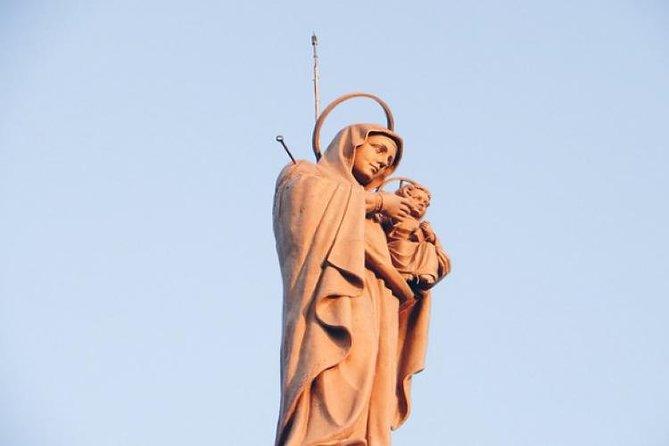
The Basilica of Our Lady of Mantara sits in Maghdoucheh, outside Sidon. The shrine is also called Our Lady of Awaiting, and local tradition identifies a sacred cave as the place where Mary rested while waiting for Jesus.
The site includes a tower crowned by a statue of the Virgin and Child, a cathedral, a cemetery, and the cave. A young shepherd reportedly discovered the shrine on September 8, 1721.
You have 15 minutes here, so this is a brief visit rather than a full religious tour. It works well as a pause between the commercial energy of Sidon and the major archaeological sites of Tyre. Dress and behave respectfully, since this is an active Melkite Greek Catholic shrine, not simply an old monument.
Tyre reveals the scale of a Phoenician power
Tyre, or Sour, is the most historically expansive stop on the route. Its foundations reach back to about 2750 BC. The city was ruled by Egyptians and later prospered under King Hiram. Over time, it came under Assyrian, Neo-Babylonian, Greek, Seleucid, Roman, Byzantine, Arab, Crusader, Mamluk, and Ottoman control.
Tyre is also linked with Elissar, the Phoenician princess associated with the founding of Carthage. Like Sidon, the city became famous for purple dye made from murex sea snails. Its seaside setting and beaches provide a pleasant contrast to the stone remains inland.
The city stop lasts one hour and is listed without an admission fee. It gives you time to understand Tyre as both an ancient port and a present-day coastal town. Do not expect the full story of every ruling power in that hour. The real archaeological detail comes at Al-Bass.
Al-Bass contains Tyre’s most impressive Roman remains
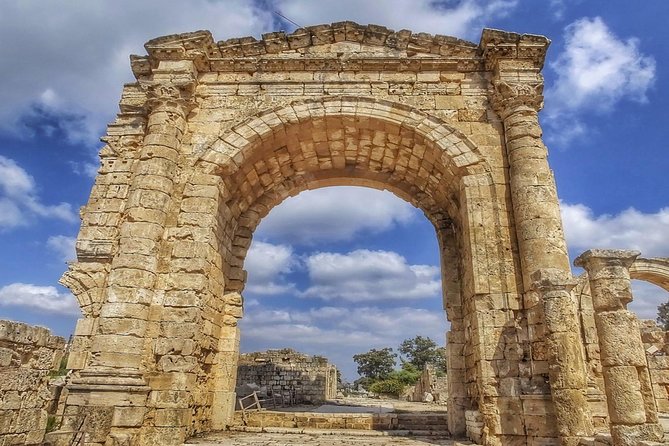
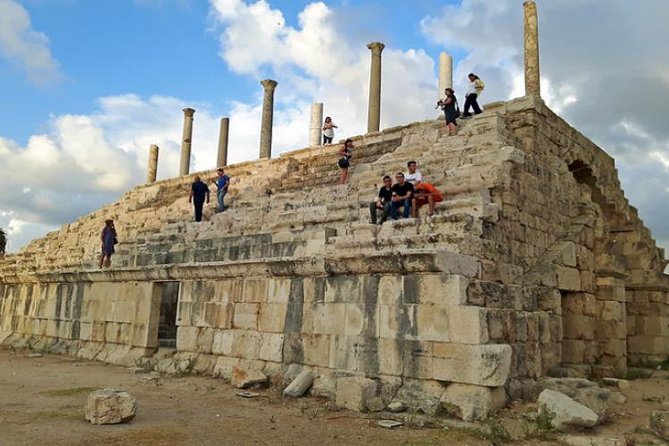
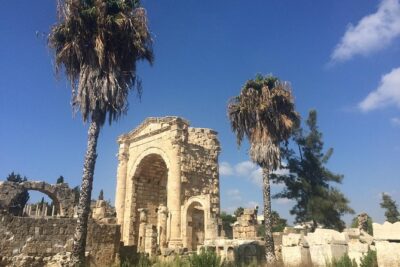
Al-Bass is the major archaeological stop and, for many people, the strongest sight of the day. The site includes a necropolis with hundreds of preserved sarcophagi, an intact Roman road, a monumental triumphal arch from the second century AD, an aqueduct, and a Roman hippodrome.
The hippodrome is the star. It is described as one of the largest in the Roman world and the best-preserved example of a Roman hippodrome. Standing among its long stone seating and open racing ground gives you a better sense of Roman public life than a single isolated column ever could.
The site also marks the ancient entrance to Tyre. The wide monumental causeway and arch help you picture the arrival into the old city, while the tombs and road show how civic, religious, and commercial functions overlapped.
Admission is not included, and the planned visit lasts one hour. That is a fair amount of time for the main remains, especially with a local guide in Tyre. One important detail is that the itinerary does not promise a specialist guide at every stop. It specifically includes a local guide in Tyre, while the tour also includes a tour leader. If archaeology is your main reason for booking, ask how guiding is organized when you reserve.
The strongest praise is directed at Hassan, who is described as an archaeologist with enthusiasm and a talent for explaining both ancient and recent events. That combination matters at Al-Bass, where a good explanation can turn scattered ruins into a readable city plan.
Tyre’s Old Souk ends the route with food and commerce
The Old Souk is a short 15-minute stop. Its small shops sell gold, copper, vegetables, fish, meat, clothing, and antiques. Foul, hummus, and sandwiches are among the popular food stops.
This is not enough time for a leisurely meal, especially since lunch is not included. Still, it is a useful final glimpse of Tyre’s commercial life after the formal ruins. If you want to eat here, confirm the timing with your guide rather than assuming the stop includes a full lunch break.
The contrast is the point. Al-Bass shows Tyre through monuments and burial grounds. The Old Souk shows the city through food, trade, and small shops.
The guides can shape the quality of the day
A private vehicle solves the road problem, but the human side of the tour matters just as much. Hassan receives particularly warm praise for his archaeological background, enthusiasm, and ability to discuss ancient and recent history. That kind of guide is valuable at both Sidon and Tyre, where the remains span several periods and are easy to confuse without context.
Georgette is also praised for being friendly and for presenting each place in an interesting way. The French-language feedback indicates that the experience can work well for French-speaking visitors too, though the supplied details do not promise a specific language for every departure.
Because the tour is private, you can ask questions directly and avoid waiting for a large group. That is a practical advantage at the souks and archaeological sites. Still, the vehicle is the main service described, so I would confirm the exact guide arrangement if detailed commentary is important to you.
Is $75 a fair price?
At $75 per person, the tour offers good value if you are traveling with a small group and want private transport from Beirut. You are paying for a nine-hour day, an air-conditioned vehicle, hotel pickup and drop-off, a driver, a tour leader, and a local guide in Tyre.
The value improves if you are uncomfortable driving or trying to connect these southern cities by public transport. Door-to-door service saves planning time and makes it possible to see three destinations in one day.
The price is not all-inclusive. Lunch is extra, and admission tickets are not included at the Sea Castle, Soap Museum, and Al-Bass Archaeological Site. Factor those costs into your day, along with any purchases in the souks.
Private pricing also depends on the size of your group. Group discounts are offered, so the per-person cost may work better for several people sharing the vehicle than for one solo visitor.
Who should book this private day?
I would recommend it to first-time visitors based in Beirut who want a strong introduction to southern Lebanon. It suits you if you value a private car, hotel pickup, and a broad mix of archaeology, religion, crafts, markets, and coastal towns.
It is also a good fit if you want to learn as you go. Hassan’s archaeological background, when available, could make the Roman and Phoenician remains much easier to understand. Georgette’s friendly presentation is another plus for those who prefer a guide who explains rather than simply points.
I would hesitate if you prefer long walks, unhurried meals, or a single subject. The schedule is tight, and several stops are short. Anyone who wants a detailed visit to every museum room or a long afternoon at the seaside should consider a slower custom arrangement instead.
Cancellation is free if you cancel at least 24 hours before the start time. Changes or cancellations made inside that window are not refunded, and the stated cutoff follows local time.
Should you book the Sidon and Tyre tour?
Book it if you want maximum coverage with minimum road stress. The route gives you Sidon’s castle, khan, soapmaking tradition, and souks, then adds Maghdoucheh and Tyre’s exceptional Roman remains. For $75 per person, the private transport and hotel service make the day practical, especially for a group.
Go in with the right expectations. This is a brisk introduction, not a relaxed multi-day exploration. Bring money for entry tickets and lunch, keep your schedule flexible, and tell the guide what interests you most. If the guide is Hassan or Georgette, you may get especially strong historical commentary. For a single day from Beirut, this is a well-balanced way to reach Lebanon’s southern coast and see far more than a simple castle visit.
FAQ
Where does the tour start?
The tour starts with pickup in Beirut at approximately 9:00 a.m.
Is hotel pickup included?
Yes. Hotel pickup and hotel drop-off are included.
How long does the tour last?
The tour lasts approximately nine hours.
Is this a private tour?
Yes. Only your group participates in the private tour or activity.
What transportation is provided?
The tour provides comfortable private transportation in an air-conditioned vehicle with a private driver.
Are entrance fees included?
No. Admission is not included for the Crusaders Sea Castle, the Soap Museum, or the Al-Bass Archaeological Site. Other listed stops have free admission.
Is lunch included?
No. Lunch is not included in the price.
Which places does the tour visit?
The route visits Sidon, the Crusaders Sea Castle, Khan al-Franj, the Soap Museum, Sidon’s souks, the Basilica of Our Lady of Mantara in Maghdoucheh, Tyre, Al-Bass Archaeological Site, and Tyre’s Old Souk.
Can I cancel for a full refund?
Yes, if you cancel at least 24 hours before the experience start time. Cancellations or changes made less than 24 hours before the start time are not refunded or accepted.
Just added around Beirut
- Private Full-Day Tour to Jeita Grotto, Harissa and Saint Charbel from Beirut★ 5.0 · 3 reviews
- Beirut to Jeita Grotto and Byblos: Daily Tours with Lunch★ 5.0 · 3 reviews
- PRIVATE city tour of Old Sidon & Historic Tyre★ 5.0 · 3 reviews
- Journey Through Time: Half-Day Private Tour to Baalbek★ 5.0 · 3 reviews
- Small-Group Tour to Sidon, Tyre and Maghdouche with Lunch and Tickets★ 4.5 · 3 reviews
- Beirut to Sidon, Tyre and Maghdouché: Daily Tours with Lunch★ 5.0 · 3 reviews
- Hike Chouwen★ 5.0 · 3 reviews
- Private Full-Day Tour to Byblos and Tripoli from Beirut★ 5.0 · 3 reviews
Sidon & Tyre Day Trips, compared.
Small-Group Adventure Tour to Sidon Tyre & Maghdouche-Day Trip
Read our review →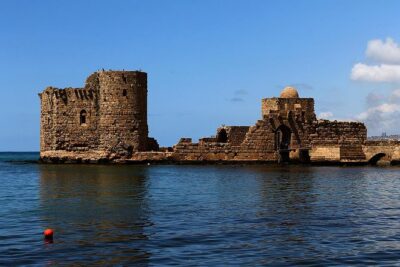
Sidon, Tyre & Maghdouche Day Trip – With Lunch (4G on Board)
Read our review →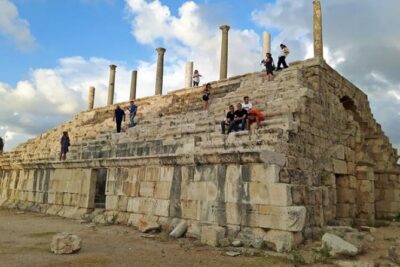
Guided Small-Group Tour to Sidon, Tyre & Maghdouche with Lunch
Read our review →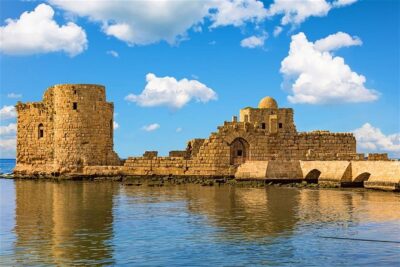
Small Group Tour to Sidon, Tyre & Maghdouche with lunch
Read our review →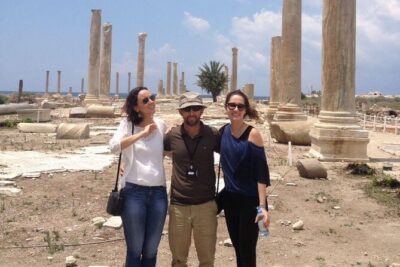
Private Guided Tour to Sidon, Tyre and Maghdouche from Beirut
Read our review →
Lebanon tour Sidon & Tyre ruins with pick-up, guide,lunch+entries
Read our review →
Browse the lists this tour appears in