
Review · SIDON & TYRE DAY TRIPS
Guided Small-Group Tour to Sidon, Tyre & Maghdouche with Lunch
Three southern cities, one full day. This $65 small-group tour from Beirut packs Phoenician ruins, Crusader remains, an old market, a soap museum, and a Marian shrine into about nine hours. I like the included hotel pickup and drop-off, since arranging separate taxis across southern Lebanon would be a nuisance. I also like that lunch, bottled water, a guide, and air-conditioned transport are included.
The main tradeoff is the pace. You get a useful first look at Sidon and Tyre, but not much time to linger, shop, or explore side streets. One practical warning: the day may not always cover every named stop in equal detail. An account of the tour noted that the old souk in Tyre and some other advertised stops were not visited, so ask your guide about the day’s exact plan at pickup.
In This Review
- What makes this southern Lebanon day trip worthwhile
- A long day made easier by hotel pickup
- Sidon: Phoenician roots and a lively old center
- The Sea Castle and its battered walls
- Khan al-Franj, a courtyard built for trade
- The Soap Museum and a hands-on craft tradition
- Sidon’s souks
- Maghdouche: a short stop with a strong religious focus
- Tyre: Phoenician power beside the sea
- Al-Bass: Tyre’s Roman showpiece
- Lunch keeps the schedule moving
- What the $65 price really covers
- The best and weakest parts of the schedule
- Who should book this tour?
- Should you book it?
- FAQ
- How long does the tour last?
- What time does the tour start?
- Does the tour include hotel pickup and drop-off?
- Is lunch included?
- What type of transportation is provided?
- What is the maximum group size?
- Are entrance tickets included?
- Does the tour visit both Sidon and Tyre?
- Can I cancel for a full refund?
What makes this southern Lebanon day trip worthwhile
- Sidon combines a Crusader castle, old khan, souks, and traditional soap-making in a compact part of town.
- Tyre offers two major archaeological areas, including the Al-Bass hippodrome, Roman road, triumphal arch, aqueduct, and cemetery.
- Maghdouche adds a religious site rather than another ruin, with a cave linked to the story of Mary waiting for Jesus.
- Lunch and bottled water are included, which keeps the day simple and reduces extra spending.
- Hotel transfers from Beirut are included, a real benefit for a long day covering several cities.
- The group can have up to 20 people, small enough for a guided outing but not an intimate private tour.
A long day made easier by hotel pickup
The tour begins at about 8:30 a.m. and lasts roughly nine hours. Pickup and drop-off at Beirut hotels are included, along with an air-conditioned vehicle and a tour leader.
That arrangement is one of the strongest parts of the experience. Sidon and Tyre are easy to locate on a map, but visiting both in one day requires careful timing and dependable transport. You do not have to bargain with taxi drivers, work out several one-way rides, or watch the clock for a return trip.
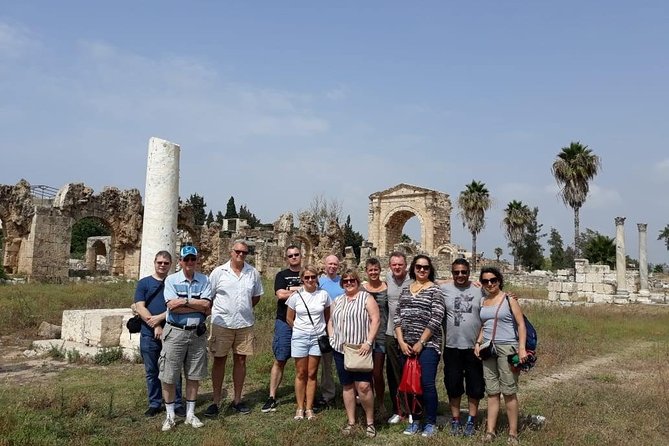
The maximum group size is 20 people. That is not a private tour, but it is much easier to manage than a large coach group. Your guide can explain the sites as you walk, and the driver handles the long stretches between towns.
The day is still demanding. You will spend much of it moving between stops, walking through archaeological areas, and getting back into the vehicle. Wear practical shoes, bring sun protection, and keep some flexibility in your expectations. This is a survey of southern Lebanon, not a slow archaeological study.
More Sidon and Tyre day trips:
- Small-Group Adventure Tour to Sidon Tyre & Maghdouche-Day Trip
★ 5.0 · 45 reviews - Sidon, Tyre & Maghdouche Day Trip – With Lunch (4G on Board)
★ 4.5 · 44 reviews - Sidon – Tyre – Maghdouche Trip, From Beirut
★ 5.0 · 25 reviews
Sidon: Phoenician roots and a lively old center
Sidon, also called Saida, is one of the oldest Phoenician cities. Its origins reach back to the third millennium BC, and it became prosperous through trade, including its famous purple dye and glassware.
The city also appears in the New Testament story of Jesus visiting the region. Later centuries brought Crusader, Mamluk, Ottoman, and local rule, so Sidon’s old center has several layers packed close together.
The opening city visit lasts about an hour. That time gives you a quick orientation, but you should not expect a full walking tour of every lane. The value is in seeing how the modern city and its older quarters fit together.
The Sea Castle and its battered walls
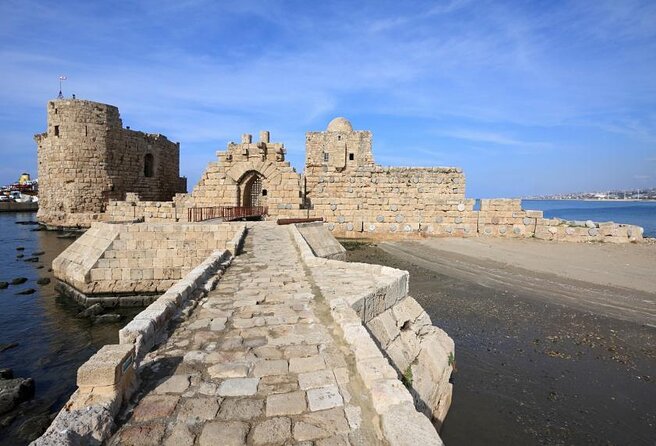
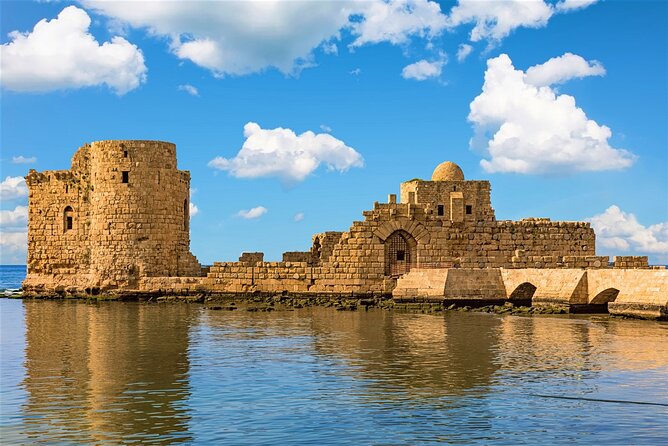
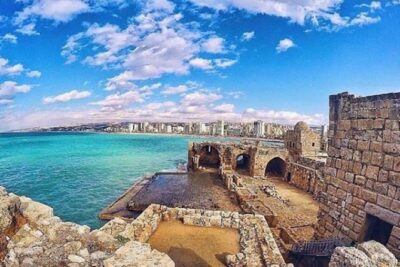
Sidon’s Crusaders Sea Castle sits on a small island linked to shore by a causeway. The Crusaders built it in the thirteenth century as a fortress connected with the Holy Land.
The Mamluks largely destroyed it in 1291. Fakhr el-Dine Maan II later restored it in the early seventeenth century. Old prints show a more complete and decorated fortress, but what remains today is more rugged than ornate.
You get about 30 minutes here. That is enough to walk around the surviving structure, look back toward the port, and understand its defensive position. It is not enough for a long architectural examination, especially if the group is moving together.
Admission is not included at the Sea Castle, so bring some extra cash for entrance fees. The tour price remains reasonable, but the included and excluded costs are worth checking before you leave Beirut.
Khan al-Franj, a courtyard built for trade
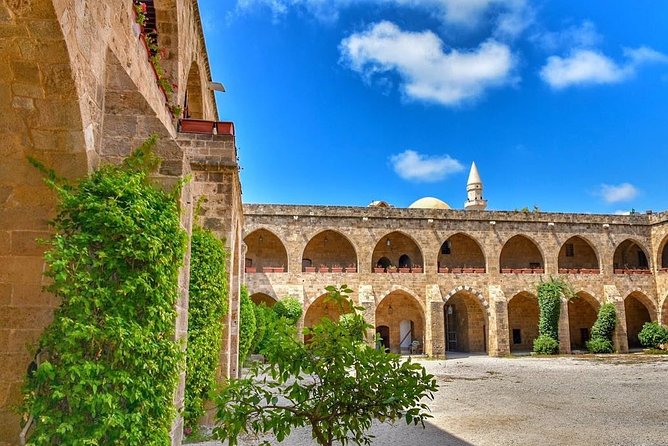
Khan al-Franj is a seventeenth-century caravanserai built by Emir Fakhreddine II. It served as accommodation for ambassadors and as a place for commercial exchange between Lebanon and France.
The building follows the classic khan design: a large rectangular courtyard, covered galleries, and a central fountain. It later became associated with learning, religion, diplomacy, industry, and literature.
You have only about 15 minutes here. I would treat this as a concise architectural stop, not a full museum visit. Look up at the covered galleries and imagine the courtyard filled with merchants, officials, and travelers moving through Sidon’s trading network.
More Tours with Lunch in Beirut:
- Guided Small-Group Tour to Baalbek, Anjar and Ksara with Lunch
★ 5.0 · 511 reviews - Guided Small-Group Tour to Jeita, Harissa, Byblos with Lunch
★ 5.0 · 361 reviews - Anjar, Baalbek & Ksara Day Trip – With Lunch (4G on Board)
★ 4.5 · 181 reviews - Byblos, Jeita Grotto & Harissa Day Trip -With Lunch (4G on Board)
★ 4.5 · 145 reviews
The Soap Museum and a hands-on craft tradition
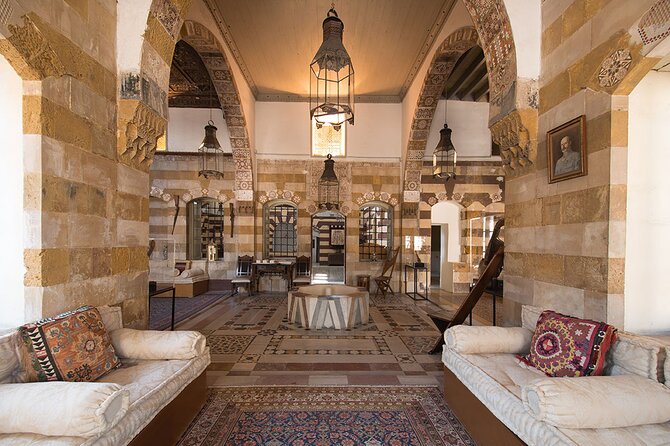
The Soap Museum occupies a seventeenth-century soap factory built by the Hammoud family. Parts of the structure may date as far back as the thirteenth century.
Inside, you learn how Levantine soap was made from olive oil and see the connection between soap production and traditional hammam, or bath, culture. The museum also holds archaeological material found during work on the building, including clay pipe heads from the seventeenth through nineteenth centuries and pottery fragments.
This is one of the more distinctive stops because it connects daily life with history. Ancient temples are impressive, but a soap workshop shows how local skills, raw materials, and customs shaped ordinary life.
The visit lasts about 30 minutes, and admission is not included. There is a demonstration of traditional soap-making, but this stop does not have to become a shopping detour. One useful feature of the tour is that the museum visit has not been described as a pressured sales stop.
Sidon’s souks
Sidon’s souk is a maze of narrow lanes lined with small shops, kiosks, cafés, food sellers, butchers, grocers, tailors, shoe-makers, and jewelers. It remains a working commercial center rather than a preserved set built only for sightseeing.
You have about 15 minutes, which is brief. Use it to get a feel for the passageways and local commerce rather than planning to shop seriously. If you want time for souvenirs or photographs, this is one place where the schedule may feel tight.
The souk is also a useful counterpoint to the ruins. Sidon is not simply an archaeological site. It is a living port city with old buildings still tied to trade and everyday business.
Maghdouche: a short stop with a strong religious focus
The Basilica of Our Lady of Mantara sits in Maghdouche, also spelled Maghdouché or Maghdoucheh. The Melkite Greek Catholic shrine is linked to a local tradition that Mary waited here for Jesus.
The site was discovered in 1721 by a young shepherd. It includes a tower topped by a statue of the Virgin and Child, a cathedral, a cemetery, and a sacred cave believed to be the place where Mary rested.
The visit lasts about 15 minutes. That makes it a quick stop, but it adds a different dimension to the day. Instead of another Roman road or Crusader wall, you see a living place of devotion with a story that remains important to local Christians.
Give the shrine the respect you would give any active religious site. The tour includes the stop, but the short timing means you may have to choose between looking closely at the church area, taking in the tower, and spending time at the cave.
Tyre: Phoenician power beside the sea
Tyre was one of the great Phoenician port cities. Its foundations reach back to about 2750 BC, and it grew under rulers including King Hiram.
Tyre became famous for its purple dye, made from murex sea snails. The dye was difficult to produce and became a mark of status across the ancient world. Tyre is also tied to the story of Elissar, the Phoenician princess traditionally credited with founding Carthage.
The city later came under Egyptian, Assyrian, Neo-Babylonian, Greek, Seleucid, Roman, Byzantine, Arab, Crusader, Mamluk, and Ottoman control. That long sequence is easier to understand on the ground, where Roman streets and later remains occupy the same broad setting.
The tour gives Tyre about two hours before a separate hour at Al-Bass. That is a fair amount of time for a first visit, but it is still not enough to explore every corner of both archaeological areas and the town.
Tyre also has a seaside setting and is known for its beaches. The tour is focused on history, so do not book it expecting a beach day. You may see the coastal side of the city, but the schedule centers on cultural sites.
Al-Bass: Tyre’s Roman showpiece
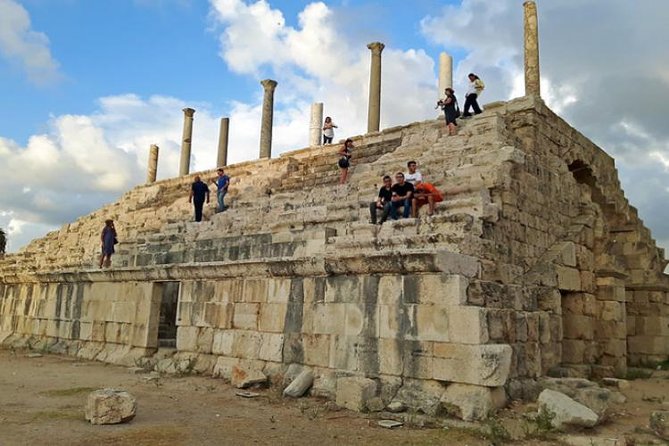
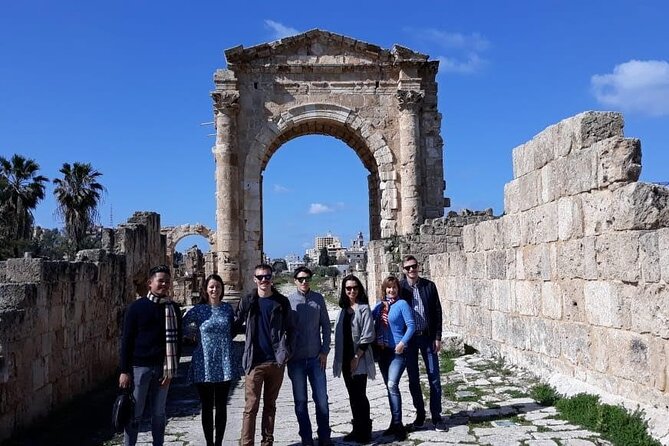
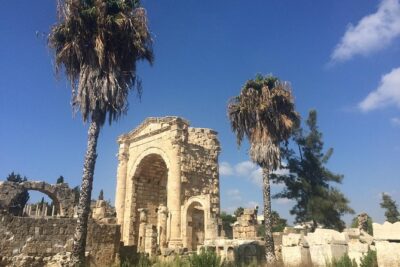
Al-Bass is the most visually powerful archaeological stop on the day. It includes a large Roman hippodrome, a necropolis, a monumental causeway, a Roman triumphal arch from the second century AD, an aqueduct, and an intact Roman road.
The hippodrome is among the largest and best-preserved examples from the Roman world. Even if you are not an ancient-history specialist, its scale is clear once you stand among the remains. It helps you picture public entertainment as a major part of Roman city life.
The necropolis contains several hundred well-preserved sarcophagi. The causeway and triumphal arch frame the site, while the aqueduct shows the practical infrastructure that supported the ancient city.
You have about an hour here, and admission is not included. Bring water, although bottled water is supplied by the tour. Sun exposure can be strong around open ruins, so sunscreen and a hat are sensible additions.
Al-Bass rewards a guide who can explain what you are looking at. Without context, a Roman arch is just an old arch. With the story of the road, cemetery, water supply, and hippodrome together, the site becomes a clear picture of Tyre as a major urban center.
Lunch keeps the schedule moving
Lunch is included, along with bottled water. A meal served during the Tyre portion of the day has been described as a pleasant fish lunch at a nice restaurant, though the exact menu can vary.
The food is an important part of the value. You do not have to spend time searching for a restaurant while trying to keep up with a packed schedule, and you get a chance to taste Lebanese cooking rather than relying on snacks in the vehicle.
One practical note: the restaurant’s outdoor seating may not be fully covered from the sun. Bring sunscreen, especially during warmer months. If you need shade, ask the staff or guide about available seating when you arrive.
What the $65 price really covers
At $65 per person, this tour is priced well for a full day that includes hotel transfers from Beirut, an air-conditioned vehicle, a guide, tour leadership, lunch, and bottled water.
The largest saving is convenience. A private car, separate drivers, meals, and entrance fees would quickly add up if arranged independently. You also gain a fixed route that links three different destinations without spending your day planning connections.
The price does not include every admission fee. The Sea Castle, Soap Museum, and Al-Bass Archaeological Site list entrance tickets as extra. Check the current fees with the operator or guide, since admission prices can change.
The group limit of 20 keeps the cost below a private tour, but it also means you will follow a shared schedule. If you want to spend an hour photographing one tomb or linger in the souk, this is not the right format.
The best and weakest parts of the schedule
The strongest feature is the mix of sites. Sidon gives you urban life, trade buildings, a Crusader fortress, and craft tradition. Maghdouche provides a short religious visit. Tyre then finishes the day with major Roman remains.
The guides and drivers also receive strong praise for organization and friendliness. Alain is one guide named positively, and Naaser is one driver praised for making the day run well. The tour operator has also been credited with clear communication about pickup times.
The weak point is the amount of ground covered in one day. Some stops receive only 15 minutes, and the full schedule may shift. Do not assume that every named location will receive the same attention. If seeing a particular place is essential, ask about it before the vehicle leaves Beirut.
The other limitation is that this is a guided overview. The tour gives you a useful introduction to southern Lebanon, but a return visit would be worthwhile if you want long, unhurried time in the souks, museums, or archaeological grounds.
Who should book this tour?
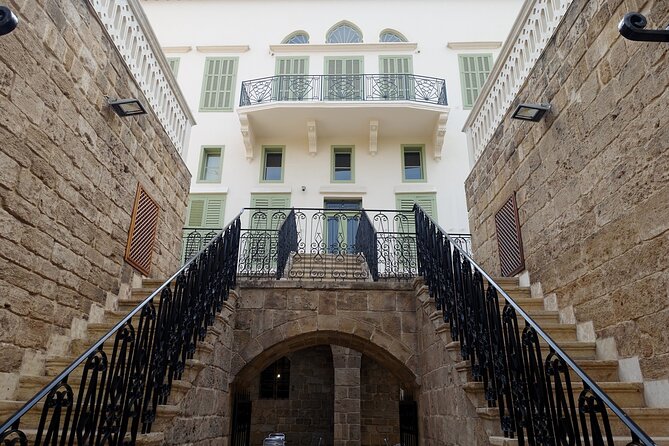
I would recommend it to you if you are staying in Beirut and want to see southern Lebanon without renting a car or arranging several taxis. It suits first-time visitors who want a broad mix of Phoenician, Roman, Crusader, Ottoman, and religious sites in one day.
It is also a good match if you value a clear plan, included lunch, and a guide who can supply historical context. The absence of a hard-sell shopping stop is another plus if you prefer to spend your time on places rather than purchases.
You may want another option if your priority is beach time, independent wandering, or detailed archaeological study. The maximum group size is 20, the day is long, and the pace can feel brisk. Travelers with a particular interest in Tyre should confirm exactly which town and archaeological stops will be covered.
Should you book it?
Book this tour if you want efficient coverage of Sidon, Maghdouche, and Tyre from Beirut. The $65 price is fair because transportation, lunch, water, and hotel transfers are included, while the guides and drivers have earned strong marks for organization and warmth.
Go in with realistic expectations. You are buying a well-planned introduction, not a leisurely private exploration. Ask at pickup about the exact stops, carry sunscreen for the open archaeological sites and outdoor lunch seating, and keep a little extra money for admission tickets.
Free cancellation is available up to 24 hours before the 8:30 a.m. start time. Changes or cancellations made later are not refundable.
FAQ
How long does the tour last?
The tour lasts approximately nine hours.
What time does the tour start?
The scheduled start time is 8:30 a.m.
Does the tour include hotel pickup and drop-off?
Yes. Hotel pickup and drop-off in Beirut are included.
Is lunch included?
Yes. Lunch and bottled water are included in the tour price.
What type of transportation is provided?
The tour uses an air-conditioned vehicle with comfortable transportation between the stops.
What is the maximum group size?
The tour can include a maximum of 20 people.
Are entrance tickets included?
Admission is not included for the Sidon Sea Castle, the Soap Museum, or the Al-Bass Archaeological Site. Other listed stops show free admission.
Does the tour visit both Sidon and Tyre?
Yes. The route includes Sidon, Maghdouche, and Tyre, including the Al-Bass Archaeological Site.
Can I cancel for a full refund?
Yes, if you cancel at least 24 hours before the experience start time. Cancellations or changes made less than 24 hours before the start are not accepted for a refund.
Just added around Beirut
- Private Full-Day Tour to Jeita Grotto, Harissa and Saint Charbel from Beirut★ 5.0 · 3 reviews
- Beirut to Jeita Grotto and Byblos: Daily Tours with Lunch★ 5.0 · 3 reviews
- PRIVATE city tour of Old Sidon & Historic Tyre★ 5.0 · 3 reviews
- Journey Through Time: Half-Day Private Tour to Baalbek★ 5.0 · 3 reviews
- Small-Group Tour to Sidon, Tyre and Maghdouche with Lunch and Tickets★ 4.5 · 3 reviews
- Beirut to Sidon, Tyre and Maghdouché: Daily Tours with Lunch★ 5.0 · 3 reviews
- Hike Chouwen★ 5.0 · 3 reviews
- Private Full-Day Tour to Byblos and Tripoli from Beirut★ 5.0 · 3 reviews
Sidon & Tyre Day Trips, compared.
Small-Group Adventure Tour to Sidon Tyre & Maghdouche-Day Trip
Read our review →
Sidon, Tyre & Maghdouche Day Trip – With Lunch (4G on Board)
Read our review →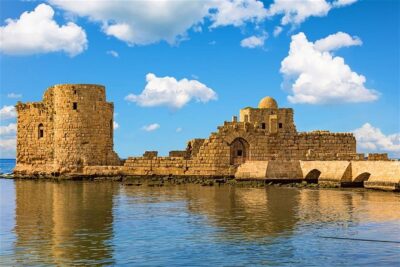
Small Group Tour to Sidon, Tyre & Maghdouche with lunch
Read our review →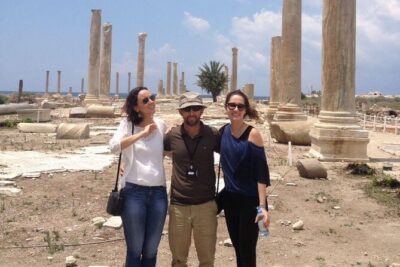
Private Guided Tour to Sidon, Tyre and Maghdouche from Beirut
Read our review →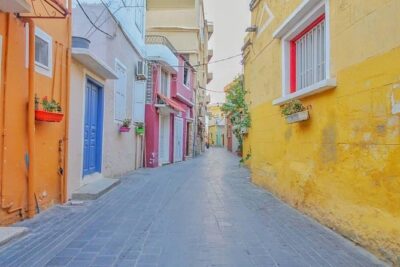
Lebanon tour Sidon & Tyre ruins with pick-up, guide,lunch+entries
Read our review →
Lebanon Unveiled: Exclusive Private Tours to Sidon & Tyre
Read our review →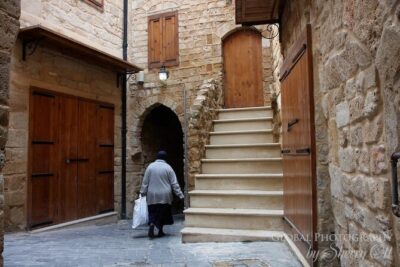
Browse the lists this tour appears in