
Review · SIDON & TYRE DAY TRIPS
Small Group Tour to Sidon, Tyre & Maghdouche with lunch
Lebanon’s southern coast packs centuries into one day. This eight-hour small-group tour from Beirut links the Crusader sea castle in Sidon, Phoenician and Roman remains in Tyre, and the Marian shrine at Maghdouche, with lunch and hotel transfers included.
I like the efficient route and the mix of major ruins with ordinary places such as Sidon’s souk. I also like that the group is capped at 20 and that the air-conditioned minivan picks you up and returns you to your hotel. The main drawback is pace: you get a useful first look at three important places, but some stops are short, and admission fees at several sites are extra.
This is a strong choice if you want to cover southern Lebanon without arranging several separate visits. Guide quality matters here, and the experience can be especially rewarding when your tour leader works with a local specialist in Tyre. Hassane, one of the guides praised for this outing, was noted for his clear explanations, practical care, and ability to arrange an archaeologist at the Tyre sites.
In This Review
- Key points to know before booking
- Why this southern Lebanon day trip works
- Sidon’s sea castle and its changing shoreline
- Khan al-Franj, a courtyard built for trade
- Sidon’s soap-making tradition and old souk
- Maghdouche and the shrine of Our Lady of Awaiting
- Tyre, from Phoenician port to Roman city
- Al-Bass, where Tyre’s Roman scale becomes clear
- Lunch and the Old Souk of Tyre
- Transport, group size, and the day’s rhythm
- What the $99 price really includes
- Who should book this tour?
- FAQ
- How long is the tour?
- What time does the tour start?
- Does the tour include hotel pickup and drop-off?
- What type of vehicle is used?
- Is lunch included?
- Are entrance fees included?
- How many people can join the tour?
- Can I cancel for a full refund?
Key points to know before booking
- Three major destinations in one day: You visit Sidon, Maghdouche, and Tyre from Beirut, with the heaviest concentration of ancient remains in Tyre.
- A real local meal is included: Lunch at a restaurant in Tyre is part of the $99 price, which helps the tour feel less like a string of photo stops.
- The Al-Bass site needs attention: Its Roman arch, necropolis, aqueduct, road, and hippodrome deserve your full hour.
- Sidon mixes monuments and daily life: The sea castle and Soap Museum are paired with the old khan and narrow commercial lanes.
- Some entrance fees are separate: The Sea Castle, Soap Museum, and Al-Bass Archaeological Site do not include admission in the tour price.
- A guide can make the ancient sites come alive: An archaeologist was arranged for some Tyre departures, adding useful detail beyond what you can pick up alone.
Why this southern Lebanon day trip works
The route gives you a broad look at Lebanon’s coast rather than focusing on one monument. Sidon offers a medieval fortress and an old trading quarter. Maghdouche adds a religious site with a local story and an unusual cave. Tyre then provides the largest archaeological section, with Phoenician, Roman, and later layers spread across two areas.
That variety is the main reason I find the tour appealing. You are not spending eight hours looking at similar ruins. One hour you may be among stone walls and sea views, then you are in a traditional market, examining soap-making tools, or walking past Roman sarcophagi.
The $99 price includes hotel pickup and drop-off, transport in an air-conditioned vehicle, a local guide, a tour leader, and lunch. That is fair value for a full day, especially if you would otherwise need to arrange a private car, pay for fuel, find lunch, and organize guides at the archaeological sites.
Still, value depends on how much time you want at each place. This is an overview tour, not a slow archaeological study. If you prefer to read every inscription, sketch ruins, or linger in a market, the schedule may feel tight.
More Sidon and Tyre day trips:
- Small-Group Adventure Tour to Sidon Tyre & Maghdouche-Day Trip
★ 5.0 · 45 reviews - Sidon, Tyre & Maghdouche Day Trip – With Lunch (4G on Board)
★ 4.5 · 44 reviews - Guided Small-Group Tour to Sidon, Tyre & Maghdouche with Lunch
★ 5.0 · 41 reviews
Sidon’s sea castle and its changing shoreline
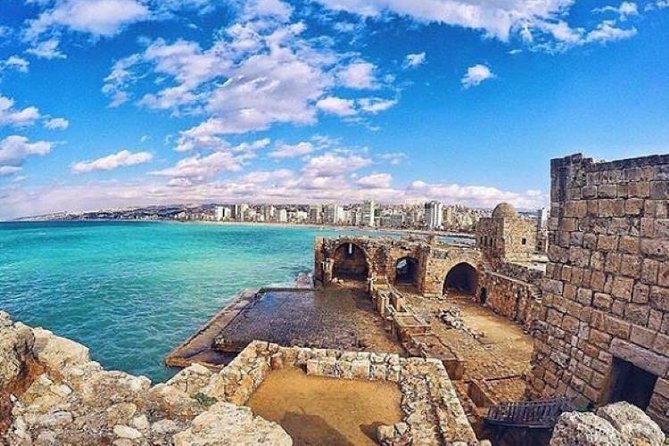
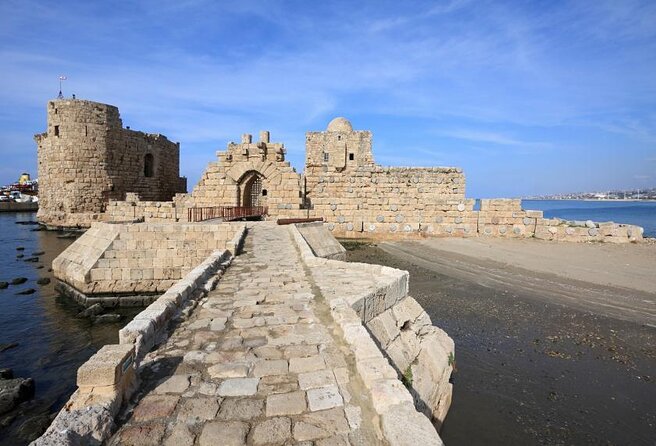
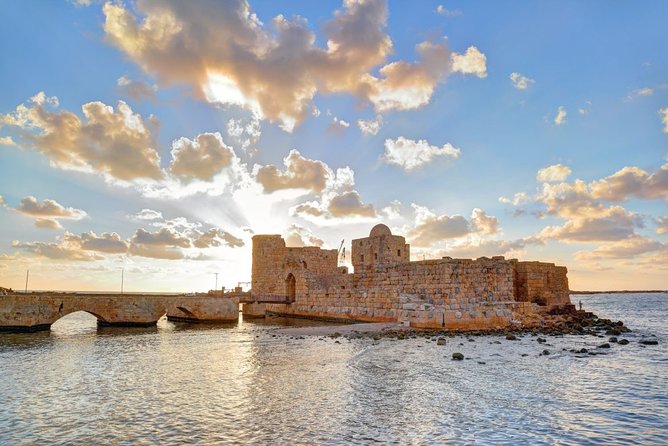
The day begins in Sidon at the Crusaders Sea Castle, one of the city’s most recognizable sights. The fortress was built in the 13th century on a small island and linked to the mainland by a causeway. That setting gives you an immediate sense of why the site mattered: the castle controlled an important port approach and formed part of the Crusader defenses in the Holy Land.
Only about 30 minutes are assigned here, so use the time well. Look at the surviving stonework, the relationship between the fortress and the water, and the causeway that connects it to modern Sidon. Old images show a more ornate structure than the one you see now. The Mamluks largely destroyed it in 1291, and Fakhr el-Dine Maan II later restored it in the early 17th century.
The remains are impressive, but they are not pristine. You are looking at a damaged and repaired fortress rather than a complete medieval castle. Admission is not included, so keep a little extra cash available for this and the other paid stops.
The short visit works for a first introduction. It may disappoint you if the castle is your main reason for booking the tour.
Khan al-Franj, a courtyard built for trade
Next comes Khan al-Franj, usually with around 15 minutes to look around. Built in the early 17th century by Emir Fakhreddine II, the khan served as a hotel for ambassadors and a commercial center linking Lebanon and France.
Its layout is easy to understand at a glance. A large rectangular courtyard and central fountain are surrounded by covered galleries. This was a place for trade, diplomacy, religion, literature, and industry, so it offers a useful bridge between Sidon’s medieval fortifications and its later commercial life.
The visit is brief and admission is free. You will not have time for a long examination of every corner, but the courtyard gives you a clear picture of how a traditional khan worked. I would pay attention to the proportions and galleries rather than expect a museum-style display.
Sidon’s soap-making tradition and old souk
The Soap Museum adds a practical, hands-on note to the morning. Housed in a former soap factory built in the 17th century, the building may contain parts dating to the 13th century. The Hammoud family originally established the workshop in Sidon, and the museum follows the development of Levantine soap-making methods.
You can see how traditional olive oil soap is made and learn about hammam customs. The museum also includes objects found during excavation, including clay pipe heads from the 17th to 19th centuries and pieces of pottery.
Around 30 minutes is allowed here. Admission is not included, which is worth noting when comparing the headline tour price with the final cost. The museum is a good stop for you if you like ordinary crafts and working traditions, not just royal buildings and battle sites.
The following 10-minute walk through Sidon’s souks is short but useful. The lanes hold small kiosks, cafes, food shops, butchers, grocers, shoe-makers, tailors, jewelers, and street sellers. This is where the city feels most connected to daily life.
Ten minutes is enough to get a quick taste, not enough for serious shopping. If you spot something worth buying, you may need to decide quickly or return to Sidon on another day.
More Tours with Lunch in Beirut:
- Guided Small-Group Tour to Baalbek, Anjar and Ksara with Lunch
★ 5.0 · 511 reviews - Guided Small-Group Tour to Jeita, Harissa, Byblos with Lunch
★ 5.0 · 361 reviews - Anjar, Baalbek & Ksara Day Trip – With Lunch (4G on Board)
★ 4.5 · 181 reviews - Byblos, Jeita Grotto & Harissa Day Trip -With Lunch (4G on Board)
★ 4.5 · 145 reviews
Maghdouche and the shrine of Our Lady of Awaiting
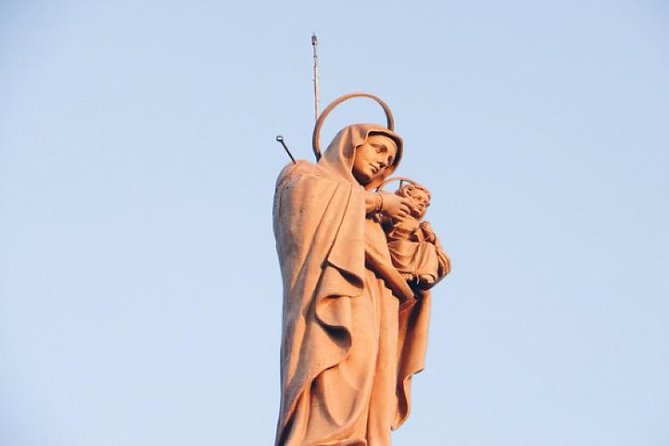
The route then turns inland to Maghdouche and the Basilica of Our Lady of Mantara, also called Our Lady of Awaiting. The site is a Melkite Greek Catholic Marian shrine, discovered in 1721 by a young shepherd.
The shrine includes a tower topped by a statue of the Virgin and Child, a cathedral, a cemetery, and a sacred cave. Local belief identifies the cave as the place where Mary rested while waiting for Jesus. The name Our Lady of Awaiting comes from that tradition.
You get about 30 minutes here, with no admission charge listed. This stop changes the rhythm of the day. After military architecture, trade, and craft production, you encounter a living religious site that remains important to the local community.
You do not need to share the shrine’s religious beliefs to appreciate its setting and story. Dress and behave respectfully, as you would at any active place of worship. The stop is fairly short, so it is best approached as a quiet pause rather than a detailed church visit.
Tyre, from Phoenician port to Roman city
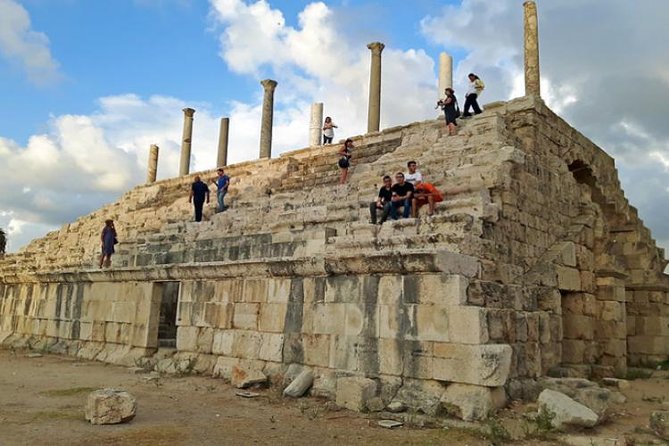
Tyre receives the longest general visit, at about two hours, followed by a dedicated hour at Al-Bass. That allocation makes sense. Tyre’s story is long and layered, and the remains are spread across different parts of the city.
The ancient port was known for its purple dye, made from murex sea snails. Tyre is also linked with Elissar, the Phoenician princess associated with the founding of Carthage. Its foundations reach back to about 2750 BC, and the city later came under Egyptian rule before flourishing under King Hiram.
After that came Assyrians, Neo-Babylonians, Greeks, Seleucids, Romans, Byzantines, Arabs, Crusaders, Mamluks, and Ottomans. You are not simply looking at one vanished civilization. Tyre shows how one useful port kept being claimed, rebuilt, and reshaped across many centuries.
The city also has a seaside setting and beaches, giving the stop a more open feel than an inland ruin. The tour does not promise extended beach time, so do not book it as a beach day. The main purpose here is the ancient city, the archaeological sites, lunch, and a short look at the old market.
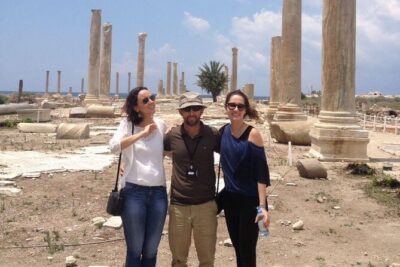
A local archaeological guide can make a major difference. On some departures, Hassane arranged for an archaeologist to meet the group in Tyre. That extra explanation is particularly useful because the ruins are spread out and not every feature is obvious at first glance.
Al-Bass, where Tyre’s Roman scale becomes clear
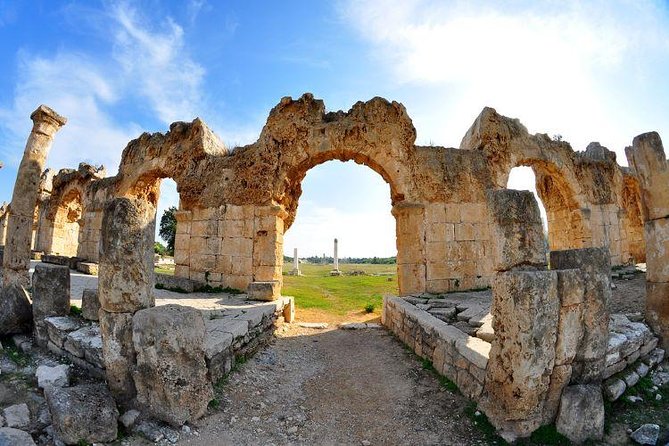
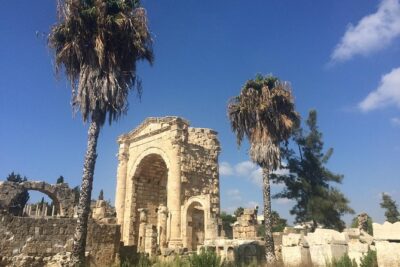
Al-Bass is the archaeological high point for many people on this tour. The site includes a necropolis with hundreds of sarcophagi, an intact Roman road, an aqueduct, a monumental triumphal arch from the 2nd century AD, and one of the largest Roman hippodromes in the ancient world.
You have about one hour here. Start with the overall layout before focusing on individual stones. The wide causeway and triumphal arch once formed the main entrance to the ancient town. The Roman road helps you picture movement through the site, while the aqueduct shows the infrastructure needed to support a large urban center.
The hippodrome is the star. Its scale gives you a better sense of Roman public life than a small fragment of wall ever could. Imagine the crowd, the racing area, and the engineering required for such a venue, but keep in mind that the remains are open ruins rather than a fully reconstructed arena.
Admission is not included. This is one of the places where I would be willing to spend the extra fee, because Al-Bass contains several different types of remains in one setting. An archaeologist’s explanation is also especially valuable here, helping you separate the necropolis, road, aqueduct, arch, and hippodrome in your mind.
Lunch and the Old Souk of Tyre
Lunch at a local restaurant in Tyre is included. The meal is described as traditional-style, giving you a chance to pause over local food rather than eating only from roadside stops. The exact menu is not specified, so you should not book expecting a particular dish.
The Old Souk receives about 15 minutes. It contains shops selling gold, copper, vegetables, fish, meat, clothing, and antiques. Small food stops offer sandwiches, foul, and hummus.
Again, the timing is a sampler. You can see the character of the market and perhaps grab a quick taste, but you will not have a leisurely afternoon to compare stalls. I would treat the souk as a final glimpse of present-day Tyre after the ancient sites, not as a dedicated shopping excursion.
Transport, group size, and the day’s rhythm
Pickup and drop-off at your hotel simplify the start and finish, especially in Beirut. The tour begins at 8:00 am and lasts about eight hours. The air-conditioned minivan is a practical choice for a day covering several southern destinations.
The group maximum is 20. That is not an intimate private tour, but it is small enough for a guide to manage questions and keep the day moving. The experience is likely to feel most personal when the group is well below the maximum.
Expect a full day with several changes of scene. You will have some walking at the castles, souks, shrine, and archaeological sites, although the supplied information does not give a total walking distance or accessibility details. Most people can participate, but anyone with mobility concerns should ask the provider for current site conditions before booking.
The schedule is designed for coverage. If you want maximum time at Sidon’s castle or Tyre’s Roman remains, a private or single-city visit may suit you better. If you want to see several key places without handling the transport yourself, this format makes good sense.
What the $99 price really includes
At $99 per person, the tour offers solid convenience. You are paying for a full day of transport, hotel transfers, a guide, a tour leader, and lunch. Those inclusions remove several tasks that can eat up time on a self-guided day.
The price is less attractive if you dislike group schedules or plan to skip the paid attractions. Entrance to the Sea Castle, Soap Museum, and Al-Bass is not included, so add those costs to your budget. The tour does include free entry stops such as Khan al-Franj, the shrine, and the souks, but no amount is supplied for the paid admissions.
The strongest value comes from the route and the logistics. Sidon and Tyre are not places I would combine casually without planning, and a driver who knows the sequence can keep the day manageable. Lunch also means you do not have to spend part of the visit searching for a restaurant in an unfamiliar city.
Free cancellation is available if you cancel at least 24 hours before the start time. Changes or cancellations inside that window are not accepted for a refund.
Who should book this tour?
I would recommend it if you are staying in Beirut and want a clear introduction to Lebanon’s southern heritage. It suits first-time visitors, history fans, and anyone who values a guide and included transport more than complete control over the day.
It is also a good fit if you want different kinds of places in one outing: a Crusader fortress, a historic khan, a craft museum, a religious shrine, Roman ruins, a market, and a local lunch.
I would hesitate if you need a slow pace, extensive shopping time, or a full day at one archaeological site. The short visits to Khan al-Franj and the Sidon souks are useful but limited, and the paid admissions mean the $99 price is not the entire day’s expense.
Book it when your priority is seeing Sidon and Tyre efficiently, with Maghdouche added as a meaningful stop. For the best experience, confirm the pickup details, ask which admissions are currently charged, and check whether an archaeologist will be joining the Tyre portion. That last detail can add real value to the ruins.
FAQ
How long is the tour?
The experience lasts approximately eight hours.
What time does the tour start?
The tour starts at 8:00 am.
Does the tour include hotel pickup and drop-off?
Yes. Hotel pickup and drop-off are included.
What type of vehicle is used?
Transport is provided in an air-conditioned vehicle, described for the tour as a minivan.
Is lunch included?
Yes. Lunch at a local restaurant in Tyre is included in the tour price.
Are entrance fees included?
No. Admission is not included for the Sidon Sea Castle, the Soap Museum, or the Al-Bass Archaeological Site. Other listed stops have free admission.
How many people can join the tour?
The maximum group size is 20 people.
Can I cancel for a full refund?
Yes, if you cancel at least 24 hours before the experience start time. Cancellations made less than 24 hours in advance are not refunded.
Just added around Beirut
- Private Full-Day Tour to Jeita Grotto, Harissa and Saint Charbel from Beirut★ 5.0 · 3 reviews
- Beirut to Jeita Grotto and Byblos: Daily Tours with Lunch★ 5.0 · 3 reviews
- PRIVATE city tour of Old Sidon & Historic Tyre★ 5.0 · 3 reviews
- Journey Through Time: Half-Day Private Tour to Baalbek★ 5.0 · 3 reviews
- Small-Group Tour to Sidon, Tyre and Maghdouche with Lunch and Tickets★ 4.5 · 3 reviews
- Hike Chouwen★ 5.0 · 3 reviews
- Beirut to Sidon, Tyre and Maghdouché: Daily Tours with Lunch★ 5.0 · 3 reviews
- Private Full-Day Tour to Byblos and Tripoli from Beirut★ 5.0 · 3 reviews
Sidon & Tyre Day Trips, compared.
Small-Group Adventure Tour to Sidon Tyre & Maghdouche-Day Trip
Read our review →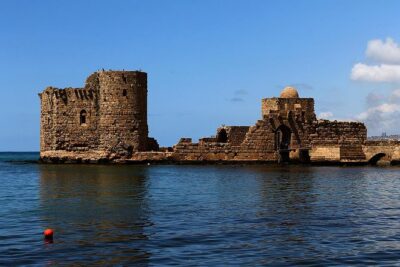
Sidon, Tyre & Maghdouche Day Trip – With Lunch (4G on Board)
Read our review →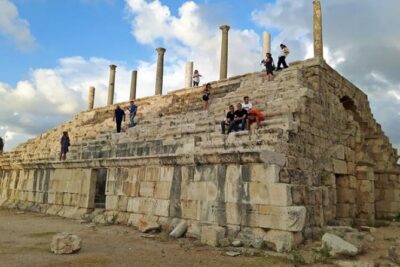
Guided Small-Group Tour to Sidon, Tyre & Maghdouche with Lunch
Read our review →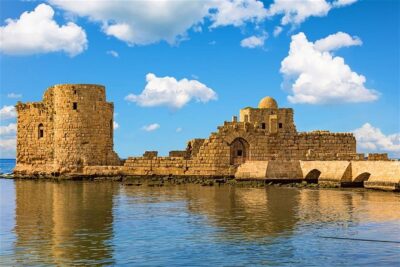
Private Guided Tour to Sidon, Tyre and Maghdouche from Beirut
Read our review →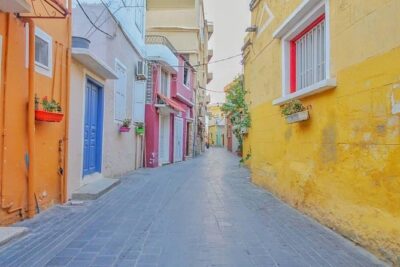
Lebanon tour Sidon & Tyre ruins with pick-up, guide,lunch+entries
Read our review →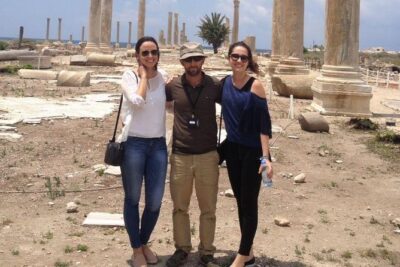
Lebanon Unveiled: Exclusive Private Tours to Sidon & Tyre
Read our review →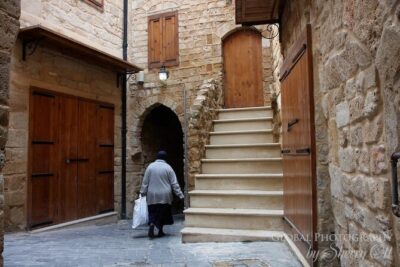
Browse the lists this tour appears in